
Artículo wiki · Colección 01
Energía Inalámbrica por RF
Referencia técnica sobre Energía Inalámbrica por RF para el diseño, integración e implementación de sistemas de energía inalámbrica.
6 minArtículo 07/16Fundamentos
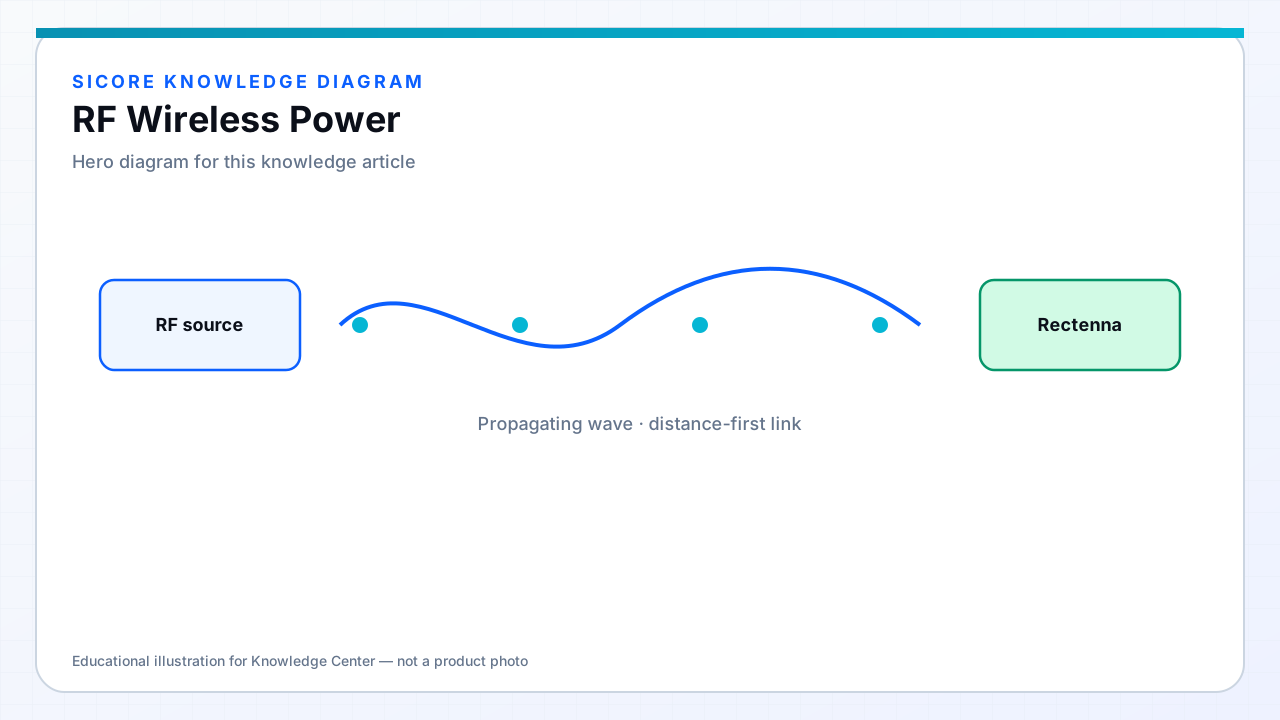
RF wireless power uses radio-frequency electromagnetic waves, typically in ISM bands, to deliver small amounts of energy to a receiving antenna and rectifier (a rectenna). It is excellent for eliminating battery changes on ultra-low-power sensors — not for charging a 48 V robot traction pack in minutes.
01Design realities
- Received power falls quickly with distance and antenna efficiency.
- Regulatory limits on transmit power and field exposure constrain range.
- Duty-cycled IoT loads can work; continuous high-power loads usually cannot.
- Link budget, antenna polarization, and multipath in factories matter as much as the rectifier IC.
02When to choose RF
Choose RF wireless power when wiring is impossible, battery service is expensive, and the load is tiny. Choose inductive/resonant docks when you need predictable high power during a short stop. Many factories will use both: RF for sensors, magnetic WPT for mobile robots.