Artículo wiki · Colección 07
Balanceo de Celdas
Referencia técnica sobre Balanceo de Celdas para el diseño, integración e implementación de sistemas de energía inalámbrica.
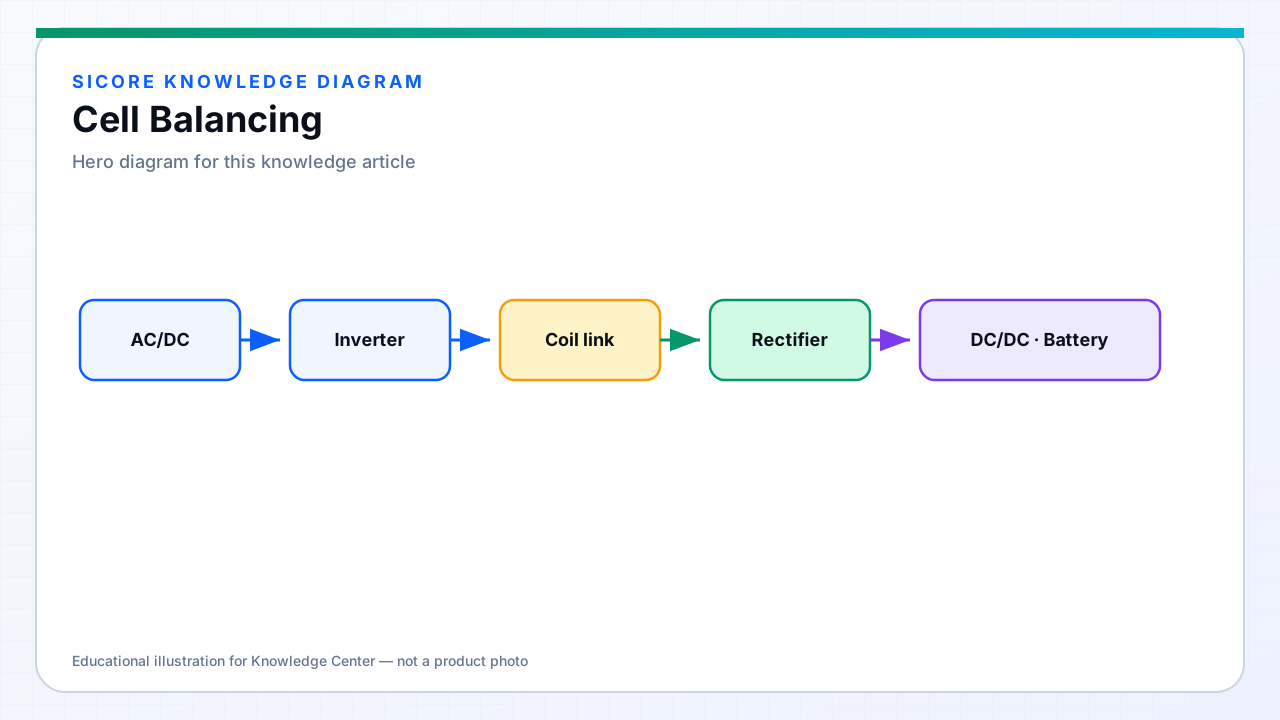
Cells in series inevitably diverge in capacity and self-discharge due to manufacturing variance and uneven temperature distribution. Without balancing, the weakest cell hits voltage limits first — capping usable pack capacity and risking over-charge on stronger cells during wireless top-off sessions.
Opportunity charging at partial SOC can reduce full-charge balancing opportunities compared to nightly full cycles, making active balancing during charge and discharge more important for wireless-heavy fleets.
01Balancing methods
- Passive balancing: bleed resistors shunt excess energy from high cells during charge taper — simple, generates heat.
- Active balancing: energy transferred from high cells to low cells via capacitive or inductive converters — efficient, higher BMS cost.
- Top balancing: equalize at high SOC near end of charge — effective when full charges occur regularly.
- Bottom balancing: equalize at low SOC during discharge — less common in fleet robots with high SOC floors.
02Impact on wireless charging
Short wireless sessions that stop at 80% SOC may never trigger the taper phase where passive balancing is most active. BMS firmware for opportunity-charging fleets often enables balancing during charge regardless of session length, or schedules periodic maintenance charges to 100% for top balancing.
SiCore fleet analytics monitor cell voltage spread reported by the BMS during charge sessions. Widening delta-V trends trigger maintenance alerts — rebalancing charge, thermal inspection, or cell replacement — before the pack usable capacity collapses.
03Commissioning and replacement
New pack integration requires verifying balancing configuration matches chemistry and fleet charge policy. Cell replacement in field service demands BMS re-learning and often a controlled full-charge balance cycle before returning the robot to high-rate wireless opportunity charging.