
Artículo wiki · Colección 07
Gestión Térmica
Referencia técnica sobre Gestión Térmica para el diseño, integración e implementación de sistemas de energía inalámbrica.
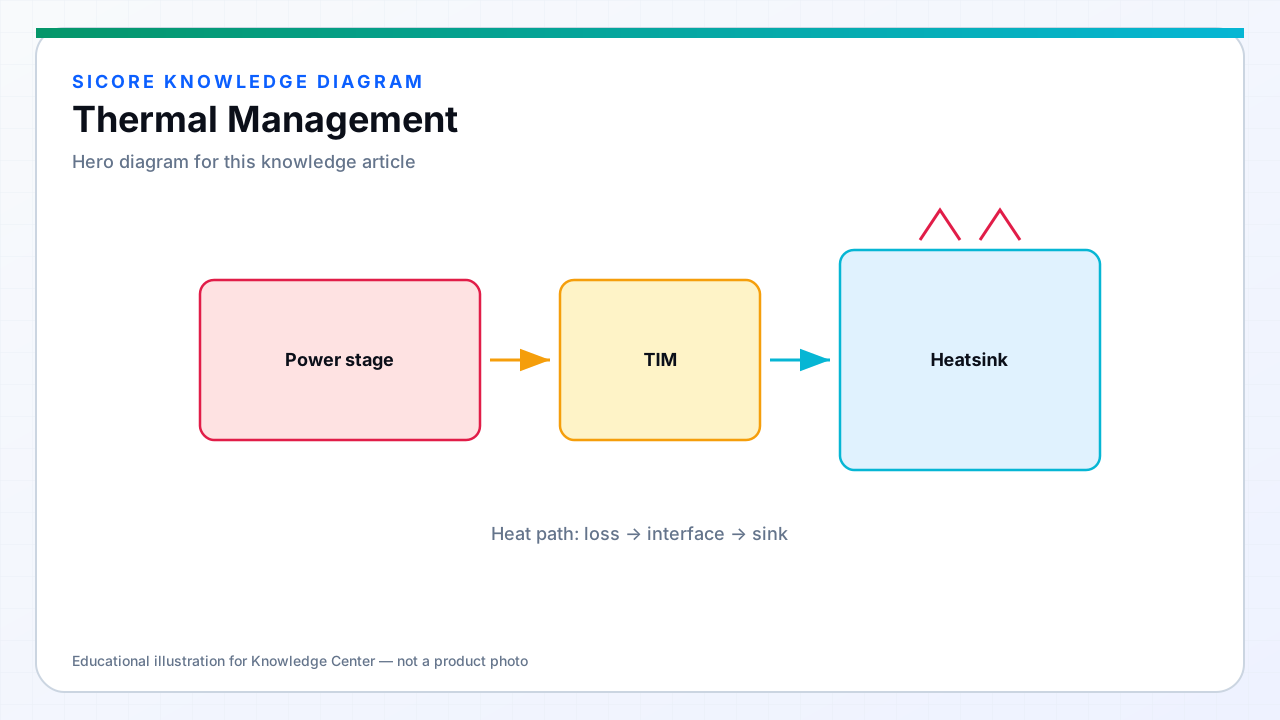
Thermal management governs how much charge and discharge power the pack can sustain without cell damage or safety shutdown. Wireless fast charging concentrates heat in cells, receiver rectifiers, and onboard chargers simultaneously — during a dock window when airflow is often limited because the robot is stationary over a pad.
SiCore systems coordinate electrical derating with BMS thermal requests: when cell or receiver temperature rises, charge power reduces before hard thermal cutoff — preserving session continuity at lower rate rather than abrupt abort.
01Cooling approaches
- Passive: aluminum spreaders, heat sinks on receiver and charger, pack enclosure venting — common on light AMRs.
- Forced air: fans on pack module or charger cabinet; ducting sensitive to dust and obstruction in warehouses.
- Liquid cooling: cold plates on high-power fork AGV packs; glycol loops with chiller in extreme climates.
- Phase-change or heat pipe: niche solutions for compact high-C-rate packs.
02Charge and ambient derating
Battery charge acceptance drops at low temperature ( lithium plating risk ) and must derate at high temperature ( accelerated degradation and thermal runaway risk ). Cold-storage AMR deployments need pre-conditioning strategies or chemistry selection ( LFP, LTO ) tolerant of sub-zero operation.
Summer peak warehouse temperatures — especially near charging bays with multiple active inverters — raise receiver and pack inlet air temperature. SiCore pad enclosures include thermal design margins and optional exhaust paths so adjacent simultaneous sessions do not create mutual derating hotspots.
03Monitoring and fleet policy
BMS reports cell max/min temperature; SiCore telemetry adds receiver and inverter heat sink trends. Fleet software can route overheating vehicles to low-power pads, extend dwell time, or defer missions until temperatures fall. Thermal trending over months reveals cooling system degradation before hard faults occur.