
Artículo wiki · Colección 06
Carga de Alta Disponibilidad
Referencia técnica sobre Carga de Alta Disponibilidad para el diseño, integración e implementación de sistemas de energía inalámbrica.
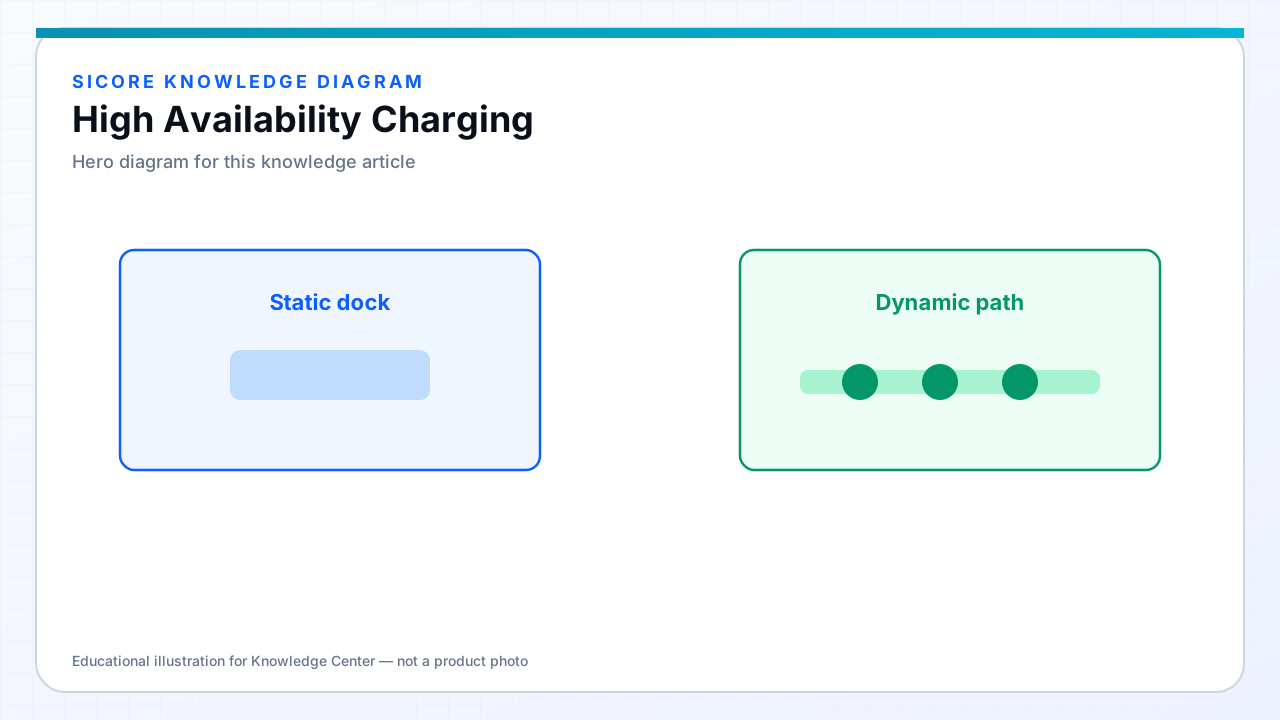
High availability charging (HAC) addresses the reality that a failed pad in a single-pad aisle can halt an entire shift. Production warehouses target charge availability comparable to conveyor uptime: redundant capacity, automatic failover routing, and maintenance workflows that do not require draining the fleet.
SiCore HAC combines hardware reliability — derating margins, modular field replacement — with fleet-level redundancy — duplicate pads on critical loops and dynamic pad assignment.
01Redundancy patterns
- N+1 pad sizing: enough stations that one outage does not create charge queues exceeding mission slack.
- Dual-pad charge bays on high-traffic loops with automatic reroute on fault.
- Hot-swappable inverter and coil modules with preserved calibration on replaceable subassemblies.
- Geographic distribution so a single electrical panel trip does not dark out all docks in a zone.
02Fault detection and isolation
Pads self-report fault latches — FOD trip, thermal shutdown, communication loss — to fleet software, which removes the station from assignment pools immediately. SiCore maintains last-known-good alignment and power telemetry so maintenance can pre-diagnose before arriving on site.
03Maintenance without fleet stop
Scheduled service uses maintenance mode: reduced power, explicit human acknowledgment, and fleet geofencing that prevents autonomous assignment during work. Opportunistic pad rotation spreads wear and allows one bay offline during low-shift windows without production impact.