SiCore Dynamics
Technology Platforms

Wireless Energy Platform

Architecture Overview

Advanced wireless power technologies engineered for efficient, reliable, and scalable energy transfer — from fundamental physics to production-ready systems.

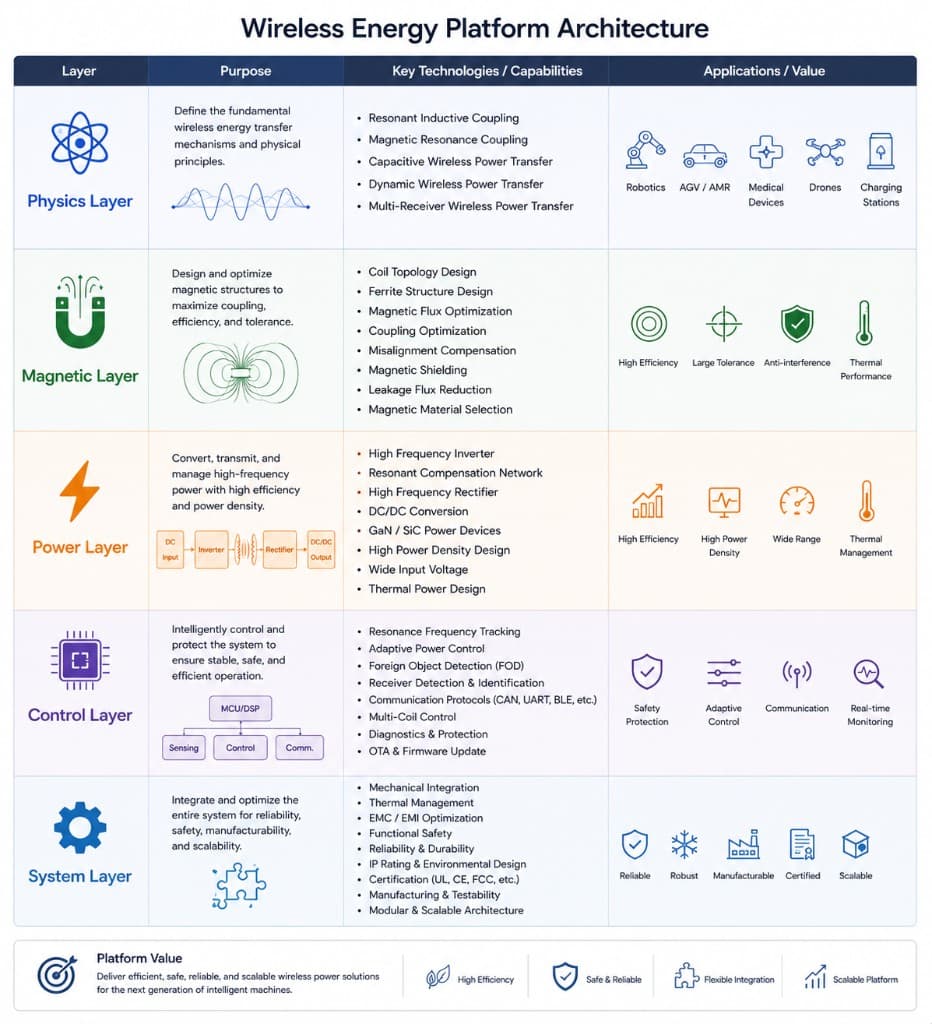
Wireless Energy Platform Architecture: five layers covering physics, magnetic, power, control, and system design
Physics Layer

Wireless Energy Transfer Physics

Wireless Energy Transfer Physics. The Physics Layer defines the fundamental principles of wireless energy transfer. It establishes how energy moves across space through electromagnetic fields and resonant coupling — enabling efficient, contactless power delivery for next-generation intelligent systems.

Four Fundamental Transfer Mechanisms

Wireless energy transfer relies on different physical mechanisms. SiCore Dynamics researches and develops multiple energy transfer technologies to meet different power levels, operating conditions, and application scenarios.

01

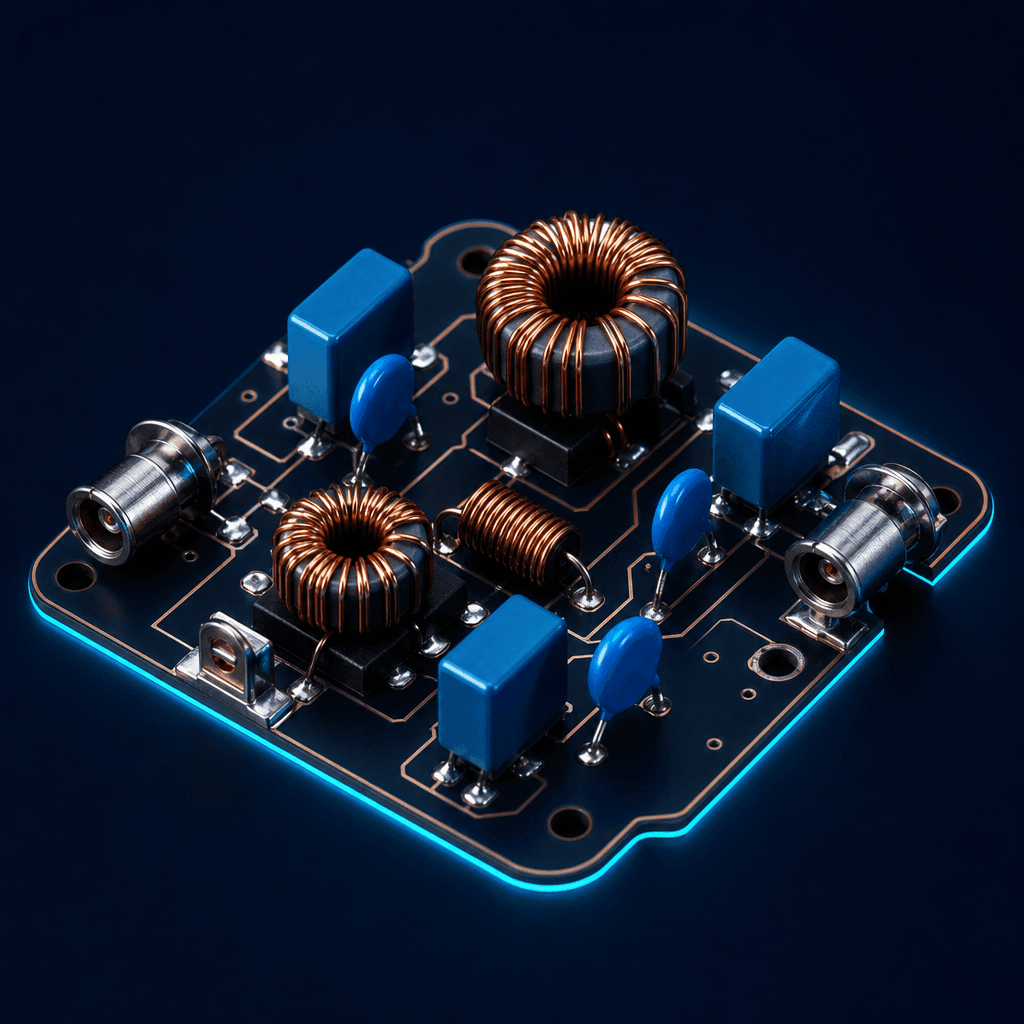
Resonant Inductive Coupling

Resonant Inductive Coupling

The industry-standard solution for high-efficiency short-range power transfer. Widely adopted in Qi charging and industrial docking systems.

Learn more

Typical Applications

  • Consumer Charging
  • Service Robots
  • AGV / AMR
  • Medical Devices

Key Research Areas

  • Coil Resonance Design
  • Resonant Compensation Network
  • High-Q Resonator
  • Coupling Optimization
  • Misalignment Tolerance
  • Foreign Object Detection
02

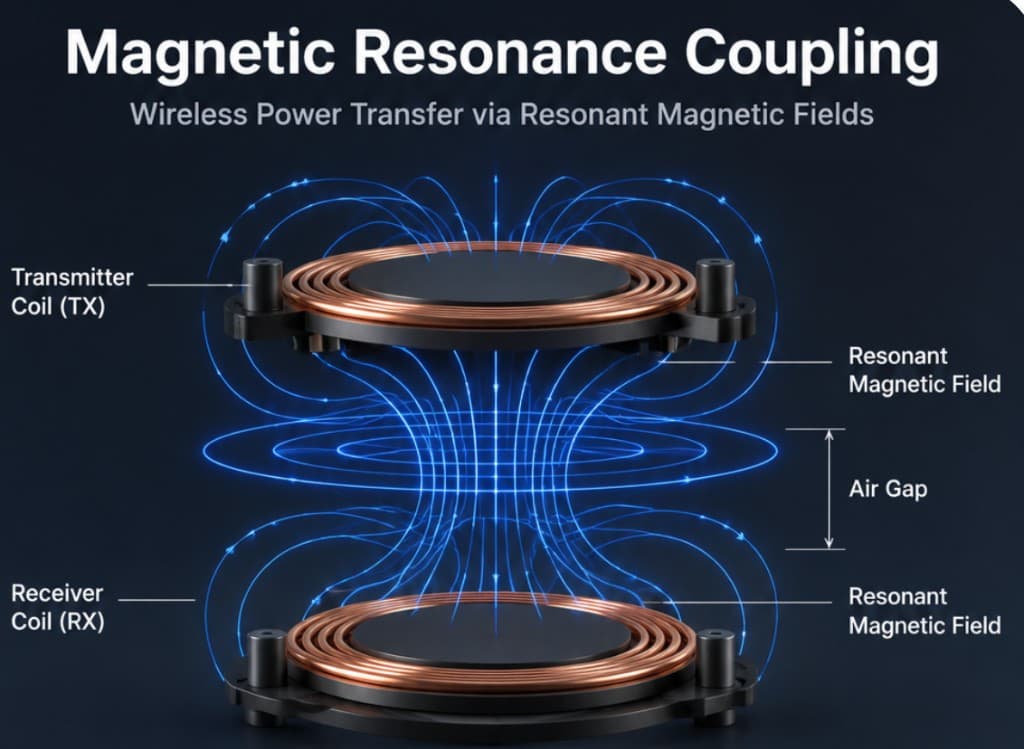
Magnetic Resonance Coupling

Magnetic Resonance Coupling

Enables longer air-gap and more flexible alignment compared with conventional inductive coupling — ideal for autonomous systems.

Learn more

Typical Applications

  • Autonomous Robots
  • Drones
  • Industrial Automation
  • Logistics Robots

Key Research Areas

  • Long Air Gap Design
  • High Coupling Resonator
  • Multi-Resonator Network
  • Magnetic Field Distribution
  • Resonant Frequency Stability
  • Large Offset Tolerance
  • Power Scalability
03

Capacitive Wireless Power

Capacitive Wireless Power

Transfers energy through electric fields rather than magnetic fields — advantageous in metal-rich or constrained environments.

Learn more

Typical Applications

  • Metal-rich Environment
  • Biomedical Devices
  • Thin Structures
  • Semiconductor Equipment

Key Research Areas

  • Electric Field Coupling
  • Plate Structure Design
  • High Frequency Operation
  • Dielectric Optimization
  • Electric Field Shielding
  • High Voltage Isolation
  • Safety Optimization
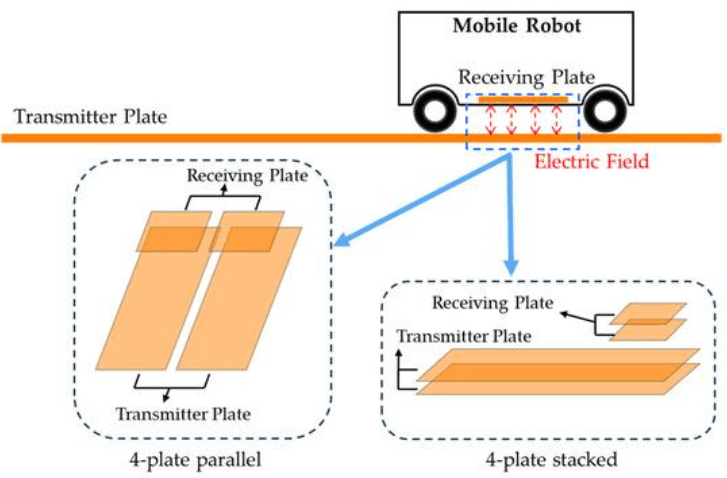
Electric-Field-Based Wireless Energy Transfer

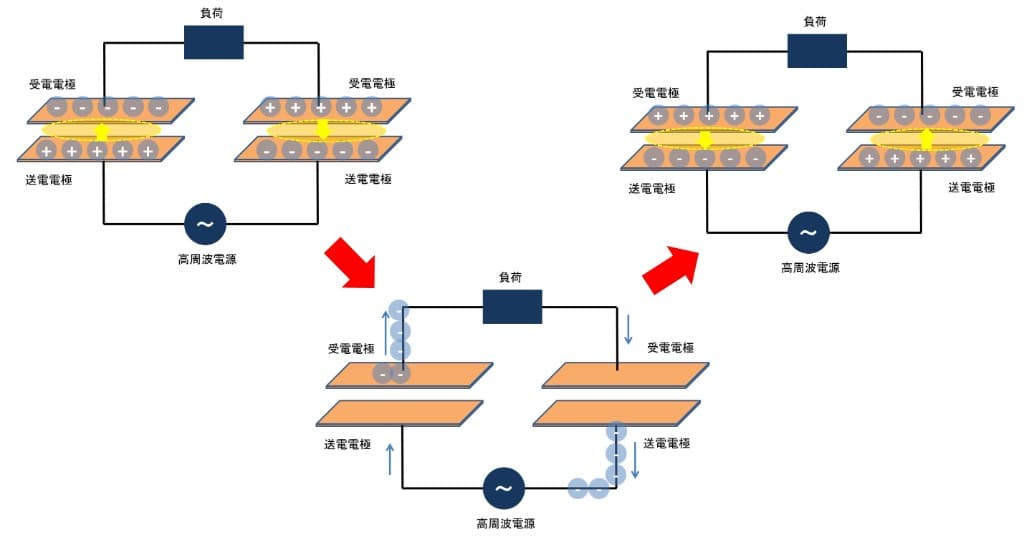
Capacitive Wireless Power Transfer (CWPT) transfers energy through high-frequency electric fields rather than magnetic fields. Instead of using coils and magnetic flux, it utilizes paired conductive electrodes to form a capacitive coupling path, enabling contactless power delivery across a small air gap.

Its ultra-thin structure, low magnetic interference, and compatibility with metal-rich environments make CWPT a promising solution for compact electronics, medical devices, rotating systems, and next-generation embedded applications where conventional inductive charging may not be ideal.

Capacitive wireless power transfer cycle using high-frequency electric fields between transmitting and receiving electrodes
04

Dynamic Wireless Power

Dynamic Wireless Power

Delivers continuous power while machines are in motion — removing the need to stop for charging.

Learn more

Typical Applications

  • AGV / AMR
  • Warehouse Robots
  • Conveyor Systems
  • Factory Automation

Key Research Areas

  • Continuous Energy Transfer
  • Segmented Transmitters
  • Position Tracking
  • Dynamic Coil Switching
  • Power Handover
  • Motion Synchronization
  • Real-time Power Regulation
Power While in Motion

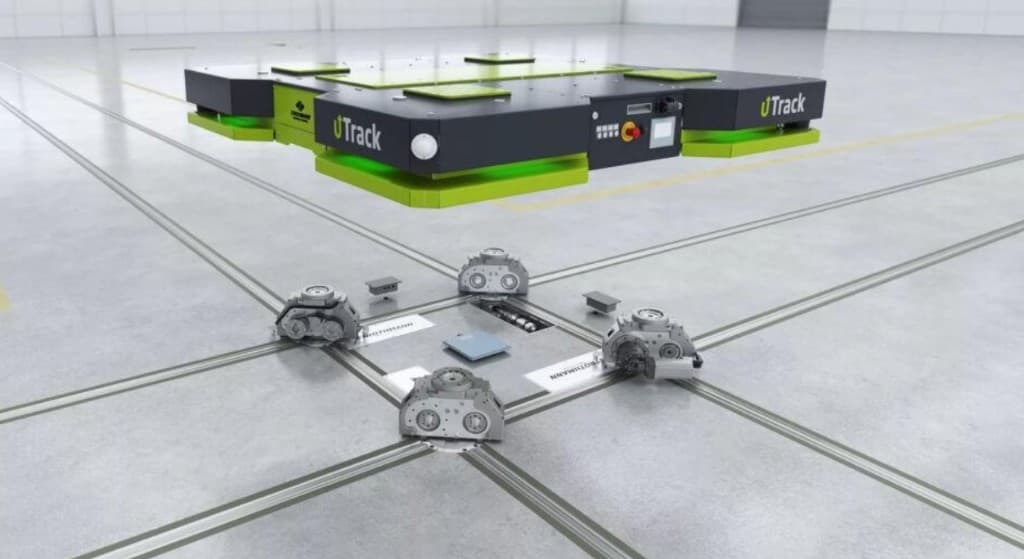
Dynamic Wireless Power Transfer (DWPT) enables continuous energy delivery to moving vehicles and robotic systems without requiring them to stop for charging. By dynamically activating power segments or tracking the receiver position in real time, the system maintains efficient wireless energy transfer throughout the entire movement process.

This technology is designed for autonomous mobile robots (AMRs), AGVs, conveyor systems, and industrial automation, enabling uninterrupted operation, higher productivity, and reduced downtime in next-generation intelligent facilities.

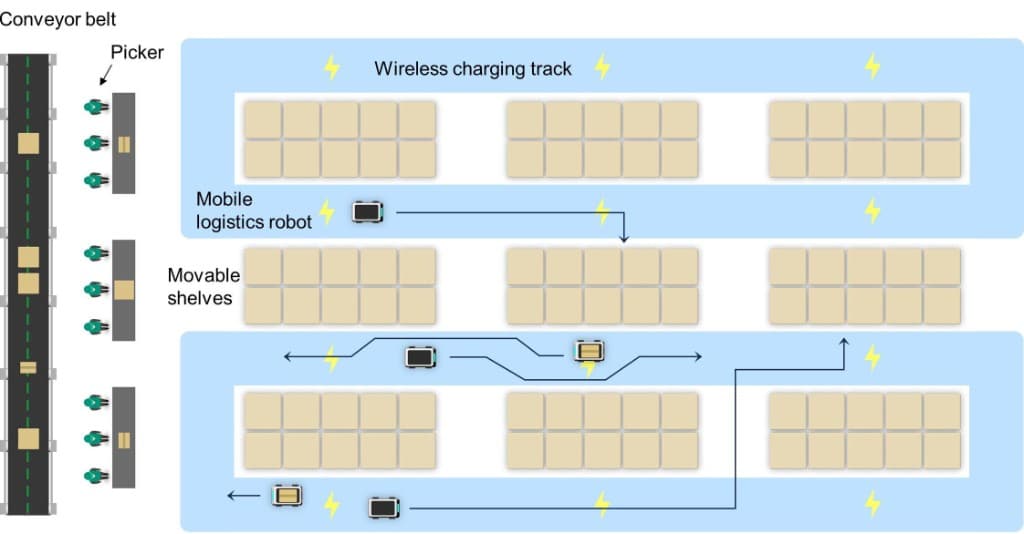
Smart warehouse with wireless charging track powering mobile logistics robots in motion
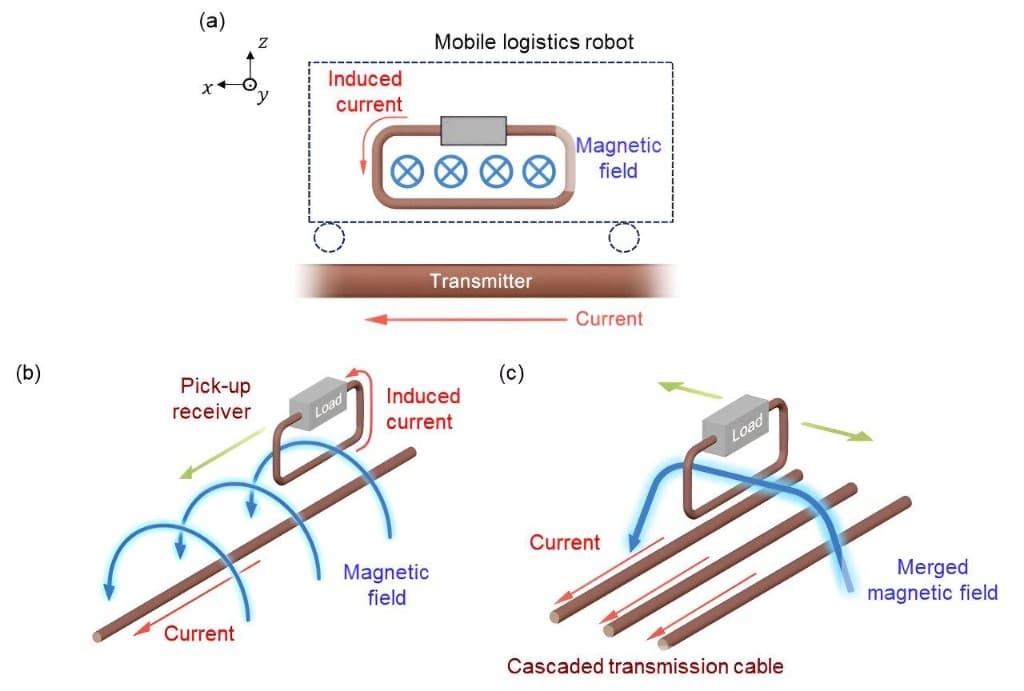
Dynamic wireless power transfer principle showing magnetic field, pick-up receiver, and cascaded transmission cables

Figure Explanation

(a) System Overview

The mobile robot carries a receiver coil while the transmitter is embedded beneath the travel path. High-frequency alternating current flowing through the transmitter generates a magnetic field, which induces electrical current in the receiver coil as the robot moves above it.

(b) Single Transmission Conductor

A single transmission conductor creates an alternating magnetic field around the cable. As the receiver passes through this field, electrical energy is induced in the pickup coil. This configuration is simple but provides a relatively limited magnetic coverage.

(c) Cascaded Transmission Conductors

Multiple transmission conductors are arranged in parallel to create a larger and more uniform magnetic field. The merged magnetic field improves coupling stability, extends the effective charging region, and enables more reliable wireless power transfer for continuously moving vehicles.

Magnetic Layer

Magnetic Engineering

Engineering the magnetic path behind efficient wireless power.

Our magnetic platform maximizes coupling efficiency, shapes flux with precision, and minimizes leakage — delivering stable wireless power across real-world alignment and gap variation.

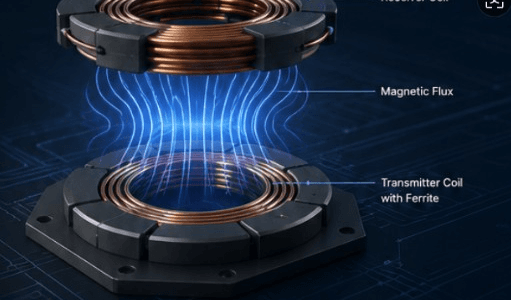
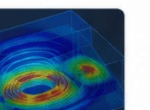
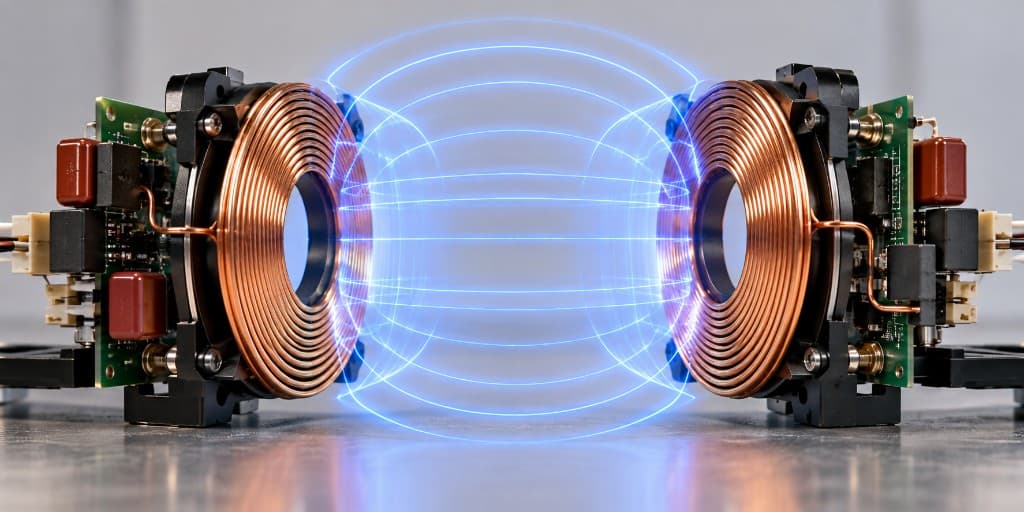
Transmitter and receiver coils with magnetic flux path

Our Capabilities

Five Pillars of Magnetic Excellence

Coil Engineering

01

Coil Engineering

TX/RX coil geometries engineered for target power, frequency, and air-gap requirements.

Learn more
  • Coil Topologies
  • Coil Materials
  • Coil Optimization
Magnetic Structure

02

Magnetic Structure

Ferrite and shielding structures that guide flux, cut loss, and protect surrounding systems.

Learn more
  • Ferrite Design
  • Magnetic Shielding
  • Flux Guide
Coupling Engineering

03

Coupling Engineering

Field shaping for higher coupling, cleaner transfer, and improved power density.

Learn more
  • Coupling Efficiency
  • Air Gap Optimization
  • Power Density
Misalignment Engineering

04

Misalignment Engineering

Tolerance design so docking variation in position and angle does not break charging.

Learn more
  • X/Y Offset
  • Z Distance
  • Angular Tolerance
Magnetic Simulation

05

Magnetic Simulation

Electromagnetic simulation that validates flux distribution before hardware is built.

Learn more
  • Flux Distribution
  • ANSYS Maxwell
  • JMAG
Power Layer

Power Electronics

High-Efficiency Power Conversion Architecture

A complete power path from DC input to regulated output — engineered for conversion efficiency, thermal stability, reliability, and scalable wireless energy systems.

  • High Efficiency
  • High Reliability
  • Excellent Thermal Performance
  • Wide Power Range
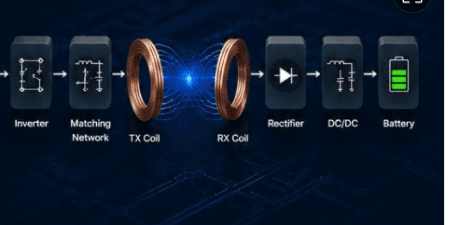
Power conversion architecture from DC input through wireless transfer to battery

01

Inverter

Inverter

The inverter converts DC input into high-frequency AC power, providing the excitation required for efficient wireless energy transfer. Different inverter topologies are selected based on power level, efficiency, switching frequency, and system architecture.

Learn more

Core Technologies

  • Half Bridge
  • Full Bridge
  • LLC
  • Phase Shift

02

Matching Network

Matching Network

The matching network tunes the transmitter and receiver into resonance, minimizing reactive power while maximizing transfer efficiency. Different compensation topologies are selected according to power level, coupling conditions, and application requirements.

Learn more

Core Technologies

  • Series
  • Parallel
  • LCC
  • LCL
  • CLC

03

Rectifier

Rectifier

The rectifier converts the received high-frequency AC power into usable DC power. Advanced rectification technologies improve conversion efficiency while reducing conduction losses and heat generation.

Learn more

Core Technologies

  • Diode Rectifier
  • Synchronous Rectifier
  • Active Rectifier

04

DC/DC

DC/DC

The DC/DC stage regulates the rectified voltage into the required output level for battery charging or system power supply. Different converter topologies provide flexible voltage conversion for various applications.

Learn more

Core Technologies

  • Buck
  • Boost
  • Buck-Boost

05

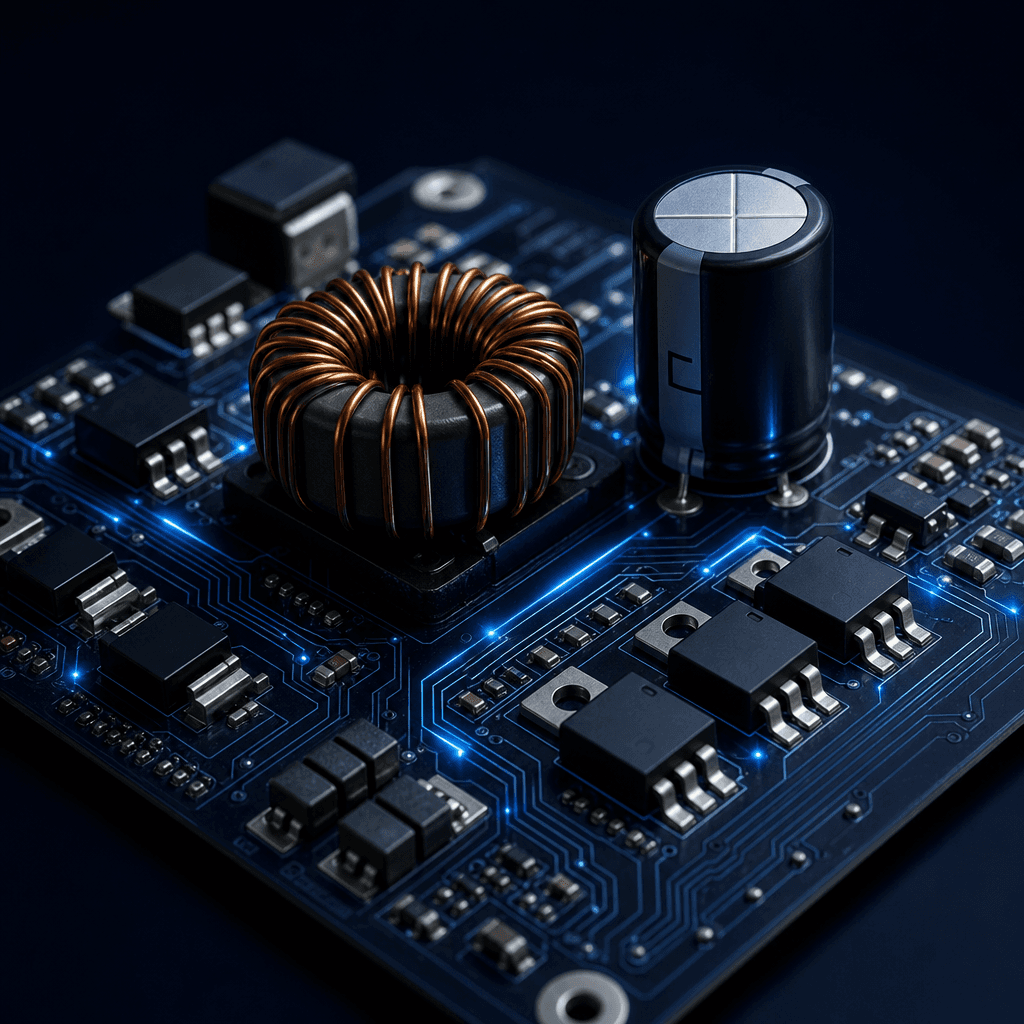
High Frequency Power

High Frequency Power

High-frequency power devices determine the switching performance, efficiency, thermal behavior, and power density of the wireless power system. Wide-bandgap semiconductor technologies enable higher switching frequencies and more compact system designs.

Learn more

Core Technologies

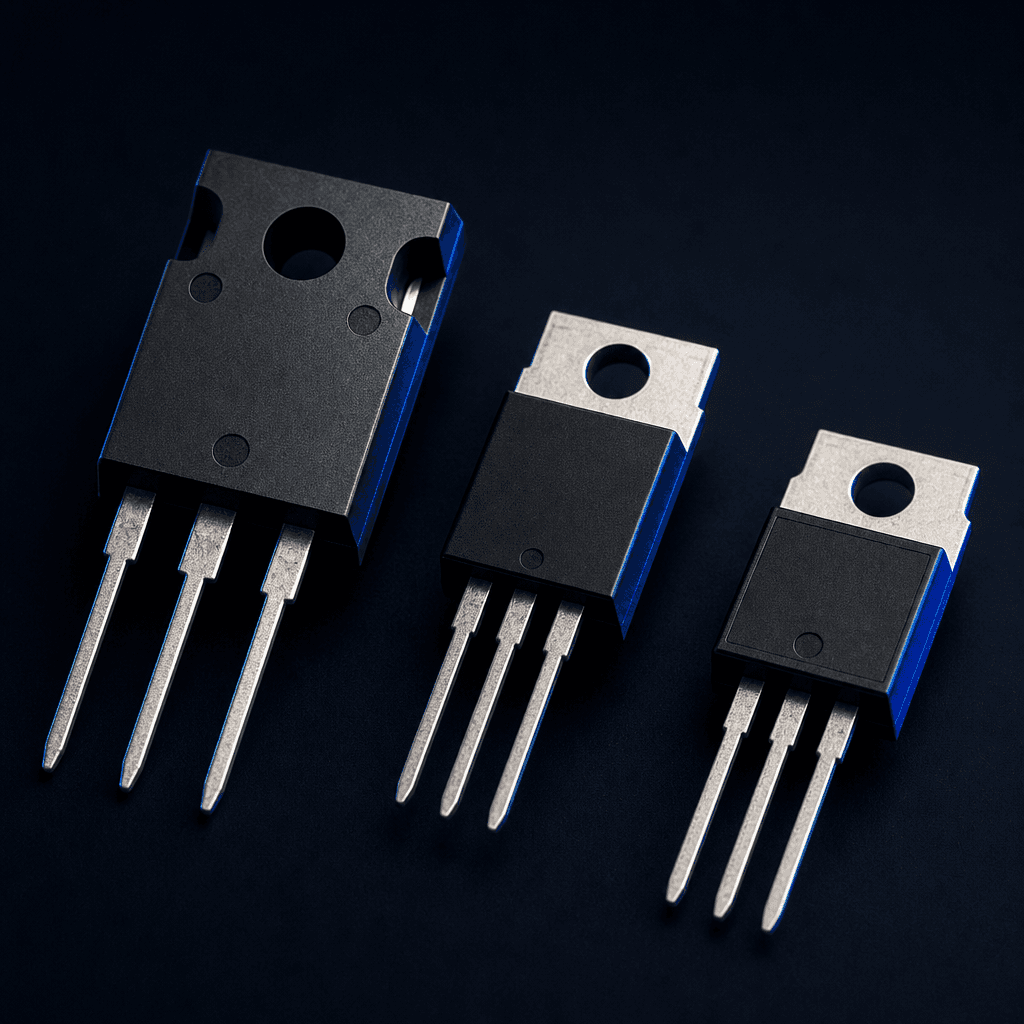
  • MOSFET
  • GaN
  • SiC
Control Layer

Intelligent Control

Real-Time Control for Safe, Efficient Wireless Power

A closed-loop control architecture that senses, decides, and protects across the TX/RX link — keeping resonance locked, power stable, and operation safe under changing load and alignment.

  • Real-time Control
  • Adaptive Regulation
  • Safety Protection
  • System Communication
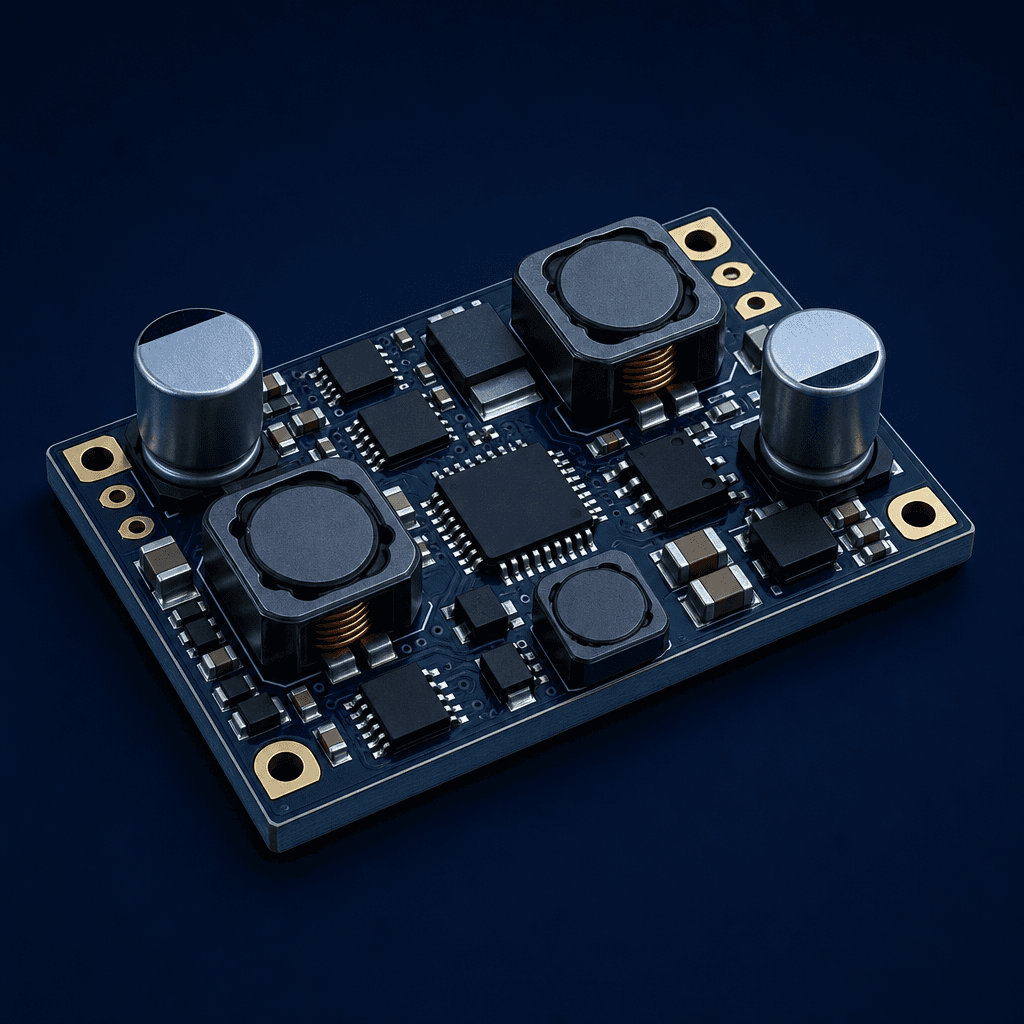
Intelligent control architecture with TX driver, RX system, and MCU

Control Intelligence Capabilities

Intelligent Control Features

01

Frequency Tracking

Continuously tracks and locks onto the optimal resonant frequency to maximize power transfer efficiency.

Learn more
  • Auto Frequency Sweep
  • Resonance Detection
  • Real-time Tracking

02

Power Regulation

Supports constant power, constant voltage, and constant current modes to meet different charging needs.

Learn more
  • Constant Power (CP)
  • Constant Voltage (CV)
  • Constant Current (CC)

03

Coil Detection

Detects whether a receiver is present and evaluates its status to ensure safe and efficient operation.

Learn more
  • Receiver Presence Detection
  • Link Quality Monitoring
  • Fault Indication

04

Foreign Object Detection FOD
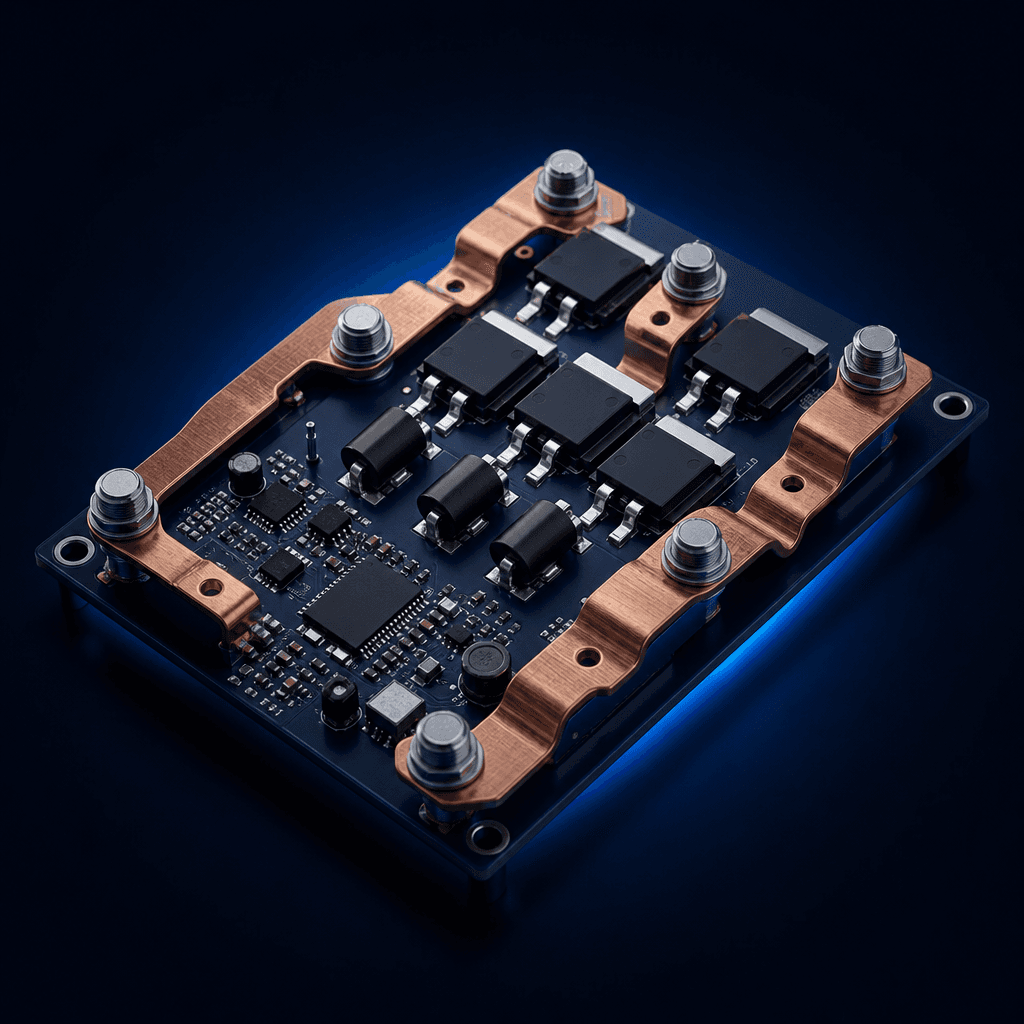
Identifies foreign metal objects on the charging surface to prevent heating and ensure user safety.

Learn more
  • Metal Object Detection
  • Power Reduction
  • Safety Shutdown

05

Thermal Protection

Monitors temperature of key components in real time to prevent overheating and protect the system.

Learn more
  • Temperature Monitoring
  • Over-Temperature Protection
  • Smart Fan / Power Derating

06

Adaptive Charging

Dynamically adjusts control strategy and output power based on load changes and system conditions.

Learn more
  • Load Monitoring
  • Dynamic Power Adjustment
  • Efficiency Optimization

07

Multi-coil Control

Intelligently switches and coordinates multiple transmitter coils for seamless power coverage and efficiency.

Learn more
  • Coil Selection
  • Automatic Switching
  • Power Balancing

08

Communication

Provides reliable communication between transmitter, receiver, battery, and host systems.

Learn more
  • Qi Protocol
  • CAN Bus
  • UART
  • BLE
System Layer

System Layer

Ensure reliability, safety, compatibility, and production excellence.

EMC

Electromagnetic compatibility for industrial and regulated environments.

Learn more

Thermal

Thermal design that sustains continuous duty cycles.

Learn more

Reliability

Architecture choices that hold up over long operating life.

Learn more

Mechanical

Mechanical integration for docks, housings, and platforms.

Learn more

Safety

Protection and fail-safe behavior designed into the stack.

Learn more

Manufacturability

Production-ready design for scale, yield, and consistency.

Learn more

Platform Outcomes

What the platform delivers.

High Efficiency

Optimized transfer across physics, magnetics, and power conversion.

Stable Power

Consistent delivery under alignment, load, and environmental variation.

Safe & Reliable

Control, protection, and system design built for continuous operation.

Scalable Platform

A layered architecture that grows from modules to full platforms.

Broad Applications

Ready for robotics, automation, medical, agriculture, and autonomous systems.