
Artículo wiki · Colección 03
Bobina DD
Referencia técnica sobre Bobina DD para el diseño, integración e implementación de sistemas de energía inalámbrica.
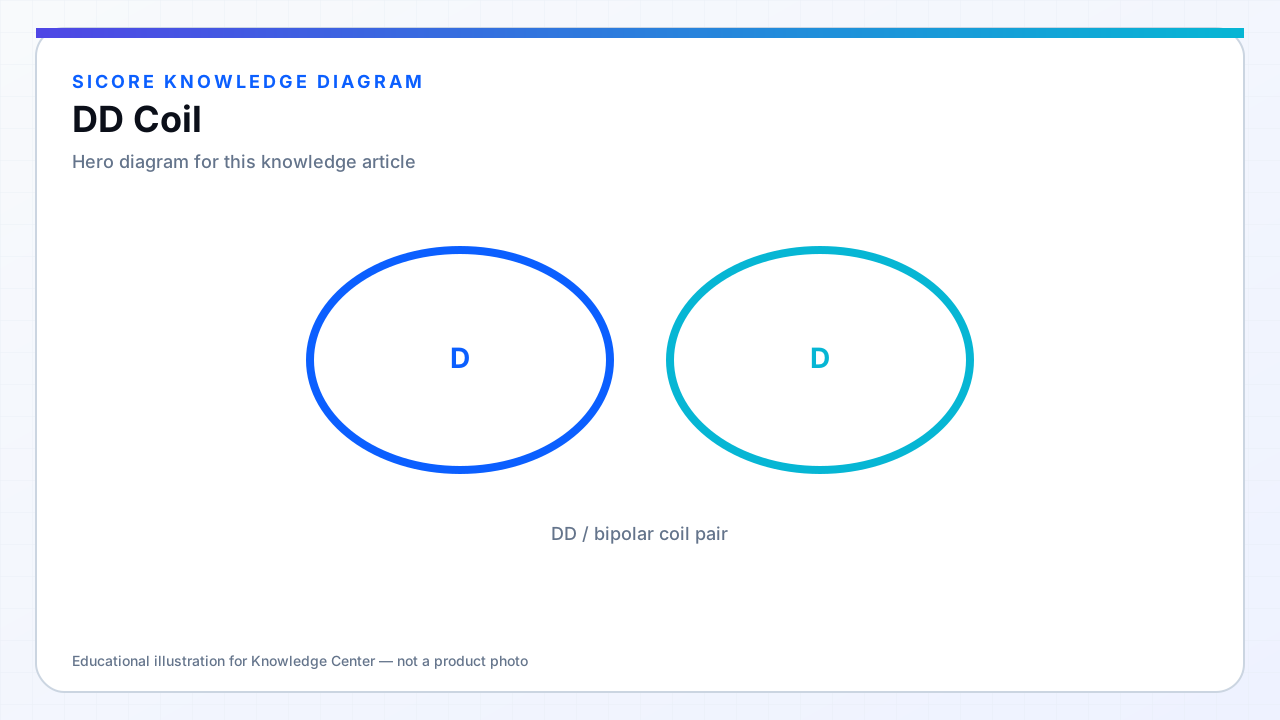
A DD (double-D) coil uses two D-shaped windings placed side by side with opposing or complementary current directions to shape the magnetic field. The goal is a coupling profile that degrades more gently under lateral offset than a single circular spiral, which is why DD pads appear in automotive and industrial WPT where the receiver may slide along one axis during docking.
DD coils trade a more complex winding and ferrite layout for an extended usable coupling region. They are not automatically better in all directions — offset along the seam between the two Ds can behave differently from offset perpendicular to it.
01Benefits in AGV/AMR docking
- Wider lateral tolerance along the pad long axis when oriented correctly.
- Ability to steer flux upward with ferrite back-plate and flux guides.
- Often paired with magnetic alignment features on the vehicle approach.
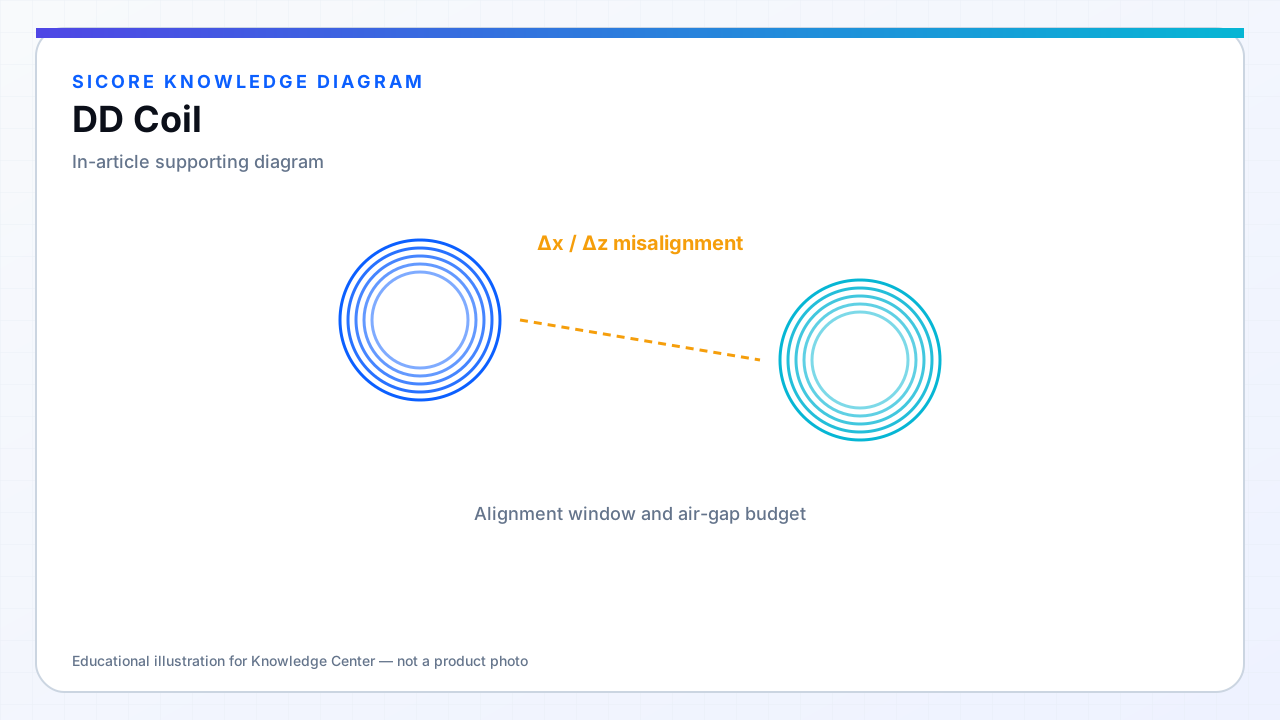
02Engineering challenges
Balancing the two D legs so current shares evenly — imbalance shifts the field null and hurts k. Ferrite must be cut and gapped to follow the DD outline without excessive fringing at the center seam. FEM validation of k(x,y) across the full dock envelope is standard practice for DD designs.
03Integration tips
- Align DD long axis with the direction of largest expected positional error.
- Document orientation on the pad housing — installing a DD pad rotated 90° silently breaks fleet performance.
- Pair with control that does not assume symmetric coupling when estimating power capability.