
Artículo wiki · Colección 03
Cable Litz
Referencia técnica sobre Cable Litz para el diseño, integración e implementación de sistemas de energía inalámbrica.
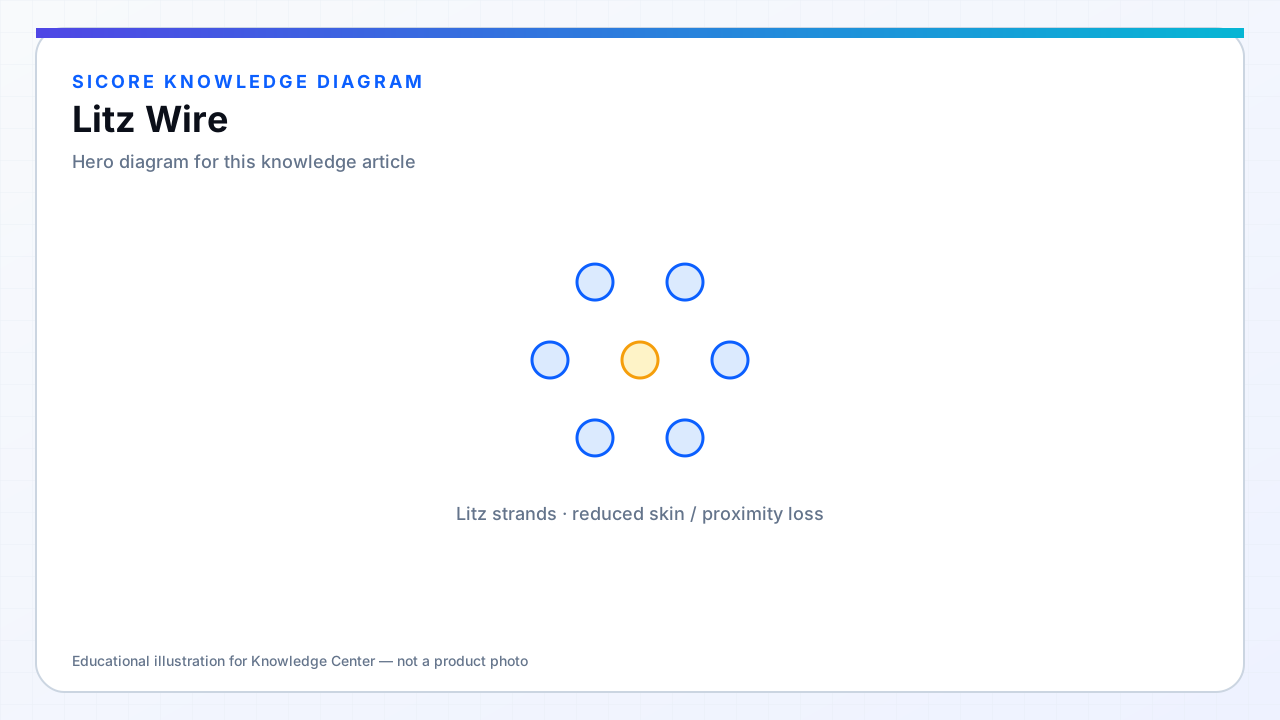
Litz wire bundles many fine insulated strands so each strand carries a fraction of the current, reducing skin-effect losses when strand diameter is small compared to skin depth at the operating frequency. Proper litz also uses optimized twisting (often Rutherford or bundled constructions) to balance proximity effect between strands.
For multi-kW docks in the 80–300 kHz class, litz is often the difference between a coil that stays below temperature limits and one that requires derating after a few minutes of charge.
01Selection parameters
- Operating frequency and required strand diameter (typically < skin depth / √N).
- Construction: number of bundles, twist pitch, outer diameter for winding bend radius.
- Insulation class and potting compatibility — some varnishes fail under epoxy chemistry.
- Termination: solder pots, ultrasonic weld, or crimp — bad terminations dominate loss.
02Practical notes
Litz is not free inductance — packing factor lowers fill compared to solid wire, which may require more turns or larger area for the same L. Cost and lead time exceed round magnet wire; specify vendor repeatability for fleet builds. Measure AC resistance with an impedance analyzer, not a DC micro-ohmmeter.
03When solid wire still wins
- Very low frequency or low power where skin depth exceeds wire diameter.
- Single-turn or thick-foil planar designs where PCB or copper sheet is simpler.
- Prototypes where litz lead time blocks the program — with eyes open on thermal limits.