
Artículo wiki · Colección 04
Conversión AC/DC
Referencia técnica sobre Conversión AC/DC para el diseño, integración e implementación de sistemas de energía inalámbrica.
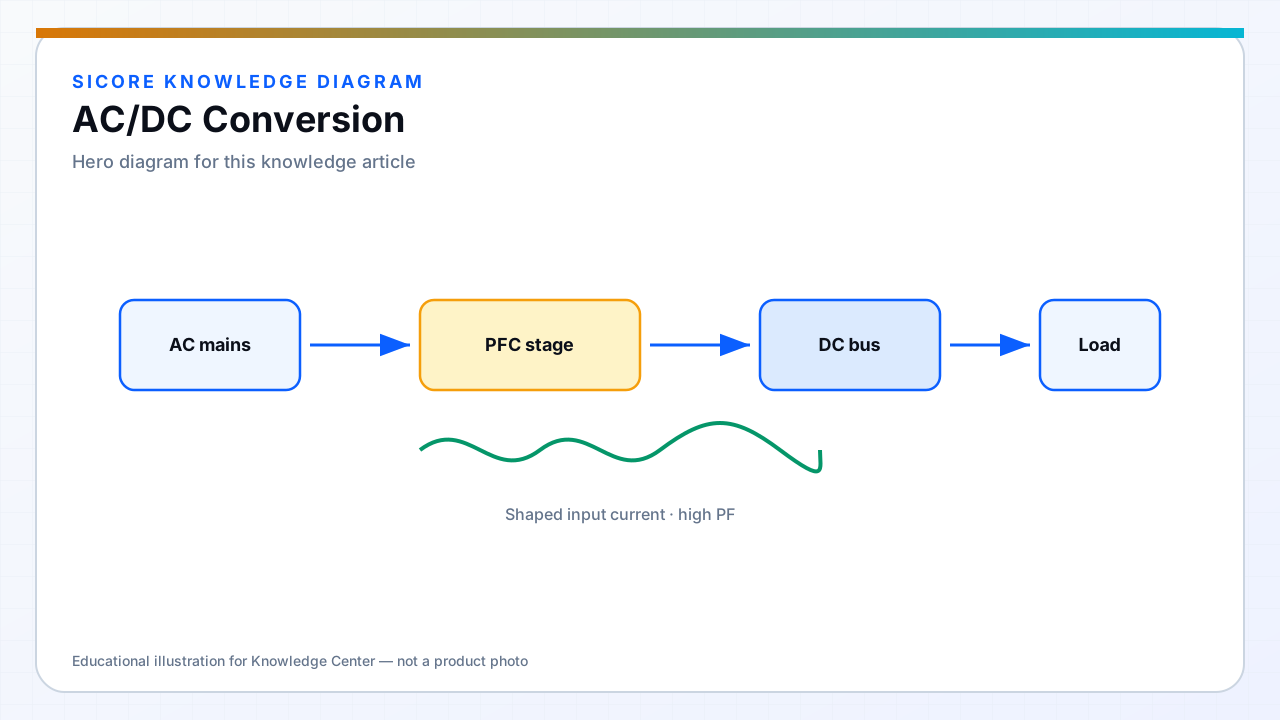
Fixed wireless charging docks connect to facility AC — single-phase or three-phase depending on power class. AC/DC conversion provides the DC bus that feeds the high-frequency WPT inverter. Poor front-end design shows up as flicker, harmonic pollution, and undervoltage trips that idle an entire AGV fleet.
Industrial sites often have stiff or weak grids, long cable runs, and shared transformers with heavy motor loads. The dock front end must tolerate that environment.
01Front-end building blocks
- Diode or active bridge rectification to intermediate DC.
- Power factor correction for harmonic compliance and usable RMS current.
- Bulk capacitance and inrush limiting for the DC link.
02Interaction with WPT load
The WPT inverter draws pulsating power at twice the line frequency on the DC bus unless PFC shapes input current. During light load or idle, the front end must still maintain bus voltage without overcharging capacitors. Coordinate soft-start on the AC side with transmitter enable logic.
03Deployment checklist
- Verify phase rotation and nominal voltage at each install site.
- Specify breaker and wire size for continuous dock duty, not peak nameplate alone.
- Monitor THD and power factor where multiple docks share one feeder.