Artículo wiki · Colección 09
Métodos de Enfriamiento
Referencia técnica sobre Métodos de Enfriamiento para el diseño, integración e implementación de sistemas de energía inalámbrica.
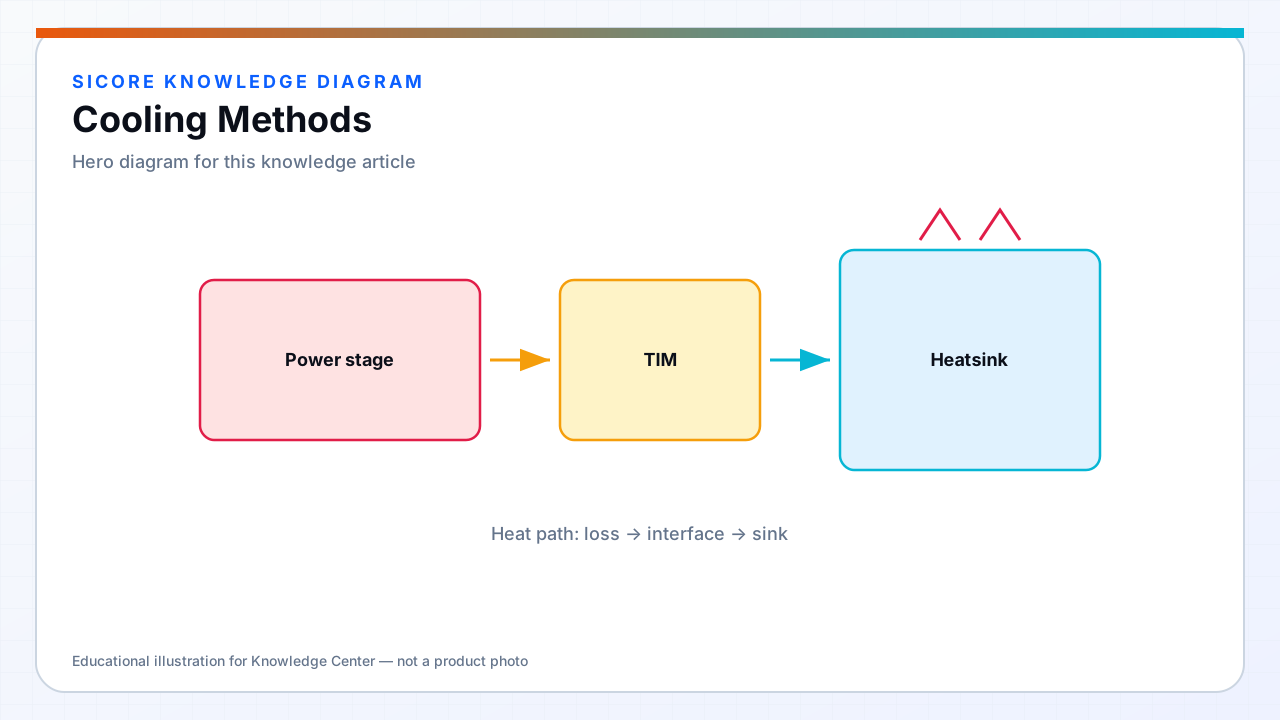
Cooling method selection begins from loss budget and environment: a 3 kW receiver in a ventilated AMR may remain fully passive, while a 15 kW floor-flush dock in a sealed pit requires forced air or liquid cooling to maintain ferrite and inverter margins during consecutive vehicle charging. SiCore maps cooling class to SKU power rating and deployment geography — passive-first where acoustics and maintenance matter, active where power density demands it.
Cooling interacts with IP rating and contamination: warehouse dust clogs fan filters; wash-down zones require fan placement outside spray path or sealed convection-only designs with derated continuous power.
01Passive cooling techniques
- Large thermal mass: dock plate and frame absorb transient peaks during session ramp without immediate fan need.
- Chimney effect: duct hot air from pit to sidewall louvers above floor level where dust accumulation is lower.
- Receiver chassis as heat exchanger: aluminum belly plate thermally tied to inverter spreader.
- Power derating firmware: reduce charge power when passive-only SKU approaches temperature threshold.
- Coil Litz and parallel strand sizing to limit copper loss density before external cooling required.
02Active air and liquid cooling
Dock fans use tach feedback and firmware interlock — fan fault triggers immediate power derating or session abort per safety case. Fan curves are validated at 50 °C inlet to avoid underflow in summer pits. Redundant fan configurations appear on mission-critical logistics lanes where charge downtime equals line stop.
Liquid-cooled cold plates on dock inverter modules appear in SiCore high-power reference designs above ~20 kW or where acoustic limits prohibit fans. Coolant loops integrate facility water or closed glycol circuits with leak detection and electrical isolation barriers; receiver-side liquid cooling remains rare due to vehicle maintenance burden.
03System-level cooling coordination
BMS and vehicle thermal management may reject charge current when pack or cabin HVAC is saturated — SiCore dock firmware accepts reduced setpoints without hunting. Fleet scheduling avoids stacking multiple high-power AGVs on adjacent pads sharing a poorly ventilated aisle pocket. Cooling method is documented in pad commissioning checklist: blocked louvers and missing pit grates are field defects with same severity as miswired interlock.