
Wiki article · Collection 06
Opportunity Charging
Engineering reference on Opportunity Charging for wireless power system design, integration, and deployment.
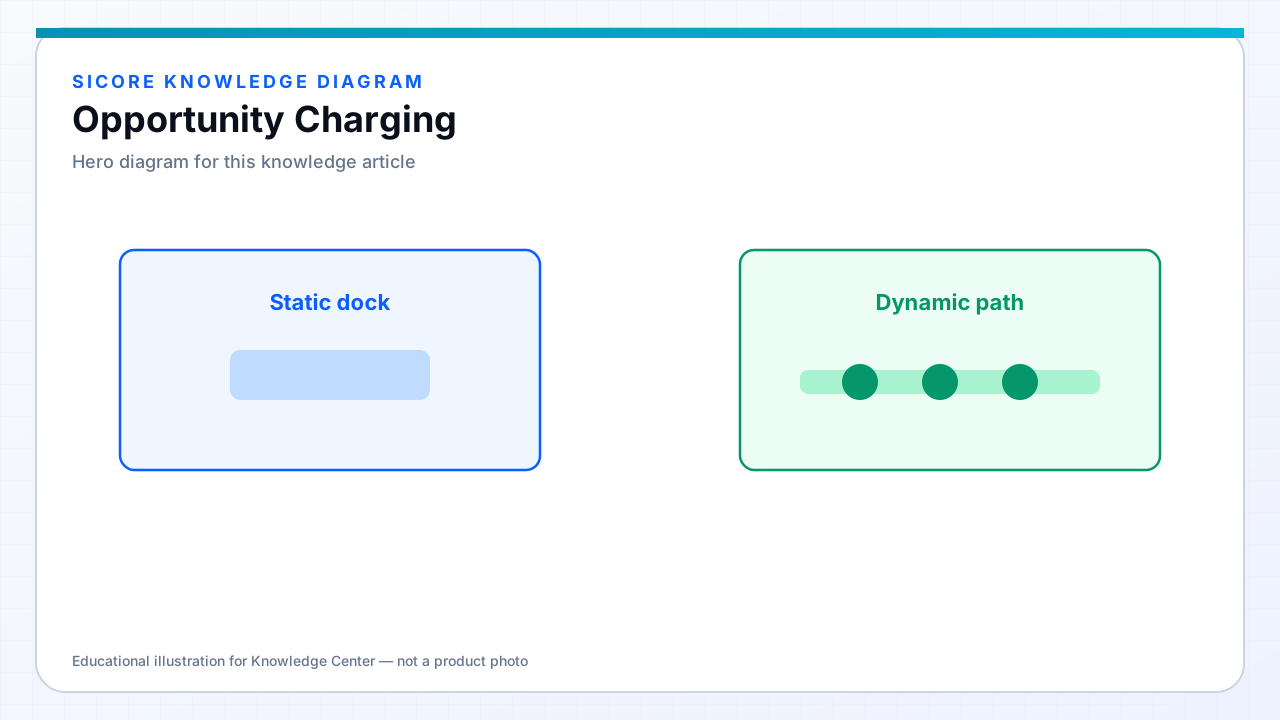
Opportunity charging exploits dwell time that already exists in the workflow. An AMR waiting at a pick face for the next order, an AGV buffering at a conveyor handoff, or a robot parked during a batch change — each idle window can deliver coulombs if a pad is within navigation reach.
Wireless opportunity charging removes friction: no manual plug-in, no pin wear, and fast engagement when dock alignment is engineered into the station layout.
01Where opportunity pads pay off
- High-traffic pick-and-place stations with predictable dwell exceeding alignment plus ramp time.
- Loop routes with natural pause points near the end of each cycle.
- Buffer zones where robots queue anyway — charge while waiting for downstream capacity.
- Shift-boundary staging areas where robots idle before the next wave dispatches.
02Design constraints
Opportunity windows are short — seconds to a few minutes — so load detect, frequency tracking, and power ramp must settle quickly. SiCore fast-start dock firmware pre-biases resonant frequency from the last successful mate at that pad and uses staged ramp profiles tuned for partial SOC top-offs rather than full CC/CV cycles.
03Fleet software coordination
Not every idle moment should trigger charging: the fleet manager balances opportunity top-offs against pad wear, thermal accumulation, and mission urgency. SiCore APIs expose pause/resume and max-power caps so schedulers inject charge only when SOC margin and dwell time justify the dock overhead.