Artículo wiki · Colección 05
Optimización con IA
Referencia técnica sobre Optimización con IA para el diseño, integración e implementación de sistemas de energía inalámbrica.
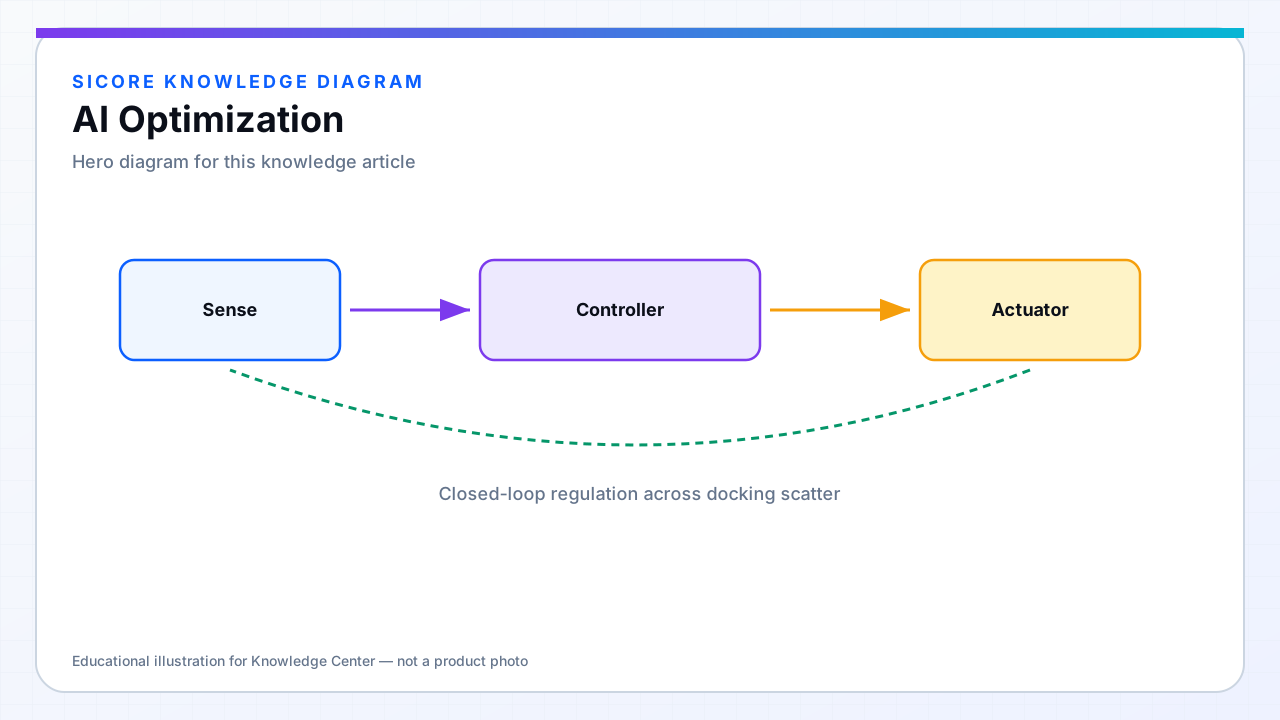
AI optimization in wireless power does not replace physics; it learns patterns that classical models under-specify. Historical dock events — alignment scatter, ambient temperature bands, shift schedules, and pack impedance trends — reveal where fixed tuning leaves efficiency or uptime on the table.
SiCore applies learning at the fleet edge: models infer expected k and thermal headroom before the robot finishes docking, pre-bias frequency search, and suggest charge profiles that respect battery aging signatures observed on that vehicle ID.
01High-value use cases
- Predict optimal frequency starting point from pose telemetry and past successful docks at that station.
- Cluster vehicles by effective receiver impedance drift and assign gentler CC ceilings to outlier packs.
- Detect anomalous loss signatures that precede connector wear, ferrite cracking, or capacitor degradation.
- Schedule opportunistic top-offs during idle windows without starving peak-shift throughput.
02Guardrails matter
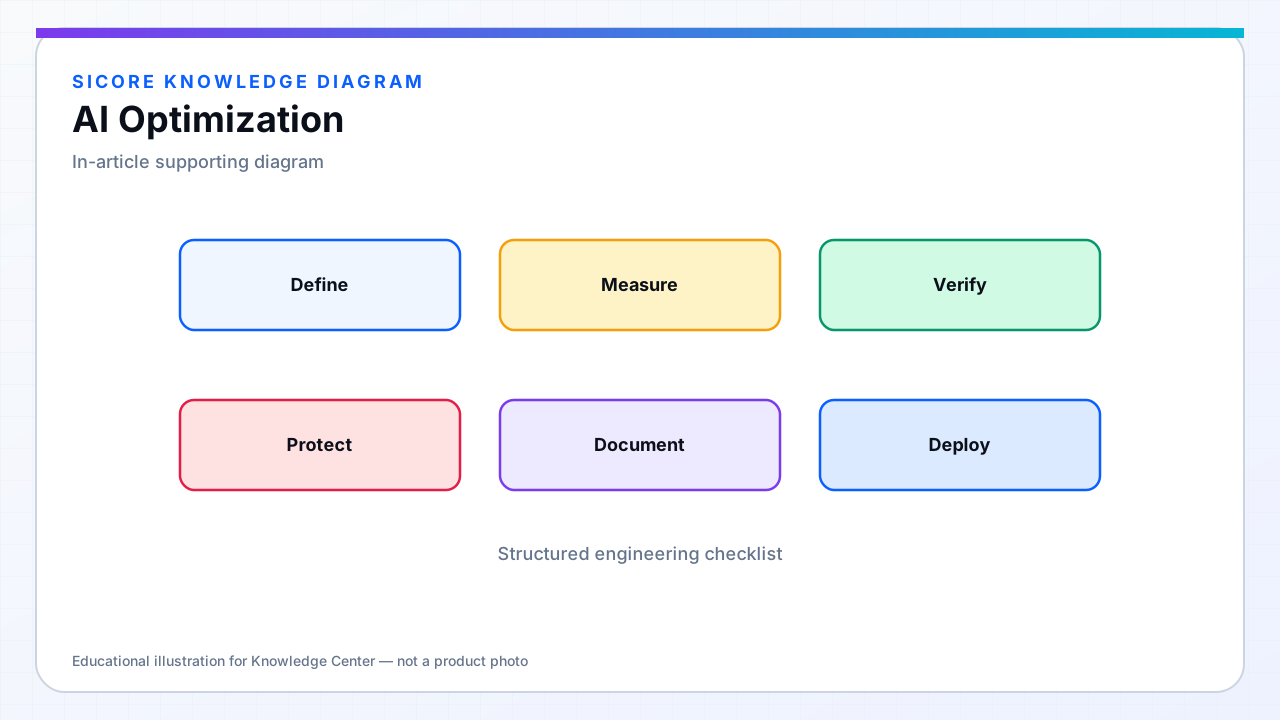
Learned setpoints run through the same hard limits as rule-based control: FOD thresholds, maximum pad temperature, ZVS loss detection, and communication timeouts. AI proposes; the safety envelope disposes. Models are versioned and validated on recorded dock traces before fleet rollout.
03What to measure
Log per-cycle features: alignment estimate, settled frequency, efficiency, charge delivered, time-to-full, and fault flags. Without labeled fleet data, AI becomes marketing. With it, optimization compounds — each thousand dock cycles refines the map your mechanical tolerances alone cannot encode.