
Artículo wiki · Colección 05
Detección de Objetos Vivos
Referencia técnica sobre Detección de Objetos Vivos para el diseño, integración e implementación de sistemas de energía inalámbrica.
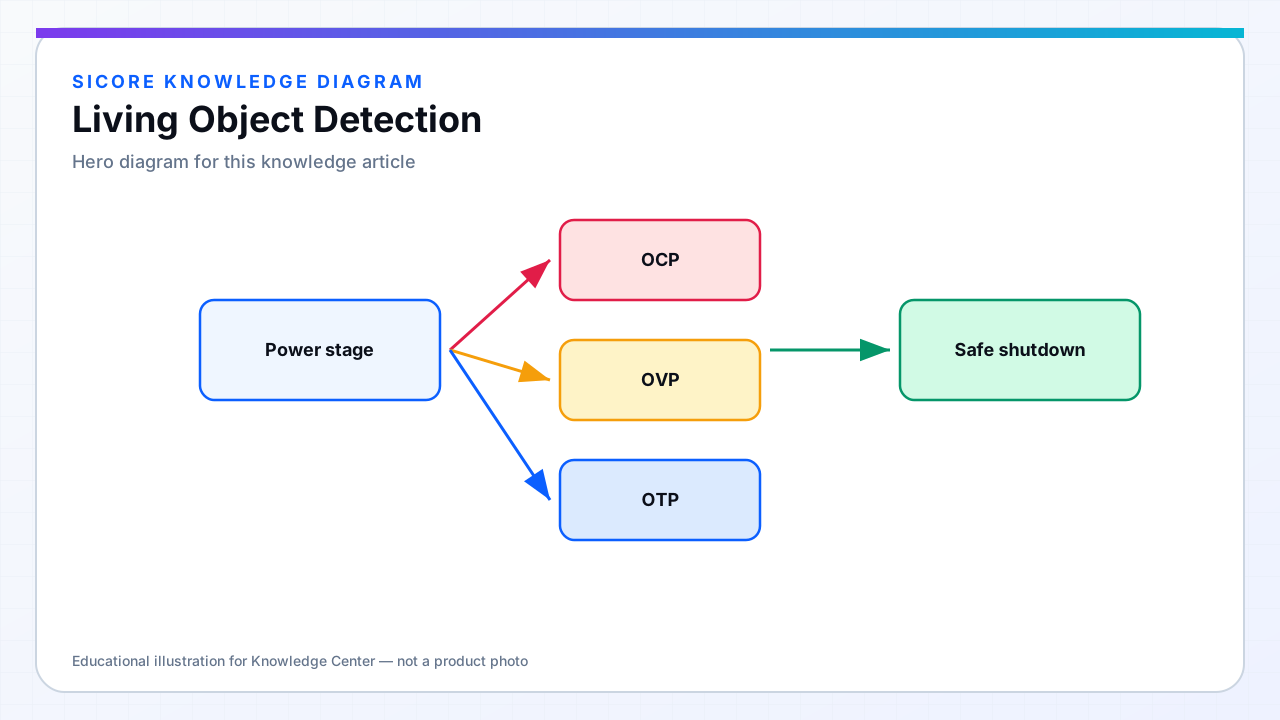
Living object detection (LOD) addresses organisms that must not be heated by stray fields — hands during maintenance, warehouse staff stepping over a low pad, or pets in facilities that mix service robots with public access.
LOD builds on FOD physics but adds conservative limits, faster shutdown, and often multimodal sensing because biological tissue has different coupling and regulatory exposure context than a steel bolt.
01Layered protection
- Primary FOD loss and Q monitoring with stricter trip margins when human-presence mode is active.
- Proximity sensors, light curtains, or vision zones around high-power pads in mixed-traffic areas.
- Reduced standby probe power and shorter fault reaction times during maintenance windows.
- Fleet software geofencing: full power only when the dock zone is confirmed clear.
02Operational modes
SiCore systems support mode profiles — production charging with standard FOD, maintenance mode with lower caps and mandatory presence sensors, and commissioning mode with explicit human acknowledgment. Mode transitions are logged for safety audits.
03Standards and site policy
Follow applicable exposure and product-safety requirements for your region and power class. LOD is as much a site layout and procedure decision as a firmware feature: pad height, marking, guarding, and training determine whether technology margins translate to real-world safety.