
Artículo wiki · Colección 11
ESD
Referencia técnica sobre ESD para el diseño, integración e implementación de sistemas de energía inalámbrica.
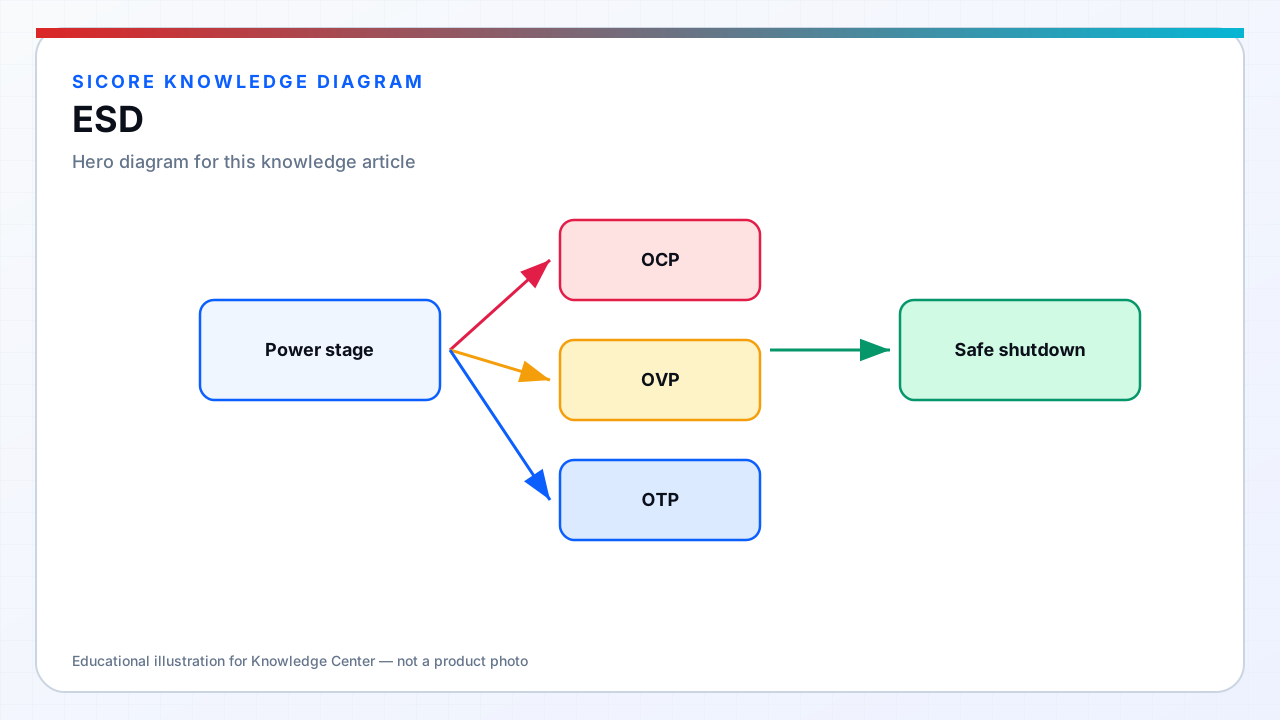
Electrostatic discharge transfers high peak current from charged personnel, vehicles, or materials into exposed connectors, touch surfaces, and enclosure seams — potentially corrupting safety state, resetting MCUs, or permanently damaging precision analog front-ends on alignment and FOD sensors. AGV warehouses combine low relative humidity from heating and cooling, triboelectric charging from plastic tote movement, and frequent operator contact with dock service panels and vehicle diagnostic ports.
SiCore designs for both component-level ESD robustness during manufacturing and system-level immunity per IEC 61000-4-2 — contact and air discharge to defined points with continued safe operation of charging and safety functions.
01Protection at interfaces
- TVS diode arrays on CAN, Ethernet, USB service, and digital IO with routed ground to chassis plane.
- Series resistors and ferrite on sensitive analog inputs — FOD sense, NTC, and alignment magnetometer paths.
- Shielded connectors with metal shell bonded to enclosure before signal reaches PCB.
- ESD-safe layout: keep protection devices at connector entry; avoid stubs between TVS and protected IC.
- Safety IO redundancy: E-stop and interlock inputs filtered but not delayed beyond response specification.
02System immunity and safe behavior
Immunity testing applies ±8 kV contact and ±15 kV air discharge to operator-accessible surfaces and cable ports while dock operates at rated charge power — performance criterion A on safety shutdown paths; criterion B acceptable on non-critical telemetry with logged recovery. ESD must not latch inverter in ON state, release interlocks, or corrupt safety CRC-protected configuration stored in flash.
Receiver boards mounted on AGV belly pans receive discharge from floor-level maintenance — enclosure design routes discharge current through chassis rather than through PCB signal traces. Fleet incidents of CAN error passive mode during charge correlate with unshielded service cables and are remediated through harness specification updates.
03Manufacturing and field service
ESD-controlled manufacturing with wrist straps, ionizers, and qualified packaging for FOD-sensitive analog assemblies. Field service guides require power isolation before connector mating, use of grounded tools, and prohibition of hot-plugging safety harnesses. Replacement modules are shipped in conductive bags with pin shorting — installation checklists verify torque on grounding screws disturbed during service.