
Artículo wiki · Colección 11
FOD
Referencia técnica sobre FOD para el diseño, integración e implementación de sistemas de energía inalámbrica.
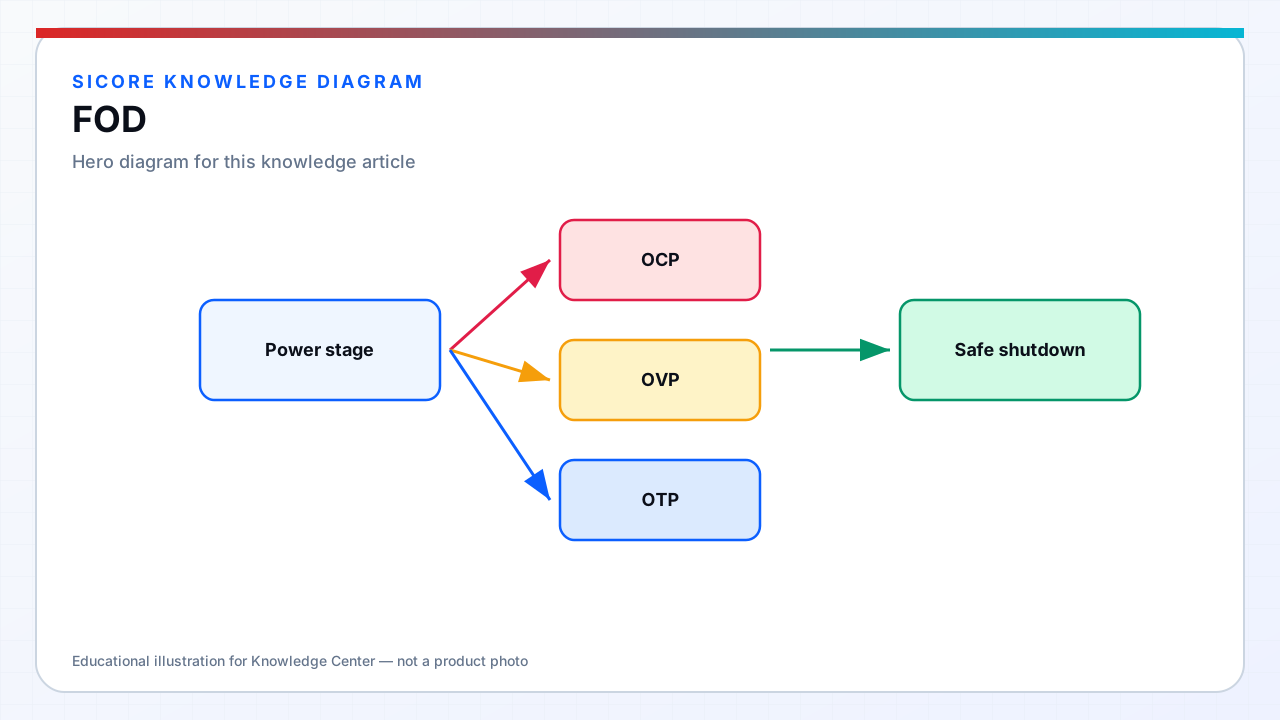
Foreign object detection (FOD) identifies conductive or lossy objects in the magnetic coupling path that would absorb RF energy and heat dangerously without receiving intended charge — metal shavings, tools, foil wrappers, and modified vehicle hardware left on pad or receiver surfaces. SiCore FOD is a safety function, not merely efficiency optimization: undetected objects can exceed ignition temperature of warehouse debris or damage vehicle composites during unattended overnight charging.
Industrial AGV environments generate metal contamination from pallet rack maintenance, grinding in adjacent bays, and fastener drops during vehicle service — FOD sensitivity must balance false positives that stop fleet operations against false negatives that create fire risk.
01Detection techniques
- Power loss analysis: compare transmitted vs received power — unexplained loss triggers derating or shutdown.
- Q-factor and resonant frequency shift: pre-charge ping detects detuning from foreign metal before full power.
- Thermal monitoring: pad surface and coil back-plate NTC arrays detect localized heating inconsistent with normal transfer.
- Multi-frequency sensing: auxiliary low-power scans at offset frequencies improve small object discrimination.
- Baseline calibration: per-pad and per-vehicle pairing accounts for receiver coil and ferrite signature.
02Operational integration
FOD executes in sequence: object detection ping before full energization, continuous monitoring during charge, and periodic re-check when power level changes. Fleet manager receives FOD trip codes with pad ID and timestamp — maintenance clears debris before reset; override is restricted to qualified personnel with logged justification. Receiver-side FOD complements dock detection when metal attaches to vehicle belly — asymmetric loss triggers shutdown even if dock sensors alone appear nominal.
False positive sources include wet floors, steel plate reinforcement directly under pad, and non-standard receiver retrofits — commissioning calibration captures site-specific baseline. Firmware updates that modify FOD thresholds undergo regression against recorded field waveforms from known good and known fault sessions.
03Standards and validation
SiCore FOD validation uses standardized test objects — aluminum and steel foils at defined sizes and positions per IEC 61980-inspired industrial protocols adapted for SiCore power levels. Thermal imaging confirms maximum object temperature remains below material limits at worst-case alignment. FOD failure modes — sensor drift, flooded pit shorting sense lines, damaged ferrite changing baseline — are included in FMEA with defined safe default of power inhibition when plausibility checks fail.