
Artículo wiki · Colección 03
Diseño Térmico de Bobinas
Referencia técnica sobre Diseño Térmico de Bobinas para el diseño, integración e implementación de sistemas de energía inalámbrica.
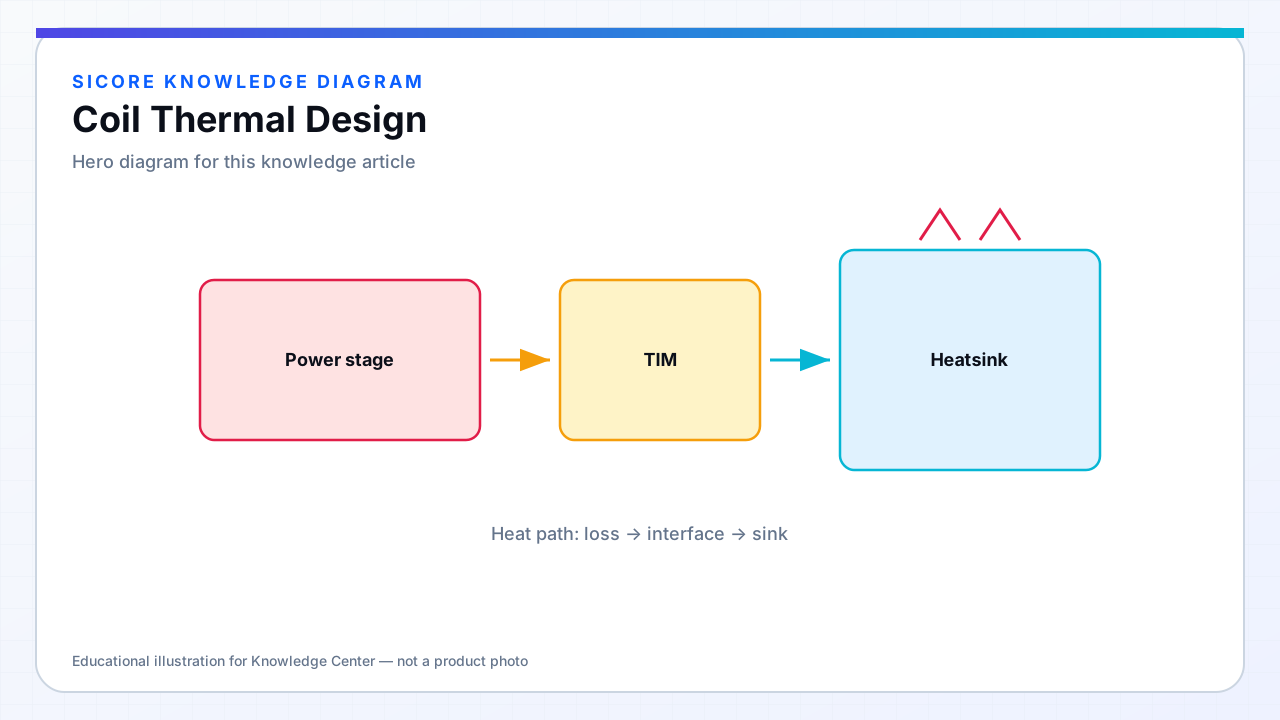
Coil thermal design moves heat from copper and ferrite to ambient through conduction (potting, spreader plates, floor tile), convection, and sometimes liquid cooling in extreme power classes. AGV docks may charge back-to-back vehicles with minimal cool-down — steady-state temperature defines the rating, not a 60-second burst.
Thermal resistance from inner turns to the outer case often dominates. A pad that feels warm on the surface may already exceed insulation class temperature at the innermost turn.
01Design elements
- Aluminum spreader bonded to ferrite back-plate.
- Thermally conductive potting with controlled viscosity for void fill.
- Floor tile integration with heat-conducting fillers vs pure epoxy cosmetic fill.
- Current derating curve vs ambient and duty cycle.
02Validation
Run thermal soak at max power, worst alignment, and max ambient in an enclosure matching install. Instrument with thermocouples on copper exit, ferrite center, and case. Cycle test: charge–depart–charge to catch cumulative heating in real throughput models.
03Field considerations
- Blocked ventilation grilles on pad housing raises thermal resistance.
- Sun-loaded outdoor pads need separate ambient profile.
- Thermal shutdown should log events for fleet maintenance — repeated trips indicate margin loss.