
Wiki article · Collection 07
SOH
Engineering reference on SOH for wireless power system design, integration, and deployment.
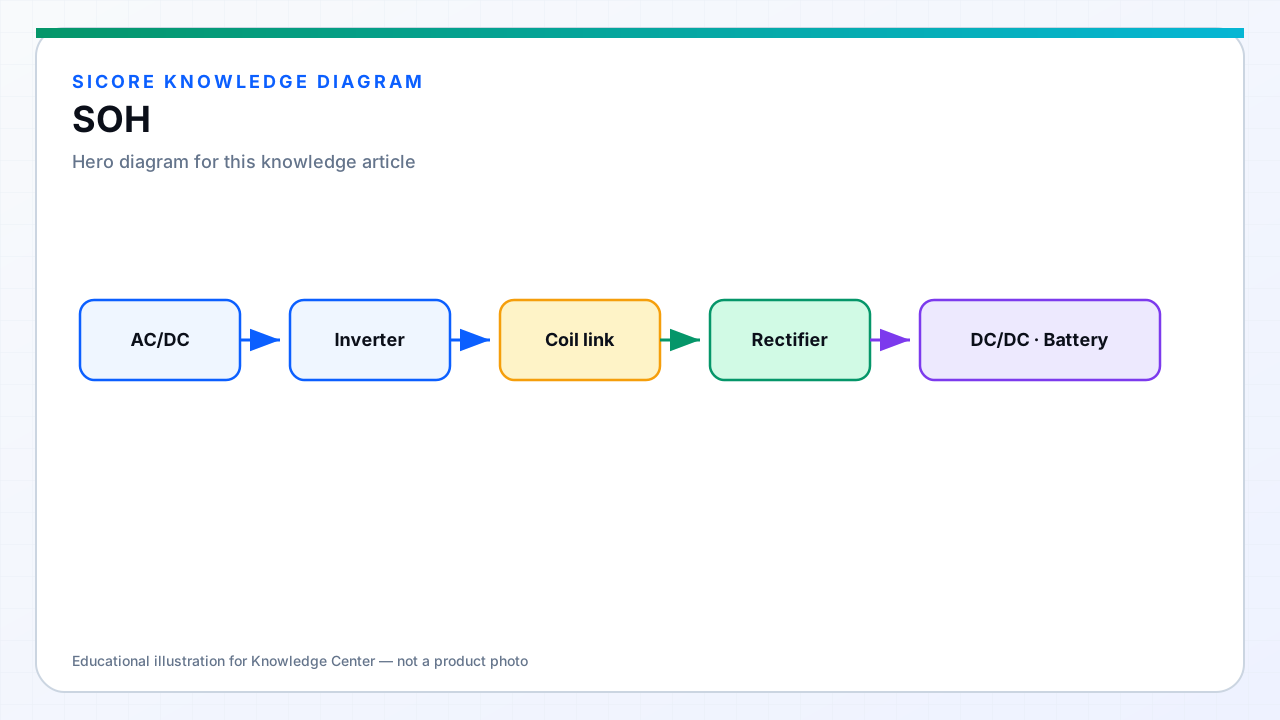
State of Health (SOH) quantifies how much capacity and power capability remain compared to a new pack — typically reported as a percentage of original rated capacity or as absolute available amp-hours. SOH drives replacement scheduling, warranty claims, and fleet energy planning: a pack at 80% SOH delivers fewer missions per charge and may charge slower if internal resistance has risen.
Wireless opportunity charging accelerates some degradation pathways (high SOC dwell, elevated temperature during fast charge) while reducing others (deep discharge cycles). SOH monitoring must account for this mixed stress profile rather than assuming laboratory cycle-test curves.
01SOH indicators
- Capacity fade: reduced amp-hours deliverable from full charge to cutoff voltage at reference conditions.
- Resistance increase: higher DCIR causes greater voltage sag under load and heat during charge/discharge.
- Self-discharge drift: elevated idle loss may indicate cell inconsistency or micro-short development.
- Cycle count and equivalent full cycles: aggregated from partial cycles using throughput-based weighting.
02Measurement approaches
Full capacity tests are impractical during production shifts, so BMS algorithms estimate SOH from partial discharge profiles, charge acceptance at reference conditions, or internal resistance trending during known load events. SiCore fleet analytics overlay wireless charge session data — energy delivered vs SOC gain — as an independent SOH cross-check when BMS estimates diverge from pad-side metering.
03Fleet lifecycle planning
Track SOH per vehicle alongside mission throughput and charge minutes. Packs declining faster than fleet average may indicate thermal management faults, cell imbalance, or aggressive charge profiles on specific routes. SiCore dashboards support SOH trending so replacement budgets and spare pack inventory align with actual degradation — not calendar age alone.