
Wiki article · Collection 06
Multi-Robot Charging
Engineering reference on Multi-Robot Charging for wireless power system design, integration, and deployment.
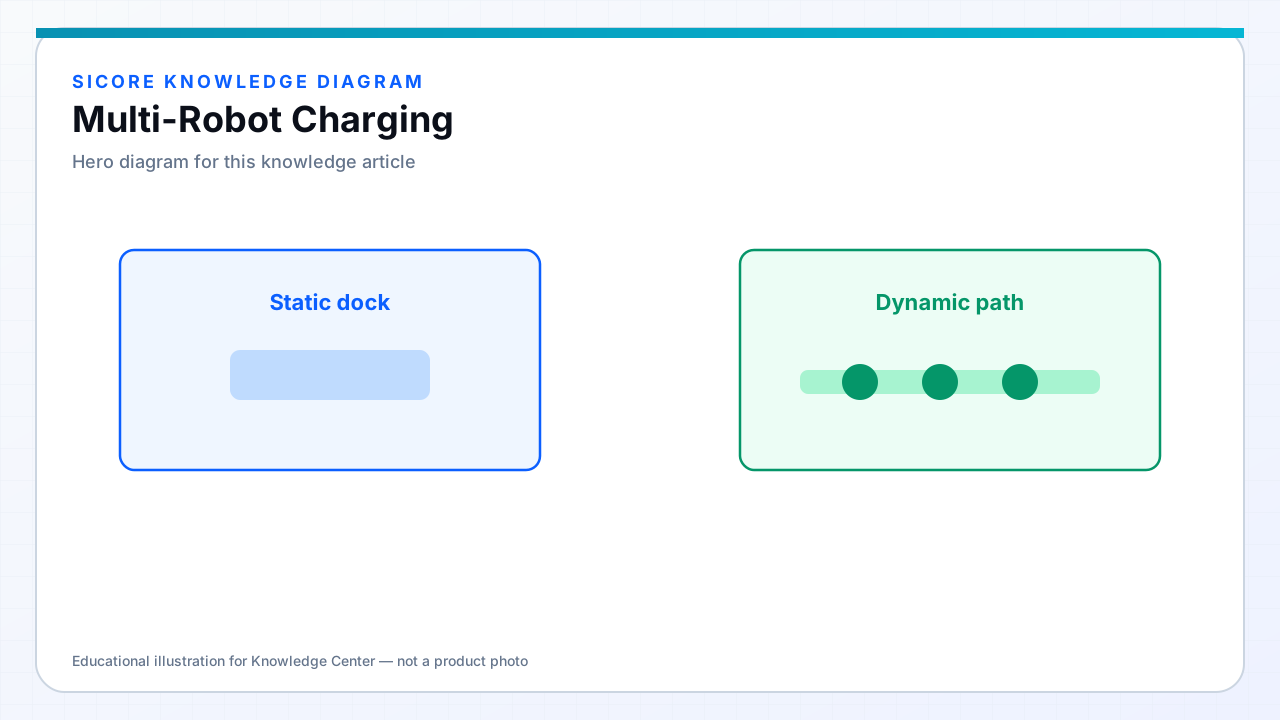
Multi-robot charging occurs when several vehicles charge at once in the same aisle, bay, or electrical feeder. Each active pad draws real power and emits magnetic flux; nearby pads and receivers can cross-couple, and upstream breakers see summed load.
SiCore multi-robot coordination ensures concurrent sessions stay within electrical and electromagnetic limits while maximizing throughput for waiting robots.
01Coordination challenges
- Aggregate power cap on shared feeders — dynamic derating when concurrent sessions exceed budget.
- Adjacent pad flux cross-talk affecting FOD baselines and coupling measurements.
- Pad assignment conflicts when multiple robots route to the same open station.
- Phase and frequency planning on multi-pad controllers to reduce inter-pad interference.
02SiCore load management
Central or edge load managers assign max power setpoints per active pad based on real-time site headroom. Priority tiers — mission-critical low-SOC robots vs idle top-off — resolve contention. Local controllers enforce limits even if communication to the manager drops, preventing unsafe overcurrent.
03Layout guidance
Minimum pad spacing, shielding between stations, and aisle traffic flow are co-designed at project stage. Simulation of worst-case concurrent charge — all pads active at rated power — validates breaker and transformer sizing before fleet go-live.