Wiki article · Collection 06
Autonomous Docking
Engineering reference on Autonomous Docking for wireless power system design, integration, and deployment.
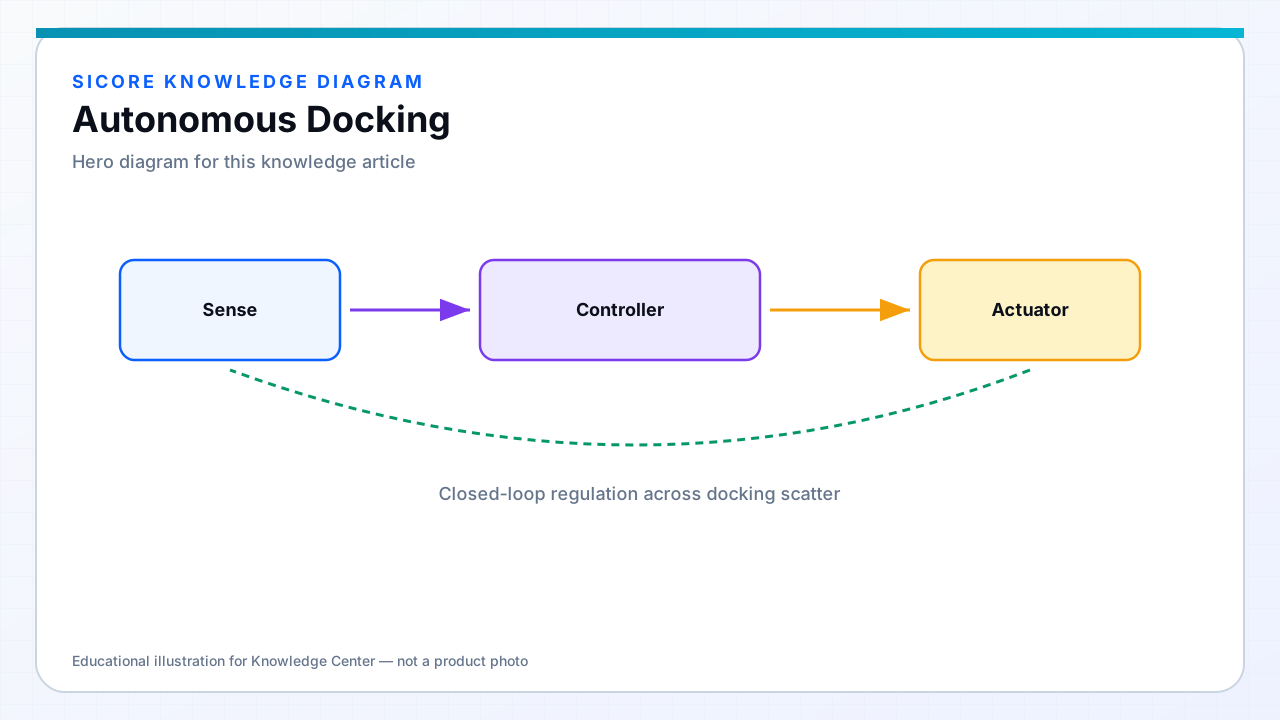
Autonomous docking is the operational outcome of combining fleet navigation, docking technology, and intelligent power control into one unattended cycle. The robot receives a charge task, plans a path to an available pad, executes precision approach, completes wireless handshake, charges to target SOC or time limit, and clears the station for the next vehicle.
SiCore autonomous docking assumes failure is routine: misalignment, occupied pads, and transient FOD trips are handled with retry logic and fleet-level rerouting, not operator calls.
01End-to-end workflow
- Charge task issuance from fleet manager based on SOC, schedule, and pad availability.
- Navigation to station with dynamic obstacle avoidance in shared aisles.
- Precision dock using automatic alignment, vision assist, or mechanical capture.
- Charge session execution with live SOC monitoring and early release if mission requires.
02Departure and station clearance
Autonomy does not end at full SOC — the robot must vacate the pad promptly so downstream charge demand is not blocked. SiCore session complete signals trigger departure maneuvers; fleet software penalizes extended post-charge dwell in pad assignment algorithms.
03Performance tuning
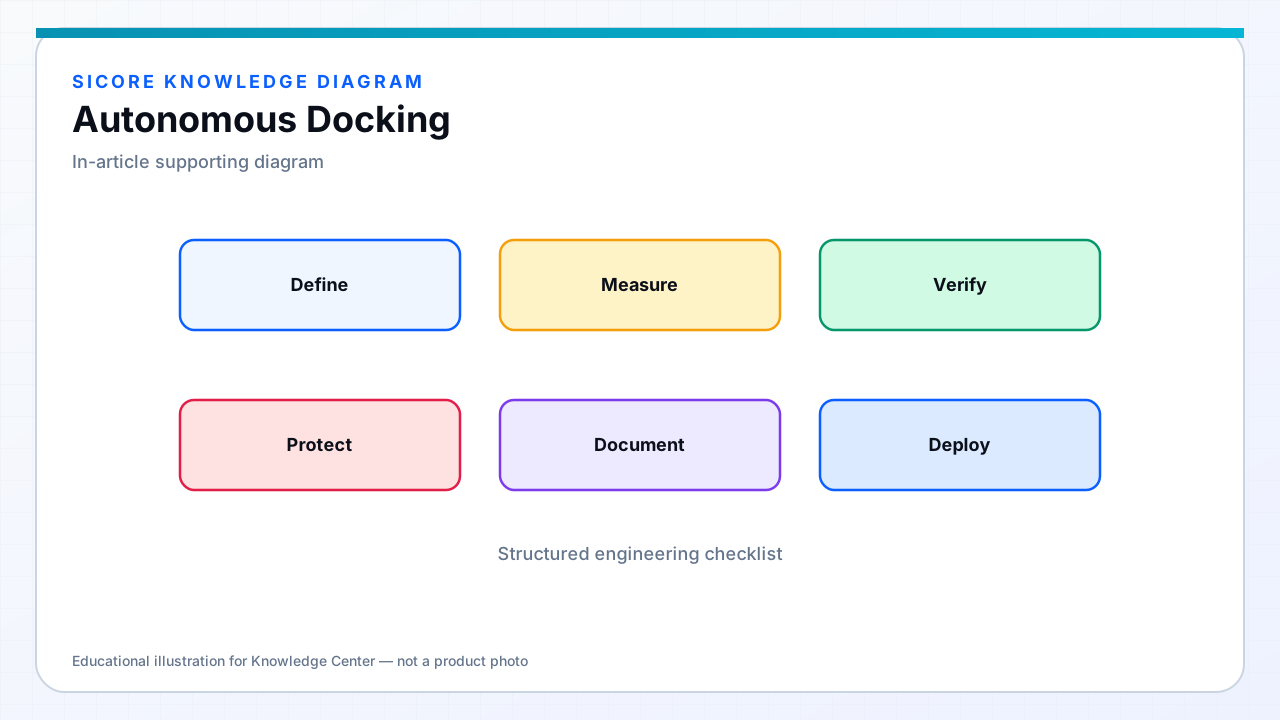
Autonomous docking KPIs include dock success rate, mean time to charge start, and charge minutes per shift hour. SiCore logs each phase separately so bottlenecks — slow navigation, alignment retries, or long frequency settle — are visible to both robotics and power engineering teams.