
Wiki article · Collection 06
Smart Charging Management
Engineering reference on Smart Charging Management for wireless power system design, integration, and deployment.
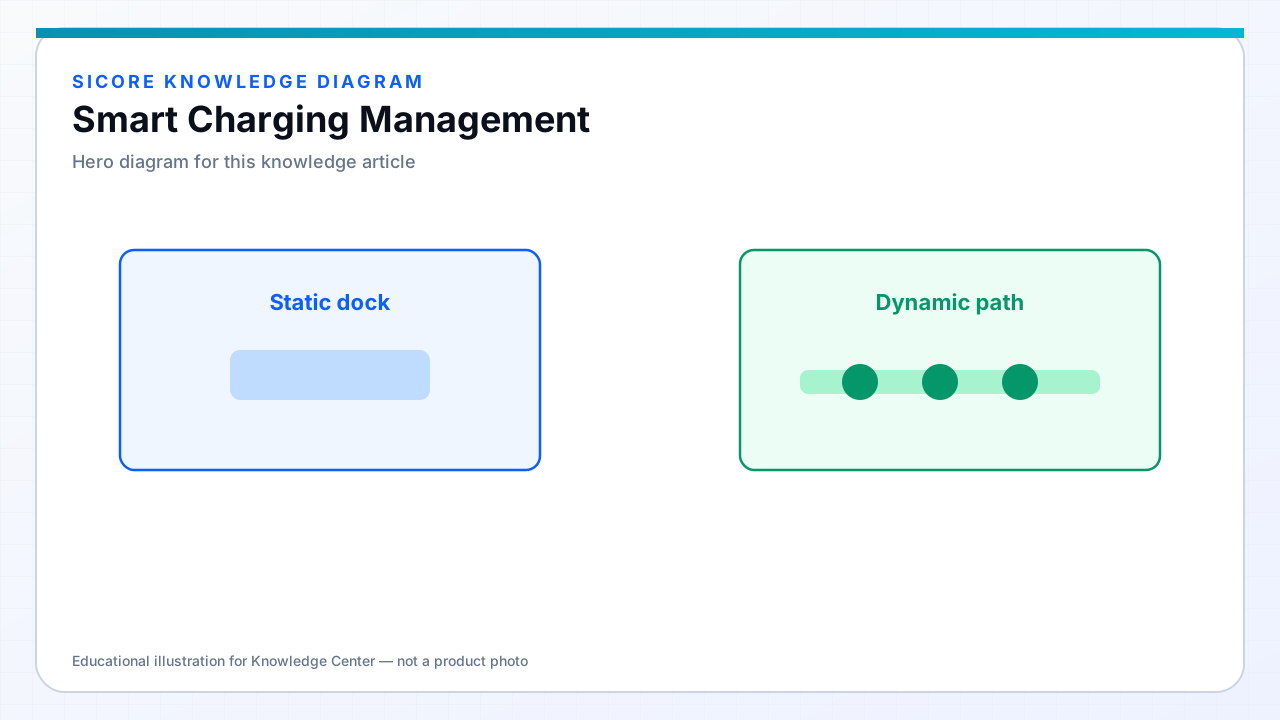
Smart charging management sits between fleet mission software and SiCore dock hardware. It decides who charges, when, at what power, and to what SOC — optimizing throughput, electricity cost, and battery longevity without violating local FOD and thermal safety envelopes.
The dock executes; the manager orchestrates. Distributed safety remains on the pad controller so a scheduler outage never leaves an unsafe power state unbounded.
01Management capabilities
- Per-vehicle SOC targets based on upcoming mission energy requirements.
- Dynamic power allocation under site load constraints and tariff windows.
- Battery health tiers: reduced charge rates for aged or flagged packs.
- Pad reservation and queue management to prevent routing collisions.
02Policy engine
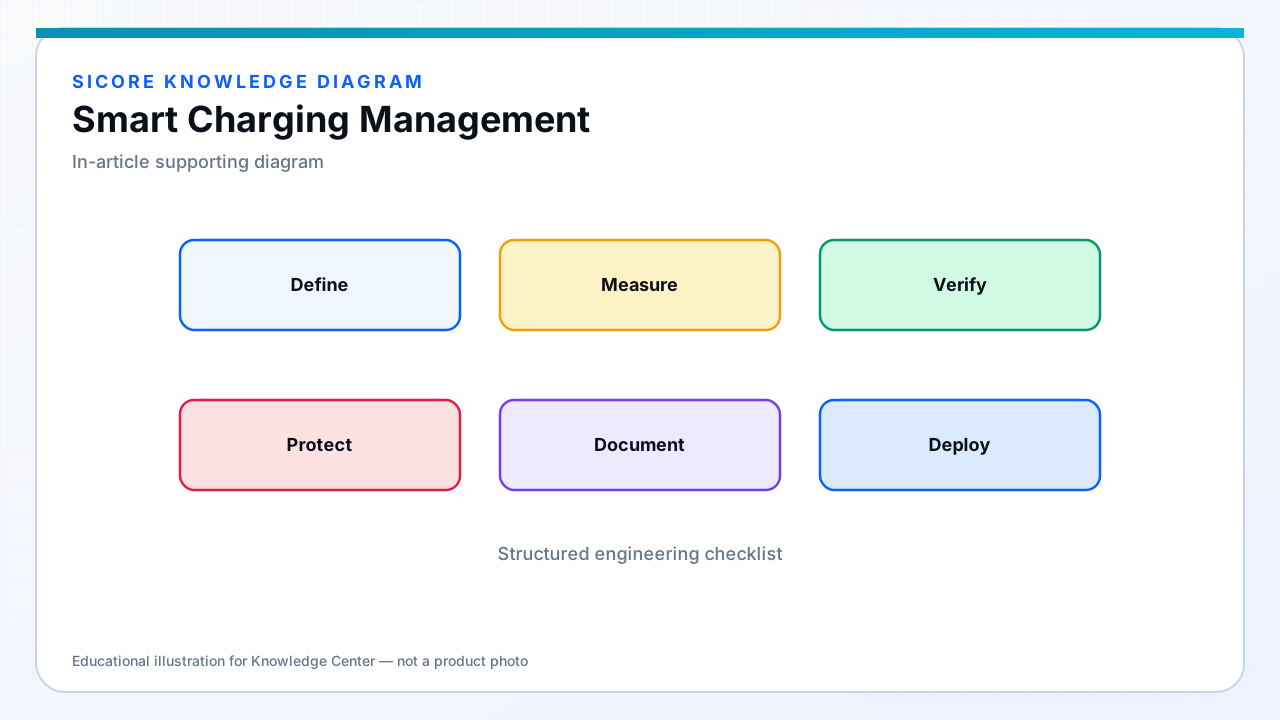
Operators define policies — minimum departure SOC, maximum charge C-rate, peak-hour derating — that the manager applies fleet-wide or per vehicle class. SiCore policy hooks integrate with WMS and MES signals so charge urgency rises when downstream pick faces starve for robots.
03Observability
Smart management is only as good as its telemetry. Dashboards show active sessions, queued robots, policy overrides, and charge-related mission risk. Historical analysis connects management decisions to outcomes — did peak derating cause missed SLAs, or did it avoid demand charges that justified the trade?