
Wiki article · Collection 11
LOD
Engineering reference on LOD for wireless power system design, integration, and deployment.
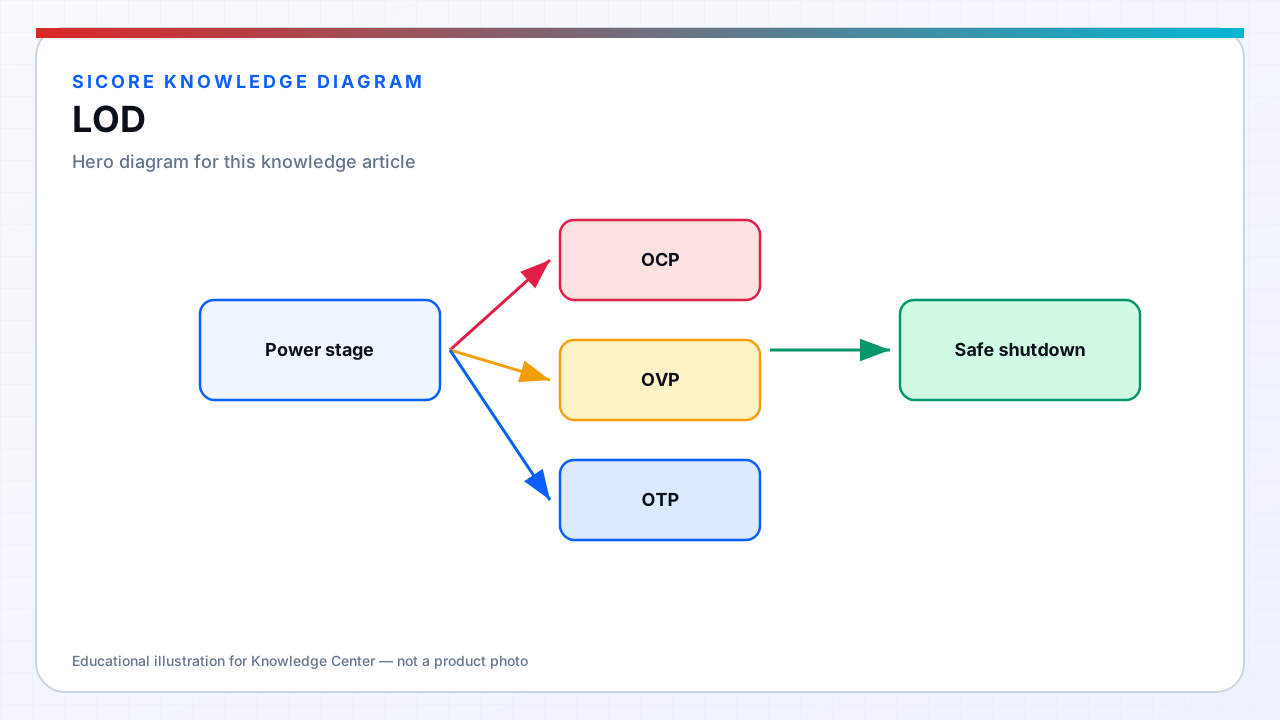
Living object detection (LOD) extends safety beyond metallic FOD to humans, maintenance workers, and animals that may enter the high-intensity magnetic field region during charging — particularly floor-level pads where operators bend to inspect vehicles or where facilities allow co-located pedestrian traffic during pilot deployments. While WPT fields at industrial frequencies primarily pose eddy-current heating risk in conductive objects, personnel safety standards require preventing exposure during full-power operation.
SiCore LOD integrates with fleet scheduling and physical guarding — docks in fully automated zones rely on perimeter interlocks; mixed-traffic pilots require active detection with faster response than operator reaction time.
01Detection modalities
- Ultrasonic and ToF sensors: volumetric zone above pad surface detecting intrusion into defined exclusion cylinder.
- Capacitive floor mats and light curtains: perimeter guarding on mixed-access charge lanes.
- Radar mmWave modules: detect motion through non-metallic obstacles near pad edge.
- Fleet coordination: charge authorization gated on AGV presence confirmation and zone clearance signal from facility PLC.
- Power ramp-down: reduce field strength during alignment search; full power only when zone confirmed clear.
02Response requirements
LOD trip must reduce magnetic field exposure within specified time — typically inhibiting inverter within hundreds of milliseconds of confirmed intrusion, faster when sensor confidence is high. SiCore distinguishes transient false triggers (dust, rain mist in open dock pilots) from sustained presence using debounce and multi-sensor fusion — nuisance stops degrade fleet throughput but are preferable to exposure under full power.
Maintenance mode allows qualified access with reduced power cap and visible indication — pad LED status and audible alert indicate field present. Receiver-side LOD is limited; primary responsibility rests with dock-fixed sensors covering the coupling volume and approach paths documented in site risk assessment.
03Site integration and documentation
Site safety files document LOD zone dimensions, sensor maintenance intervals, and bypass procedures under lockout for pit service. Training materials for customer EHS teams explain difference between FOD and LOD — metal debris vs personnel entry. Validation includes staged intrusion tests with instrumented mannequins and power density measurement at zone boundary confirming compliance with applicable exposure reference levels for occupational environments.