
Wiki article · Collection 11
Surge Protection
Engineering reference on Surge Protection for wireless power system design, integration, and deployment.
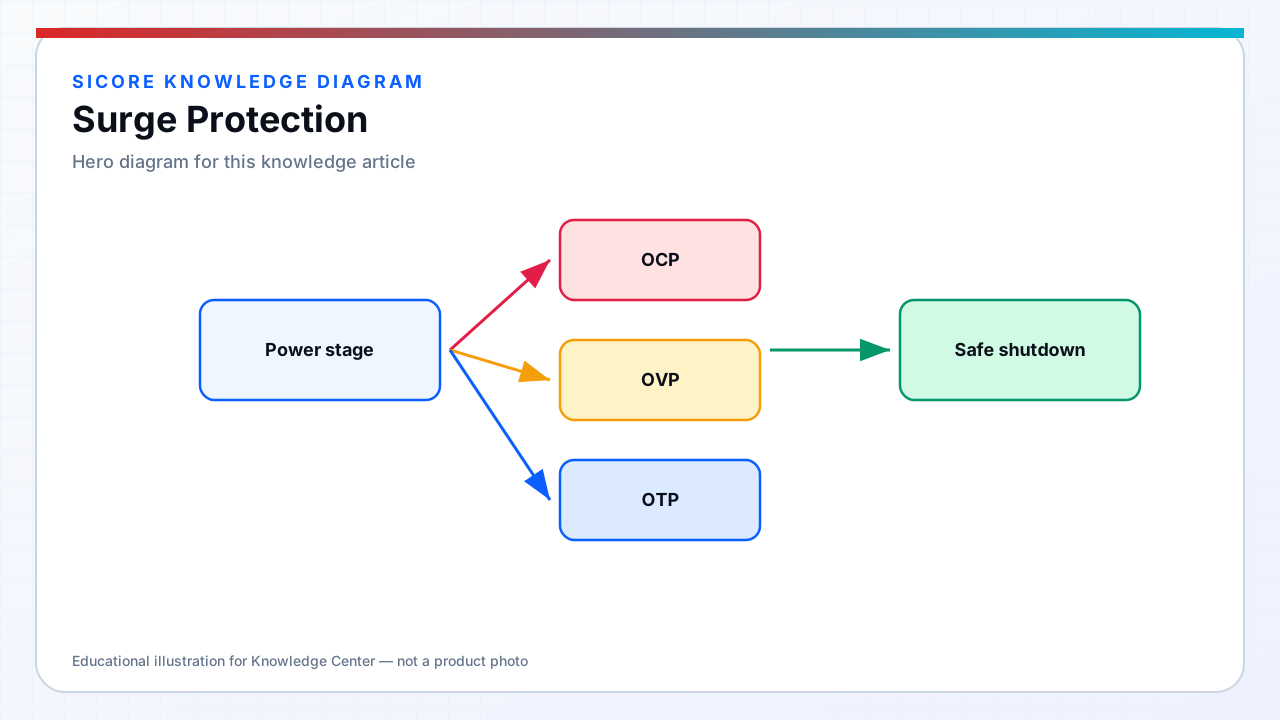
Surge transients from lightning indirect strikes, utility switching, and large load disconnections on factory distribution systems inject kilovolt-scale impulses onto AC mains — propagating into dock PFC, DC bus capacitors, and downstream control electronics if inadequately attenuated. Floor-flush charging installations with long conduit runs from remote electrical rooms present elevated exposure; multi-pad aisles share feeders where one surge event affects parallel docks.
SiCore surge protection coordinates with overvoltage and isolation design — MOVs and gas discharge tubes clamp differential and common-mode impulses while preserving safety ground integrity and limiting follow-on current that could weld contacts or trip upstream breakers.
01Protection topology
- Type 2 SPD at dock AC inlet or upstream panel — rated for installation location and expected lightning exposure class.
- Tiered clamping: GDT for coarse protection, MOV for energy absorption, TVS for fast edge on control boards.
- Common-mode choke before Y-cap network — prevents surge current splitting unpredictably across facility ground.
- PFC pre-charge and inrush limiters — coordinate timing so surge recovery does not falsely trigger overcurrent.
- Signal port protection: surge-rated Ethernet and CAN transceivers with external GDT where cable runs exceed 30 m.
02Installation and grounding
Effective surge protection requires short, low-impedance path from SPD to facility ground electrode — SiCore installation guides specify maximum lead length from dock AC disconnect to building ground and prohibit shared neutral-only returns for surge current. Pit installations bond dock frame, liner, and SPD earth to the same electrode system evaluated during site audit.
Underground conduit ingress may introduce capacitive coupling — surge tests on installed mockups validate that pit moisture and rebar proximity do not elevate dock controller stress beyond type-test conditions. Post-surge behavior requires dock to enter safe idle state, log event with timestamp, and permit controlled restart after inspection — not immediate auto-resume at full power.
03Testing and maintenance
Immunity validation per IEC 61000-4-5 with 1.2/50 µs wave applied through coupling network — combined test of PFC, inverter disable, and communication survival. MOV aging from repeated clamping events reduces protection margin — SiCore recommends periodic inspection interval in high-lightning regions and documents SPD module replacement in maintenance schedules. Surge event counters in dock firmware support predictive maintenance for facilities with historical transient issues.