
Wiki article · Collection 07
Energy Optimization
Engineering reference on Energy Optimization for wireless power system design, integration, and deployment.
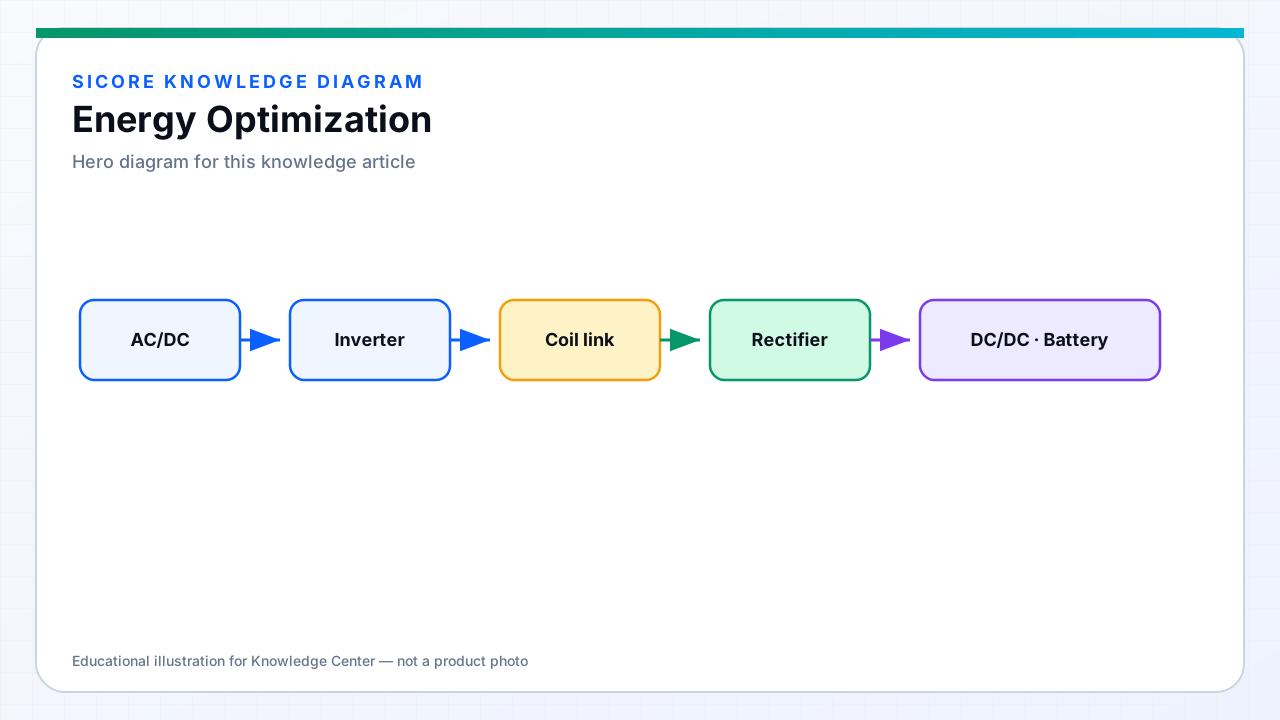
Energy optimization reduces operating cost, pad infrastructure sizing, and peak facility demand by minimizing wasted charge, avoiding unnecessary battery mass, and aligning robot dispatch with available energy. Wireless charging enables optimization strategies impossible with manual plug-in — pads at natural dwell points, autonomous charge routing, and real-time SOC-aware mission assignment.
SiCore energy optimization spans hardware efficiency ( coil coupling, inverter loss ) and software ( fleet dispatch, charge priority, power caps ) as a single system.
01Optimization levers
- Right-size pack capacity: excess kWh adds mass and cost; insufficient capacity forces oversized pad count.
- Opportunity pad placement at high-dwell stations to reduce dedicated charge trips.
- SOC-aware dispatch: assign long routes to high-SOC robots; queue low-SOC units to nearest pad.
- Regenerative braking tuning: recover aisle descent energy without triggering BMS over-voltage on small packs.
- Peak demand management: stagger high-power wireless sessions across shift timeline.
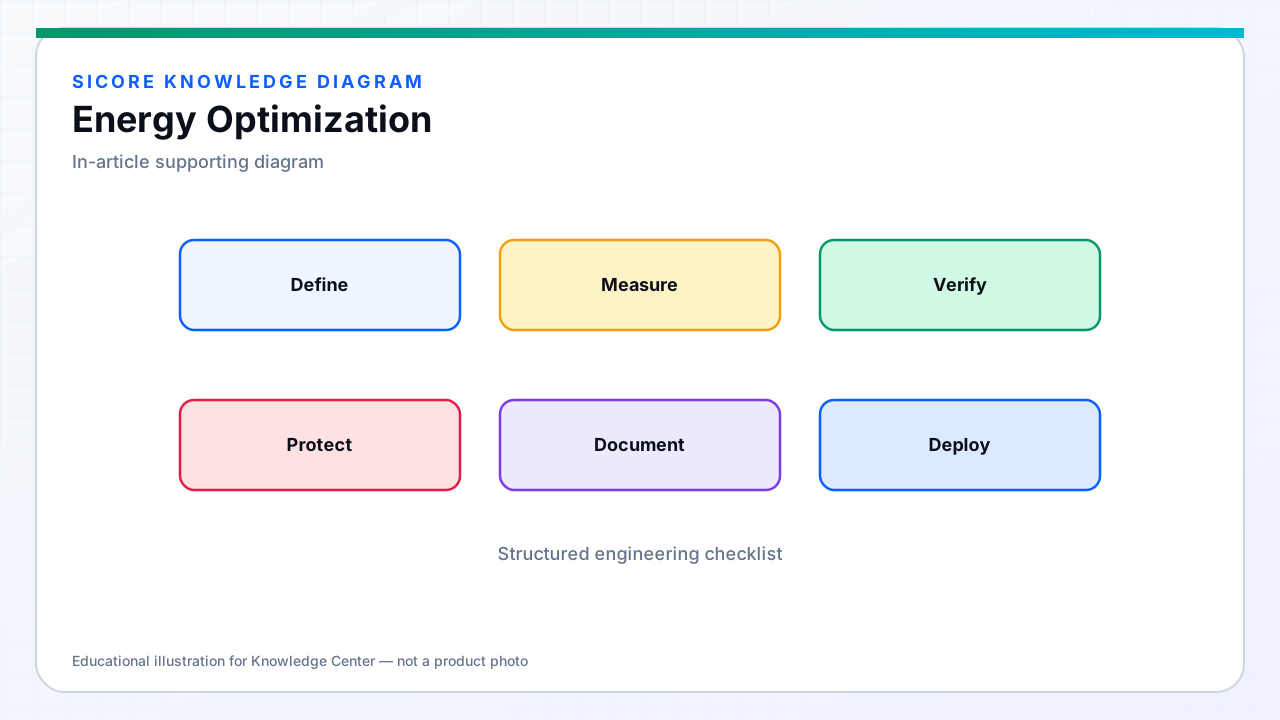
02Energy modeling
Digital twin or spreadsheet models simulate route energy from distance, acceleration profile, payload, and lift actuation. Compare against wireless charge opportunity map — which stations have pads, expected dwell seconds, achievable k at each pad — to validate 24-hour SOC feasibility before capital install.
SiCore deployment engineering uses measured charge efficiency from commissioning ( AC meter to BMS coulomb gain ) rather than datasheet figures alone, because site-specific alignment and temperature dominate real delivered energy.
03Continuous improvement
Post-deployment, compare energy per mission, charge minutes per mission, and pad kWh throughput weekly. Routes that consistently arrive at critical SOC indicate modeling error or workflow change. Optimization is iterative: pad additions, charge profile tuning, and dispatch rule updates driven by telemetry — not one-time sizing at install.