
Wiki article · Collection 05
Foreign Object Detection
Engineering reference on Foreign Object Detection for wireless power system design, integration, and deployment.
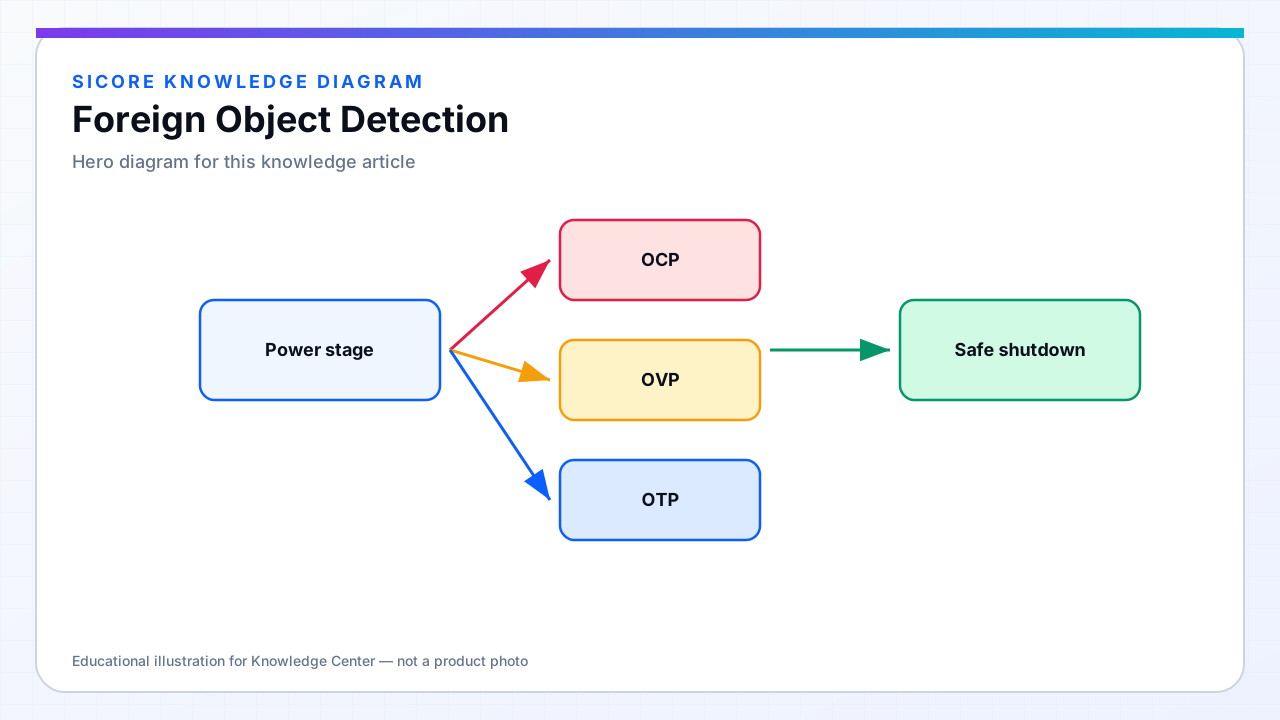
Foreign object detection (FOD) protects people, property, and the charger itself from induced heating in objects that are not the intended receiver. Resonant WPT can expose kilowatts of flux; a coin, wrench, or steel plate in the wrong place becomes a resistor.
Regulatory and insurer expectations for industrial installs treat FOD as non-optional — especially in human-present warehouses and maintenance bays.
01Detection approaches
- Power loss accounting: compare transmitted vs received power; excess loss implies parasitic heating.
- Resonant parameter shift vs learned baseline for empty pad and valid receiver.
- Q-factor or impedance signature changes from eddy-current loading on ferrous objects.
- Thermal imaging or NFC-style auxiliary sensors on high-power or public-facing pads.

02SiCore FOD philosophy
Baseline at commissioning: each pad learns its empty and mated signatures with temperature compensation. During charge, FOD runs continuously — not only at start — because objects can slide into the field mid-session when maintenance staff work beside an AGV aisle.
03Balancing safety and uptime
Over-sensitive FOD causes nuisance trips that erode operator trust; under-sensitive FOD creates burn hazards. Tune thresholds from worst-case metal placement tests, then validate with fleet telemetry. Document trip events with context so thresholds can be refined without blind loosening.