
Wiki article · Collection 05
Real-Time Efficiency Optimization
Engineering reference on Real-Time Efficiency Optimization for wireless power system design, integration, and deployment.
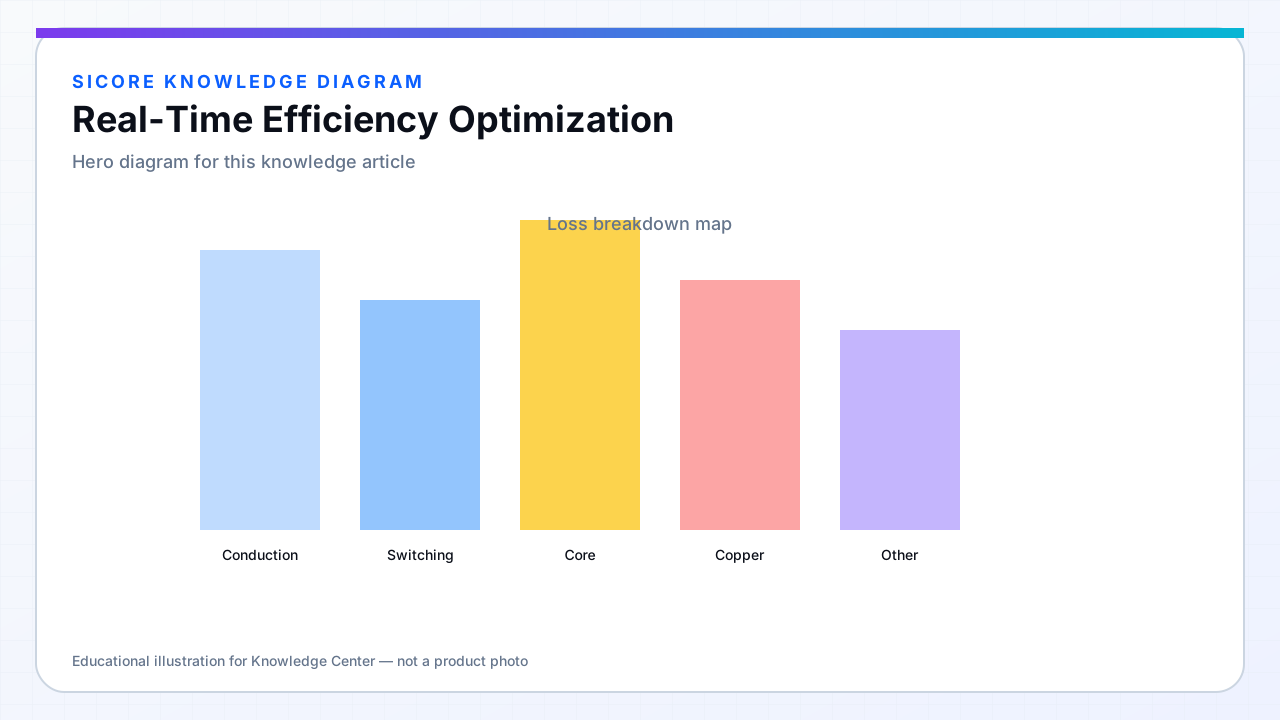
Real-time efficiency optimization adjusts operating point to minimize total loss for the current k, load, and temperature. Efficiency is not a single datasheet number; it is the ratio of DC watt-hours stored to DC watt-hours drawn at the pad, measured over the actual CC/CV trajectory.
Industrial fleets feel efficiency as heat in sealed enclosures, electricity cost at scale, and whether the robot reaches the next shift without an extra dock stop.
01Loss buckets to balance
- Inverter switching and conduction loss vs ZVS margin.
- Coil copper and ferrite core loss vs alignment-imposed current rise.
- Rectifier and receiver regulation loss vs battery voltage headroom.
- Resonant tank circulating current vs capacitor ESR heating.
02Online optimizers
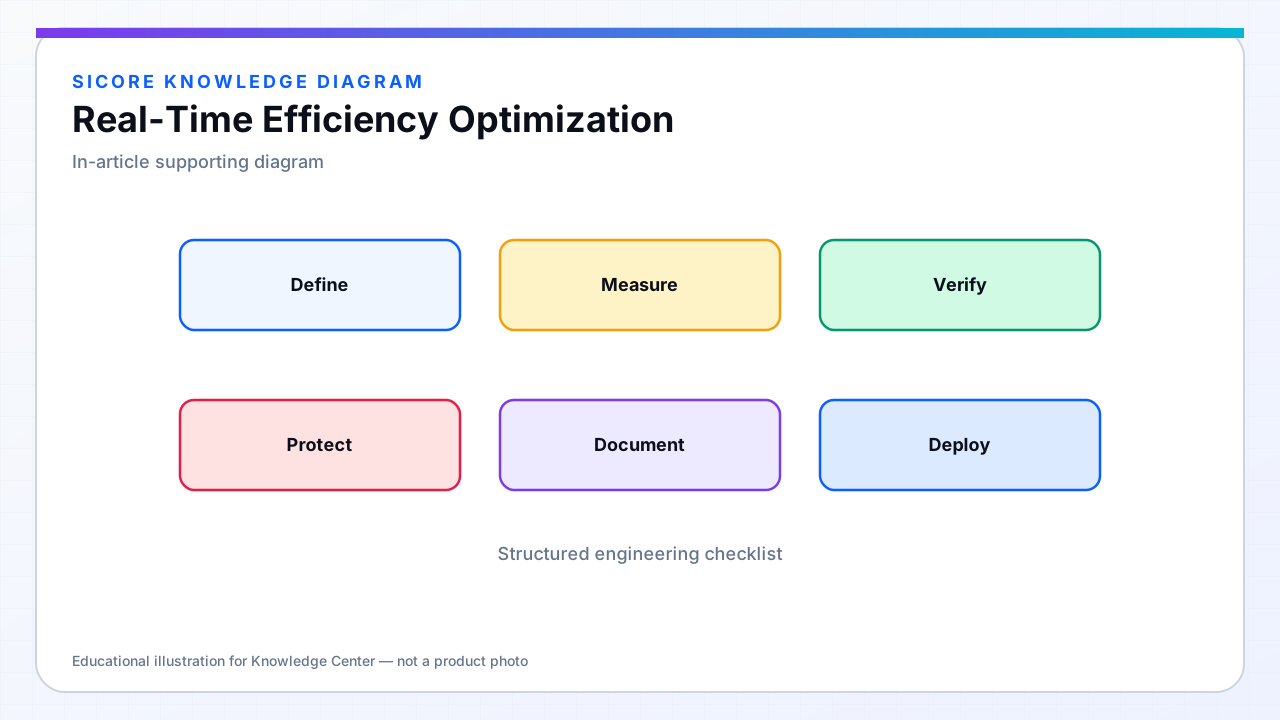
SiCore controllers use constrained search: small frequency and phase steps that increase measured delivered power while monitoring loss proxies (pad temperature slope, input-output power delta, ZVS indicators). When margins tighten, the optimizer backs off — peak efficiency is worthless if it trips FOD or ages the pack.
03Reporting for operations
Per-cycle efficiency scores aggregated by pad ID expose misaligned mechanics, dirty ferrite gaps, or failing vehicle receivers long before hard fault. Efficiency trending is predictive maintenance data dressed as an energy KPI.