
Wiki article · Collection 09
High Power Thermal Design
Engineering reference on High Power Thermal Design for wireless power system design, integration, and deployment.
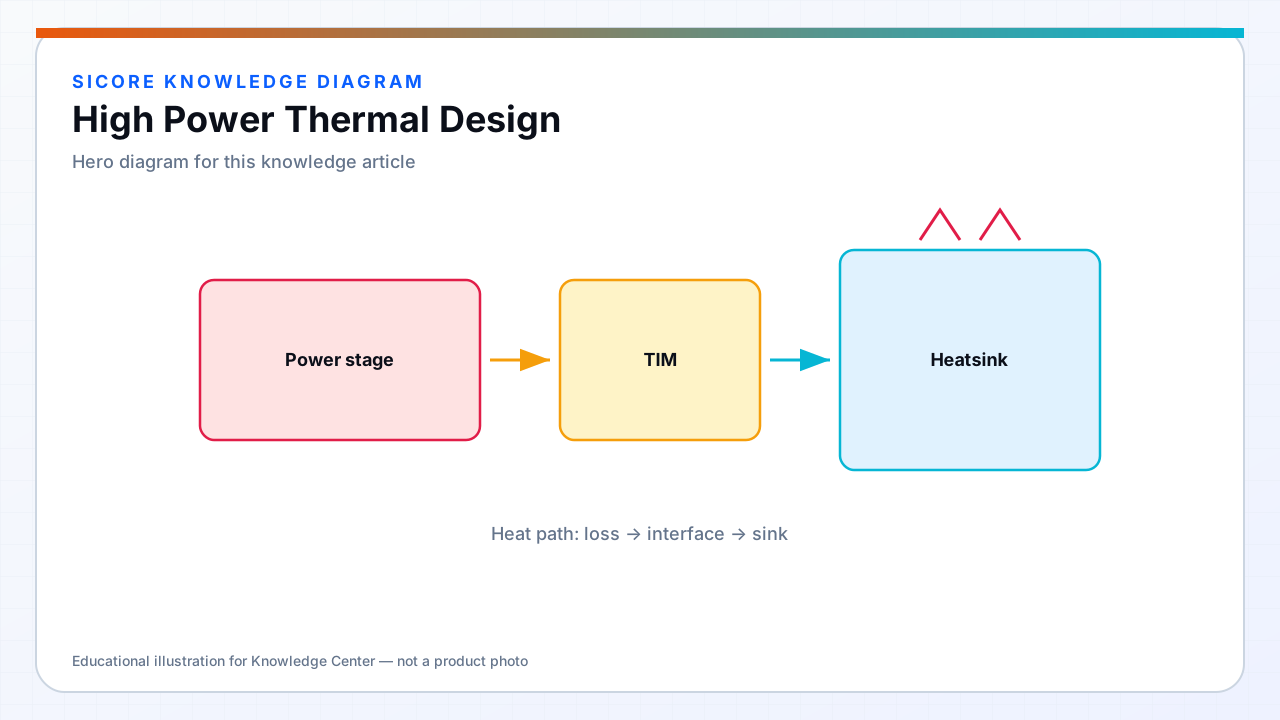
High-power wireless charging — typical for heavy fork AGVs, tow tractors, and fast opportunity charging — pushes loss density beyond passive warehouse assumptions. At 15 kW transferred power with 90–93% end-to-end efficiency, 1–1.5 kW dissipates split between dock inverter, transmitter coil, receiver coil, and rectifier stage. Each subsystem has distinct thermal limit: ferrite Curie proximity, FET Tj max, and vehicle underbody composite temperature.
SiCore high-power thermal design is concurrent with electrical topology: splitting into multiple coils, interleaving phases, and using SiC devices reduces peak loss density and enables workable cooling within floor pit depth limits.
01Loss allocation and hot spots
- Dock inverter + tank: 40–55% of total loss — primary target for heatsink and airflow.
- Transmitter coil copper and ferrite: 20–30% — limited external cooling; Litz, geometry, and duty cycle bound peak temperature.
- Receiver rectifier and output stage: 20–35% — chassis coupling and SR FET sink critical.
- Cable and connector I²R: 5–10% — often underestimated in enclosed routing.
- Adjacent metal eddy loss: site-dependent — floor steel and vehicle frame contribute parasitic heating.
02Architectural mitigations
Phased power ramp and SOC-dependent taper limit time-at-peak-thermal-stress — high power concentrates in early charge window when thermal mass is cold. Multi-coil docks rotate excitation or use segment control to avoid heating dead zones while maintaining aggregate power.
SiC MOSFETs and synchronous rectification reduce conduction and switching loss per watt delivered, directly shrinking heatsink volume required in shallow pits. Receiver designs may split power path across dual rectifier modules thermally bonded to separate chassis rails for parallel heat rejection.
03Infrastructure and fleet constraints
Facility electrical and thermal infrastructure co-design: clustered high-power pads may require aisle HVAC or pit exhaust routing to prevent heat recirculation between consecutive charging AGVs. SiCore site thermal assessments model queue depth and charge duration from WMS data — average power matters less than peak concurrent sessions for infrastructure sizing.
Heavy AGV applications document maximum allowable underbody temperature to protect customer vehicle warranties; dock commissioning verifies composite and hydraulic line proximity clearances with IR survey at full power.