
Wiki article · Collection 09
Thermal Protection
Engineering reference on Thermal Protection for wireless power system design, integration, and deployment.
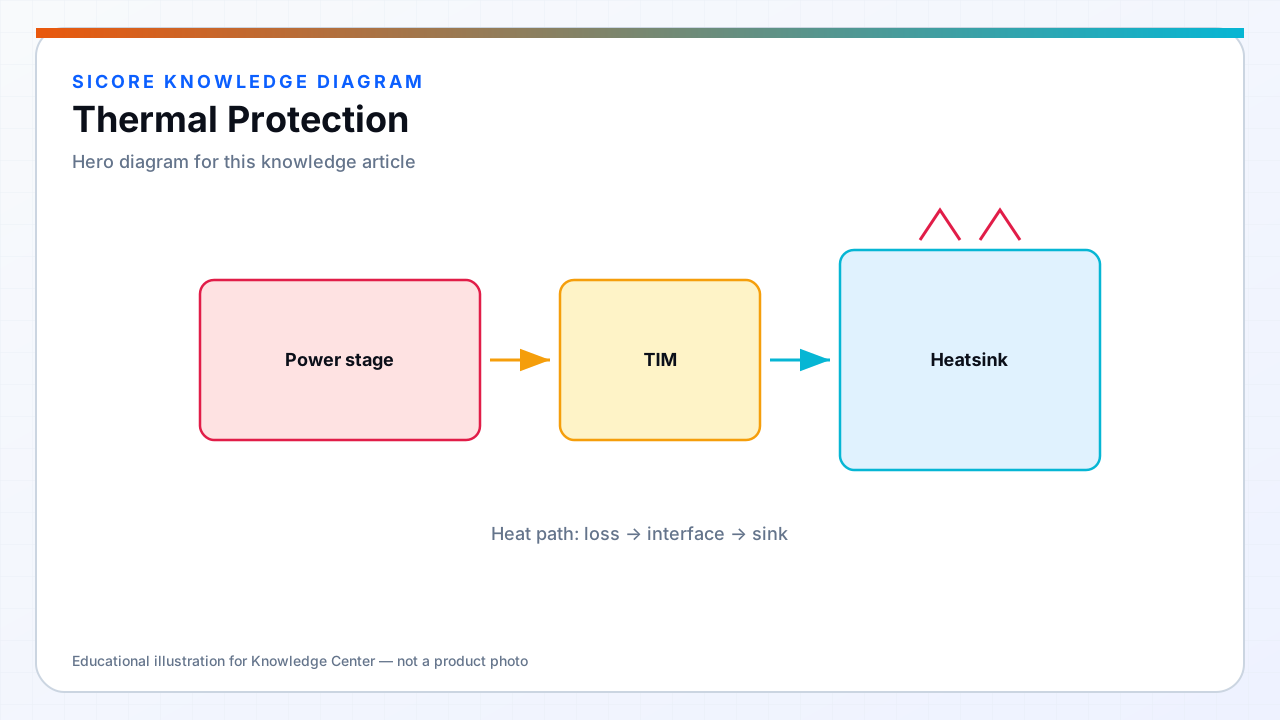
Thermal protection prevents irreversible damage to coils, ferrite, semiconductors, and vehicle-adjacent materials when cooling fails, alignment degrades, or duty cycles exceed design assumptions. SiCore implements layered response: warning derating preserves partial charge capability; hard shutdown protects hardware; latched faults require defined cooldown or technician reset before re-energizing high power.
Wireless charging thermal faults differ from wired systems: pad and vehicle may disagree on observed temperature; comm-loss must not leave transmitter at full power into overheating receiver; foreign-object heating can localize before bulk sensors respond.
01Protection tiers
- Tier 1 — Advisory derating: reduce power 10–30% when warning threshold exceeded; log event to fleet.
- Tier 2 — Aggressive derating: cap power to minimum alignment maintenance level until temperatures fall with hysteresis.
- Tier 3 — Session abort: ramp to zero power, open contactor request, notify BMS; auto-retry after cooldown if policy allows.
- Tier 4 — Latched hardware fault: disable PWM via comparator or gate-driver fault pin; manual or service reset required.
- Tier 5 — Redundant independent monitor: secondary MCU or analog chain for SIL-oriented dock installations.
02Hardware and firmware coordination
Gate-driver thermal shutdown and FET die sense (where available) act faster than software NTC polling — firmware treats hardware trip as authoritative. Software monitors trend and rate-of-rise for conditions hardware cannot distinguish, such as gradual ferrite aging or clogged vent. BMS overtemperature or charge inhibit commands override dock power request regardless of pad-local sensor state.
SiCore session state machine enforces thermal guard during alignment and negotiation phases — pre-power alignment pulses use time and energy limits so brief excitation cannot accumulate ferrite heating unnoticed. Transmitter-side reflected-power monitoring supplements temperature for FOD-adjacent thermal anomalies.
03Recovery, logging, and compliance
Recovery policies define minimum cooldown duration and maximum auto-retry count per session and per 24-hour window — repeated thermal aborts latch pad out of service until inspection. NVM fault records capture temperature trace snapshot, active power, alignment score, and coolant or fan status for root-cause analysis.
Safety documentation maps each thermal fault code to hazard analysis: foreseeable misuse (blocked vent, removed pit grate), single-fault sensor failure, and concurrent comm-loss scenarios. Factory acceptance tests inject simulated NTC fault and verify shutdown timing meets contractual limits for AGV fleet operators.