
Wiki article · Collection 03
Solenoid Coil
Engineering reference on Solenoid Coil for wireless power system design, integration, and deployment.
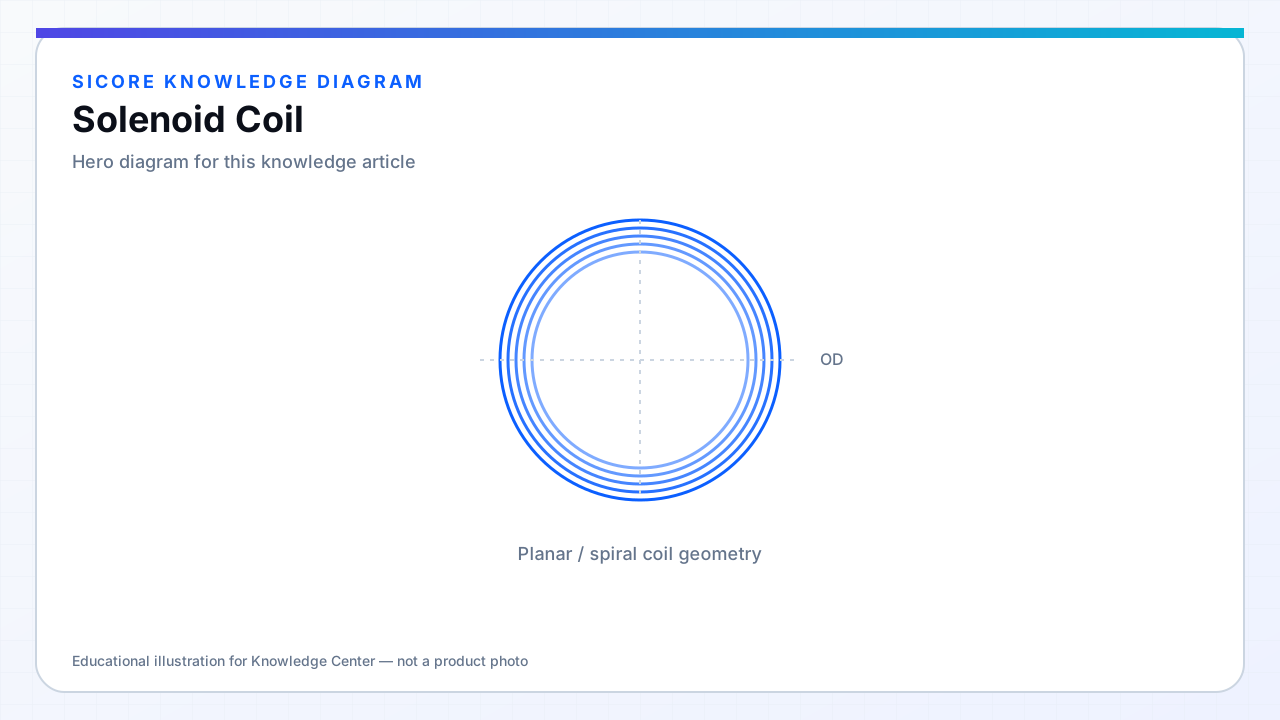
A solenoid coil winds helically around a cylindrical or rectangular core, producing axial field inside the bore and returning flux outside through the core or air. In WPT, solenoid segments supplement planar pads when vertical space exists — for example a raised core on a floor pad or a bobbin receiver between frame members.
Inductance scales with turns squared over length and is boosted by core permeability until saturation. Solenoids concentrate flux but also concentrate loss hot spots if current density is not managed.
01Applications
- Hybrid pad: planar spiral plus central solenoid bump for gap tolerance.
- Receiver bobbin fitting in cylindrical pockets on AGV chassis.
- Alignment pegs surrounded by solenoid windings for pin-type docks.
02Design notes
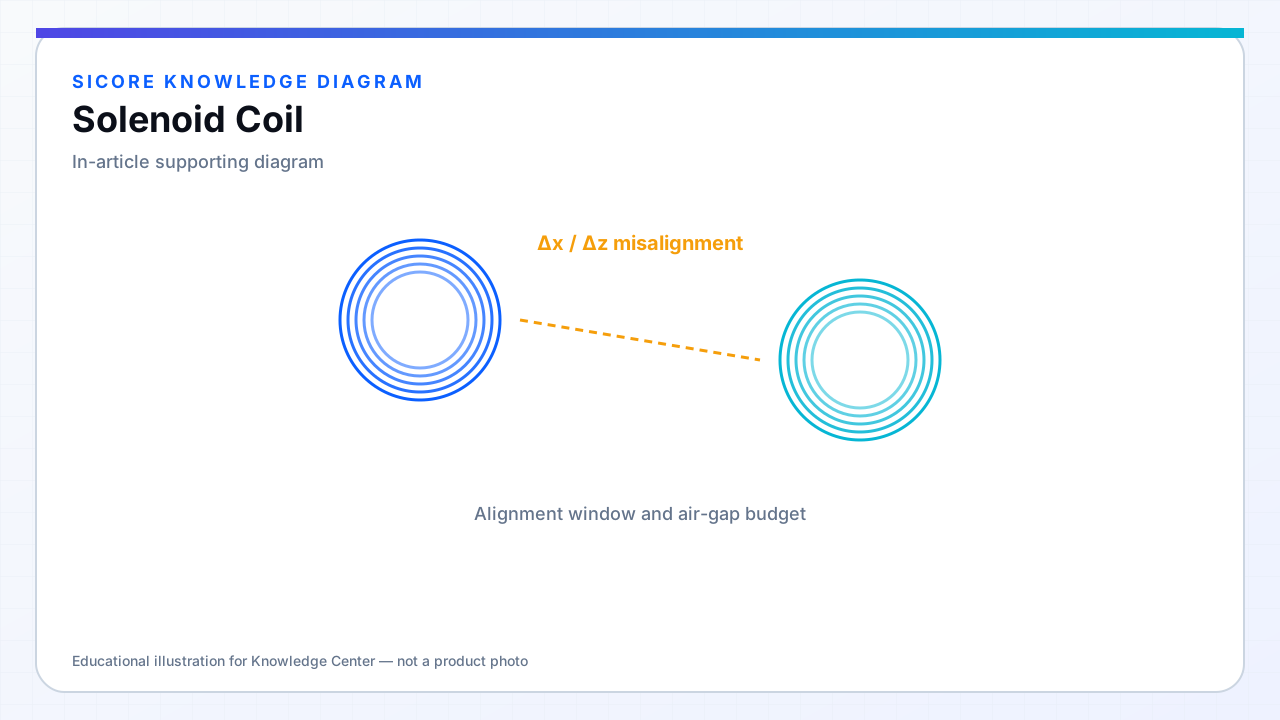
Match solenoid diameter and height to receiver bore for coupling — oversized bore wastes flux. Ferrite rod or pot core shapes must include gaps if DC bias or strong AC fields approach saturation. Wind direction and start/finish leads determine field polarity at the dock interface.
03Mechanical
- Bobbin must withstand impact without collapsing turn spacing.
- Potting fills bore voids — verify L change after potting on samples.
- Core cracking from drop tests is a common field failure mode.