
Wiki article · Collection 08
Diagnostics
Engineering reference on Diagnostics for wireless power system design, integration, and deployment.
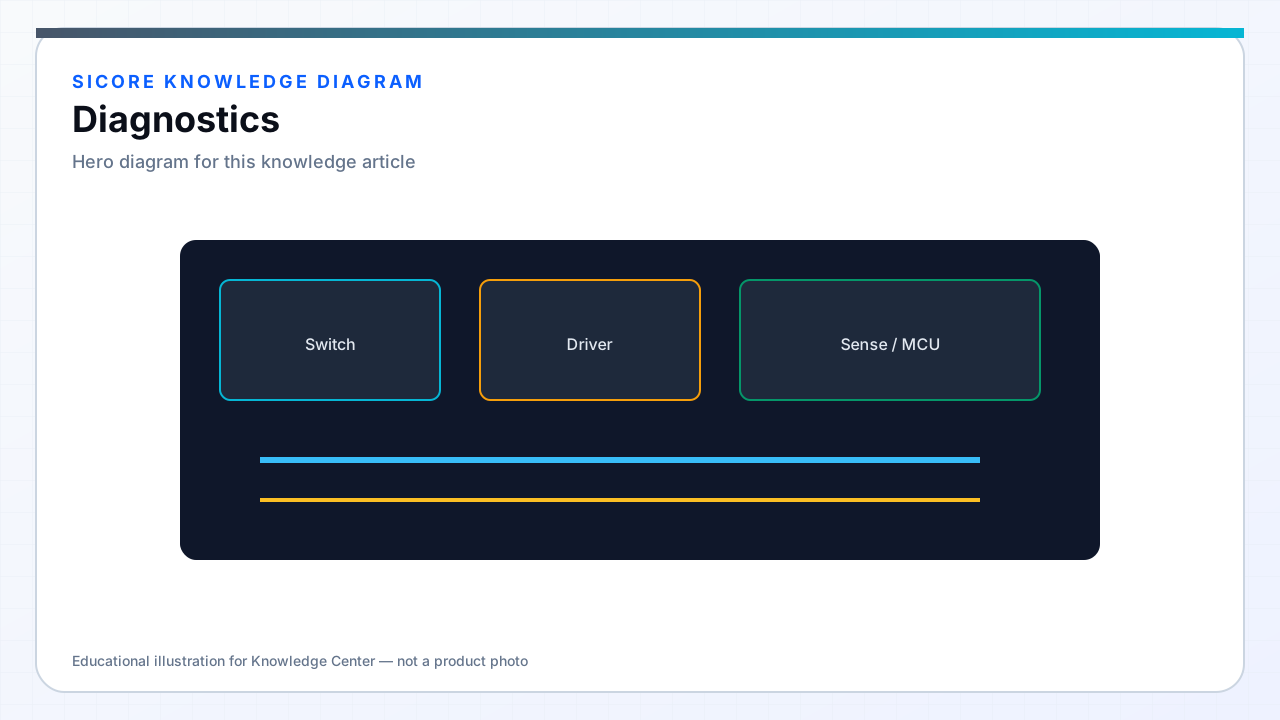
Diagnostics bridge embedded controllers and fleet operators: they expose internal state without compromising real-time control or security. SiCore firmware implements structured data identifiers for alignment quality, loop health, thermal margins, NVM wear, and communication statistics — accessible over CAN during service mode and summarized to cloud gateways during normal operation.
Effective diagnostics reduce mean-time-to-repair when pads derate mysteriously or receivers show rising charge abort rates across a vehicle class.
01Diagnostic surfaces
- CAN service mode: read DIDs, clear latched faults, trigger alignment test pulse at reduced power.
- Live telemetry: SOC-correlated charge power, k estimate, inverter efficiency, session duration.
- Session records: start/stop reason, energy delivered, max temperature, min alignment score.
- Self-test routines: ADC loopback, gate driver pulse check, NVM integrity scan at power-up.
- Developer trace: ring buffer snapshot uploaded after fault for support engineering.
02Operational use cases
Technicians compare alignment scores across pads serving the same vehicle route — low scores on one pad indicate mechanical wear or floor settlement. Rising DCIR-estimate divergence between pad metered energy and BMS coulomb gain points to receiver cable or contactor issues before dispatch SOC errors appear.
SiCore diagnostic policy separates customer-visible fleet metrics from OEM-internal debug registers; production builds strip verbose trace unless service auth token or physical key switch enables extended session.
03Design for serviceability
Diagnostic code paths avoid blocking flash erase during active charge. DID definitions are versioned in DBC-like schema files shipped with fleet software so parsers stay synchronized across OTA firmware generations. Predictive maintenance hooks flag trends — increasing FOD near-miss count, PWM break events per month — before hard faults trigger line stoppage.