
Wiki article · Collection 05
Battery Health Monitoring
Engineering reference on Battery Health Monitoring for wireless power system design, integration, and deployment.
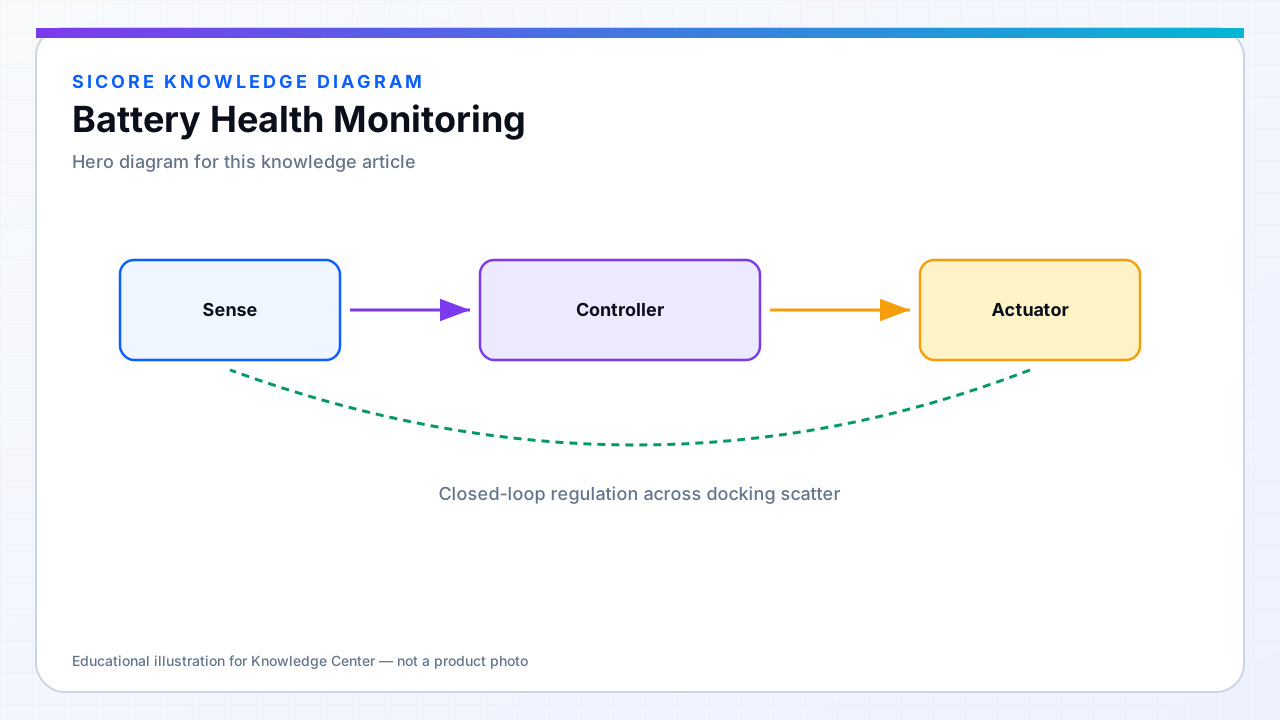
Battery health monitoring (BHM) uses the charging session as a diagnostic window. Incremental capacity loss, rising internal resistance, and cell imbalance show up in voltage curvature, temperature gradients, and how much power the pack accepts late in CV phase.
Wireless charging adds link variables, so BHM must separate pack degradation from bad alignment or receiver loss — SiCore correlates electrical signatures with pose and efficiency context.
01Signals tracked
- DC internal resistance estimates from current steps during controlled CC segments.
- Temperature delta vs ambient and vs fleet cohort at similar power.
- CV tail duration and coulombic efficiency vs historical baseline for that vehicle ID.
- Communication-reported cell voltages and BMS fault flags when available.
02Closing the loop
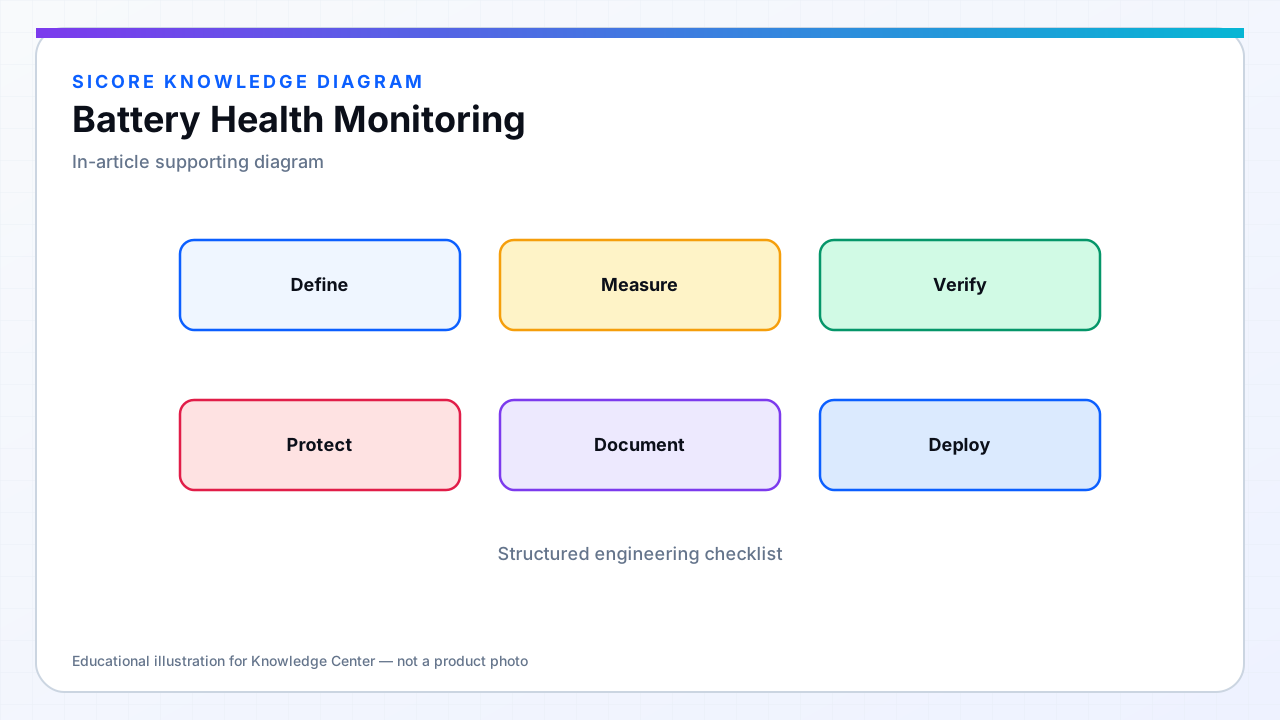
Healthy packs receive full fleet charge rates; flagged packs get reduced CC ceilings, longer rest recommendations, or maintenance routing. The dock becomes an gatekeeper — not every vehicle should absorb maximum wireless power every cycle if the pack is already stressed.
03Privacy and ownership
Health data belongs to the fleet operator. SiCore architectures keep per-vehicle histories exportable and segregated by customer policy — useful for warranty disputes, replacement planning, and proving that charging practice — not abuse — caused a failure.