
Wiki article · Collection 05
Self Calibration
Engineering reference on Self Calibration for wireless power system design, integration, and deployment.
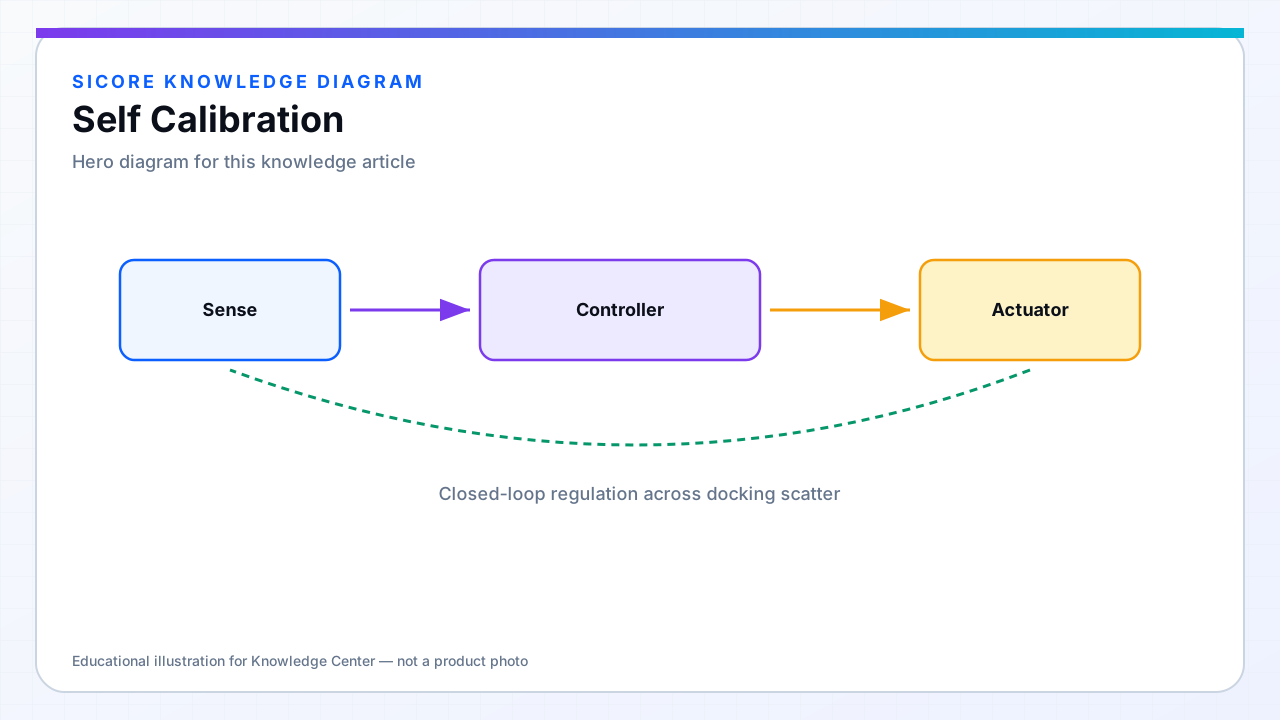
Self-calibration lets a wireless dock learn its normal electrical personality after installation or component replacement. Manual calibration with external LCR meters does not scale when hundreds of pads roll out across a warehouse network.
SiCore self-calibration runs scripted low-power sequences: empty pad baseline, known test load or mated reference receiver, and optional fleet-provided golden vehicle — storing results in non-volatile memory with temperature tags.
01What gets calibrated
- FOD empty-pad and mated-receiver reference signatures.
- Power meter alignment between primary sensing and secondary reported power.
- Frequency search seeds for local ferrite batch and coil serial.
- Communication latency and handshake timeouts for the site's network load.
02When recalibration runs
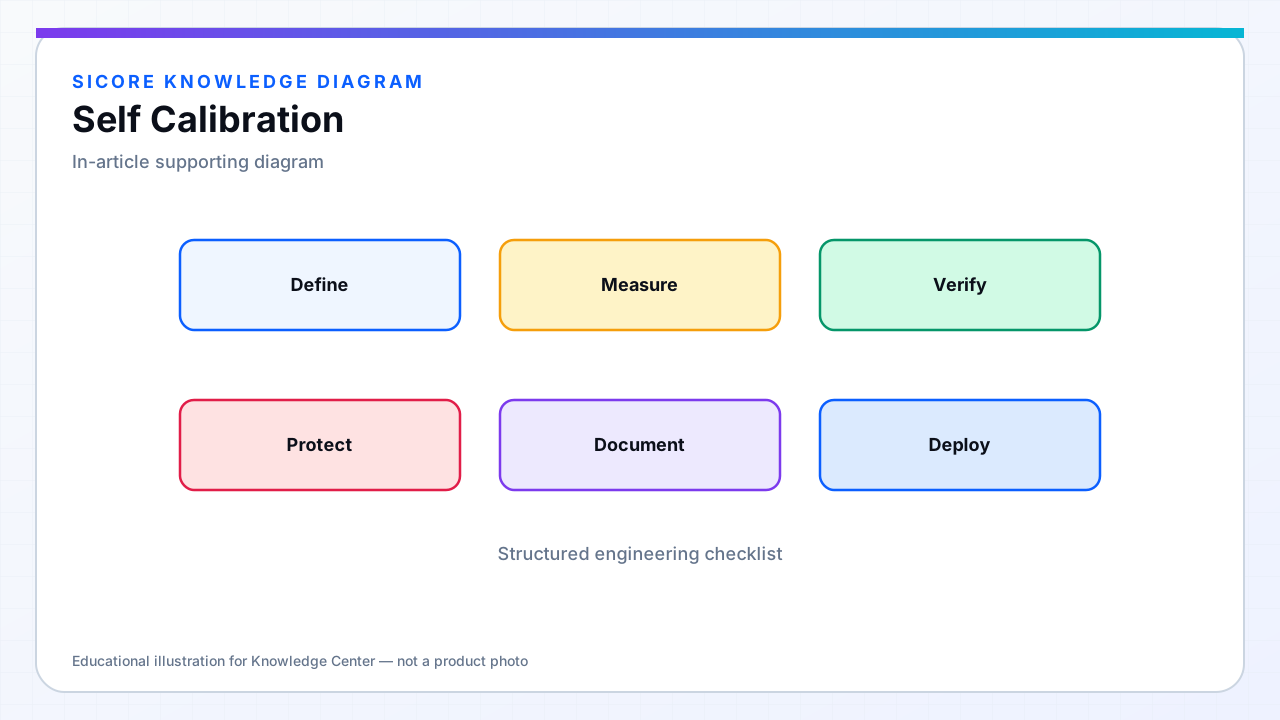
Triggers include first power-on, firmware update affecting control gains, replaced capacitor bank or coil assembly, and scheduled drift checks after N cycles or thermal seasons. Forced recalibration after maintenance prevents a swapped receiver board from skewing FOD baselines.
03Commissioning workflow
Installers confirm mechanical pad placement, run the guided calibration wizard, and verify a full-power test charge with sign-off captured in the fleet portal. Self-calibration reduces field dependency on expert field application engineers — but it does not replace correct mechanical install.