
Wiki article · Collection 01
Capacitive Power Transfer
Engineering reference on Capacitive Power Transfer for wireless power system design, integration, and deployment.
6 minArticle 05/16Fundamentals
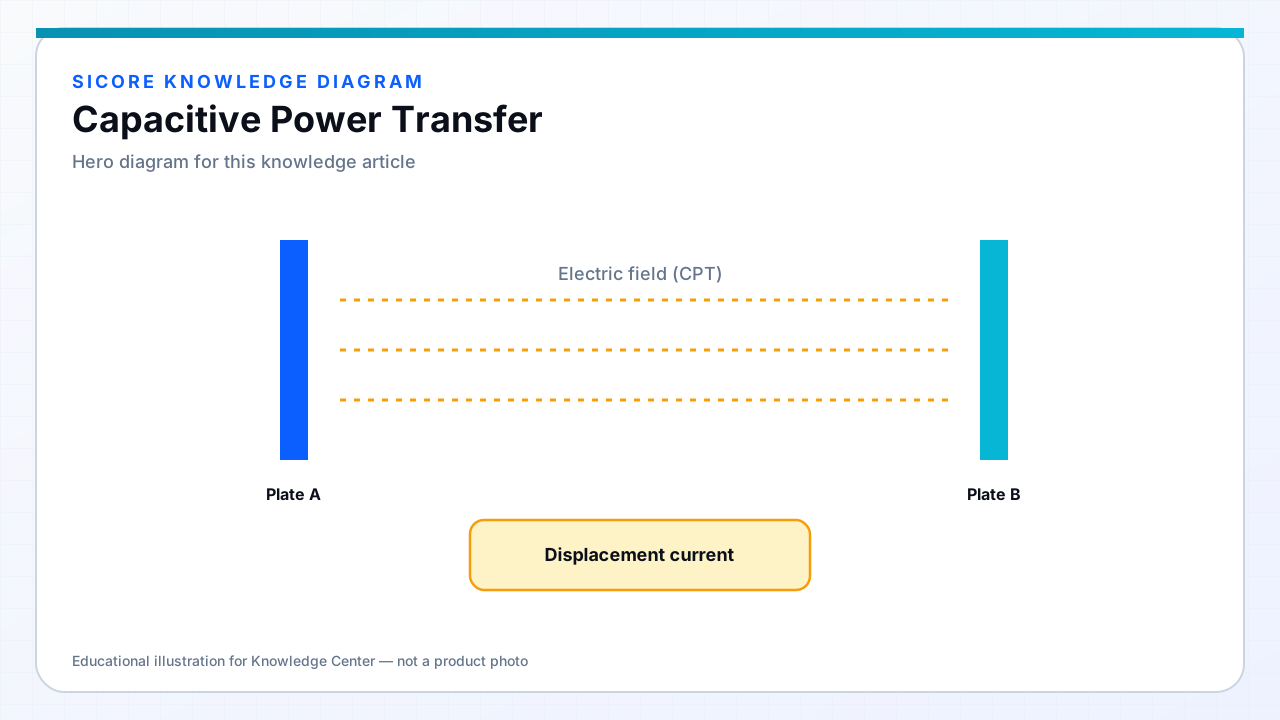
Capacitive power transfer (CPT) couples energy through an electric field between conductive plates rather than a magnetic field between coils. Think of two capacitors in series across a gap: displacement current carries power when the plates face each other.
01Characteristics
- Coupling depends on plate area, gap, and dielectric between plates.
- Generally less sensitive to nearby ferromagnetic materials than inductive coils.
- Can be attractive for low-profile interfaces and some sealed packaging concepts.
- High voltages or careful insulation design are often needed as gaps grow.
02Practical status
CPT is an active research and niche product area. Most high-power industrial charging docks today still use inductive or resonant magnetic architectures because magnetics, standards, and supply chains are more mature. CPT remains worth watching for thin interfaces, special dielectrics, and applications where magnetic fields are undesirable.