
Wiki article · Collection 01
What is Wireless Charging?
Engineering reference on What is Wireless Charging? for wireless power system design, integration, and deployment.
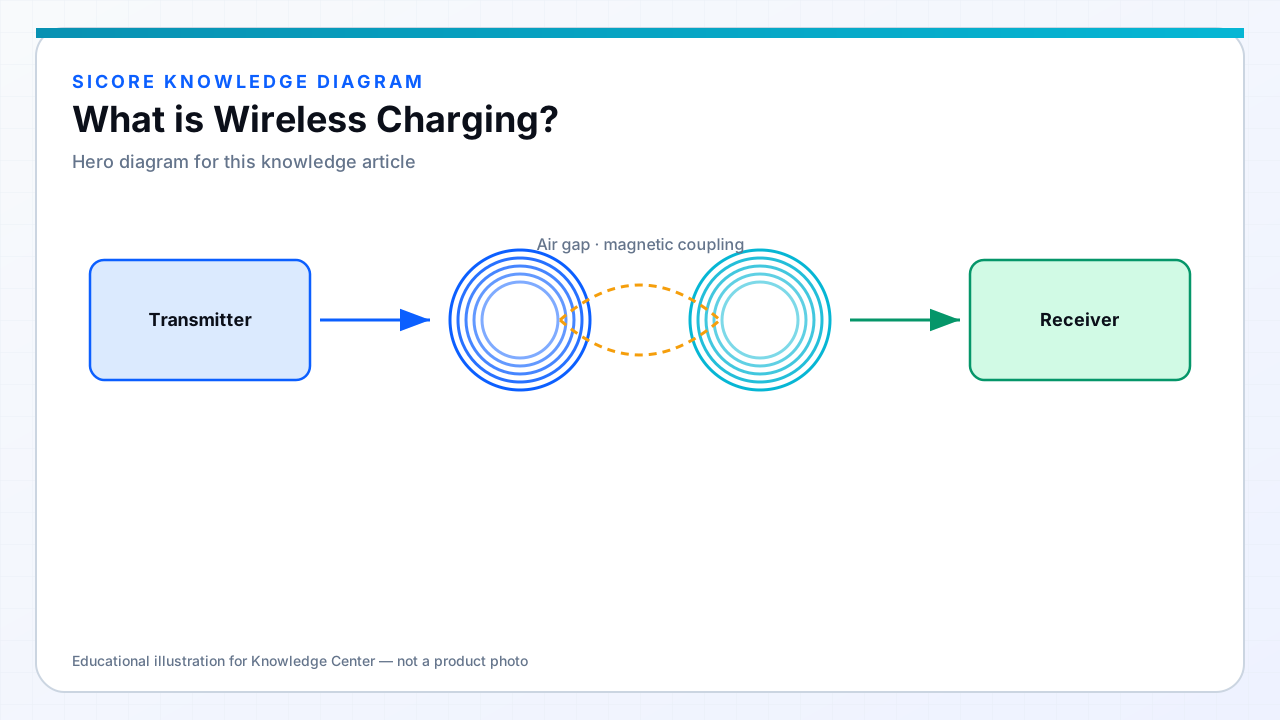
Wireless charging — also called wireless power transfer (WPT) — delivers electrical energy from a transmitter to a receiver without a mated electrical connector. Instead of pins or plugs, energy moves through a coupling field: most often a magnetic field (inductive or resonant), and in other architectures an electric field, radio-frequency wave, microwave beam, or optical beam.
In consumer electronics, wireless charging usually means a phone resting on a Qi pad. In industrial robotics, AGVs, and autonomous equipment, the same principle supports sealed, high-cycle charging where connectors would wear, arc, or collect contamination.
01The basic energy path
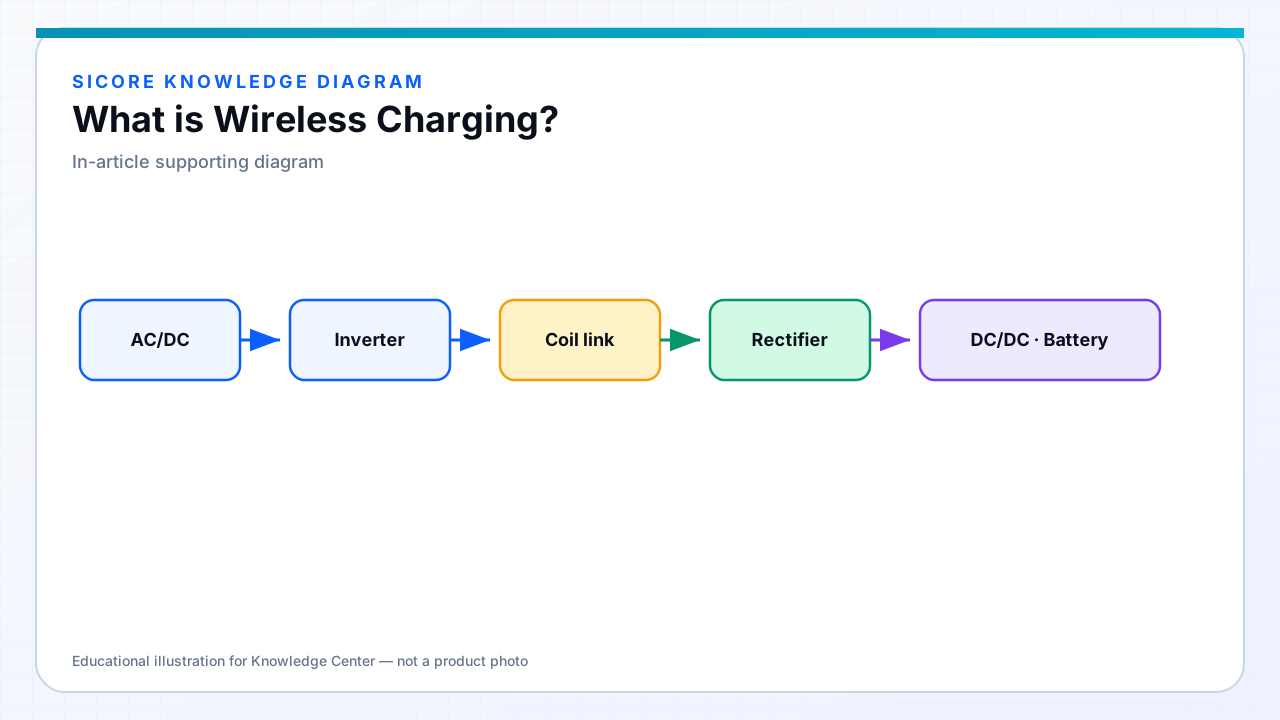
Every wireless charging system converts DC (or AC mains) into a controlled high-frequency field at the transmitter, couples that field across an air gap, and recovers usable DC power at the receiver for a battery, capacitor bank, or load.
- Source conversion: AC/DC or DC/DC stages prepare a stable DC bus.
- Inversion: a power stage drives the transmitter coil or antenna at the design frequency.
- Coupling: magnetic, electric, or radiative transfer across the gap.
- Reception: the receiver recovers AC, rectifies it, and regulates charge current/voltage.
- Control & safety: communication, foreign-object detection, and protection close the loop.
02Why industry adopts it
- No exposed contacts — better sealing (IP-rated docks) and less corrosion.
- Lower mechanical wear from thousands of docking cycles.
- Opportunity charging: short top-ups during idle time without human plug-in.
- Cleaner integration for AGVs, AMRs, cobots, and outdoor autonomous platforms.
03What “wireless” does not mean
Wireless charging is not magic free energy, and it is not always more efficient than a cable. Good systems are engineered for a defined gap, alignment window, power class, and thermal budget. Efficiency, EMI, and safety must be designed — not assumed.