
Wiki article · Collection 01
Far-Field Wireless Power
Engineering reference on Far-Field Wireless Power for wireless power system design, integration, and deployment.
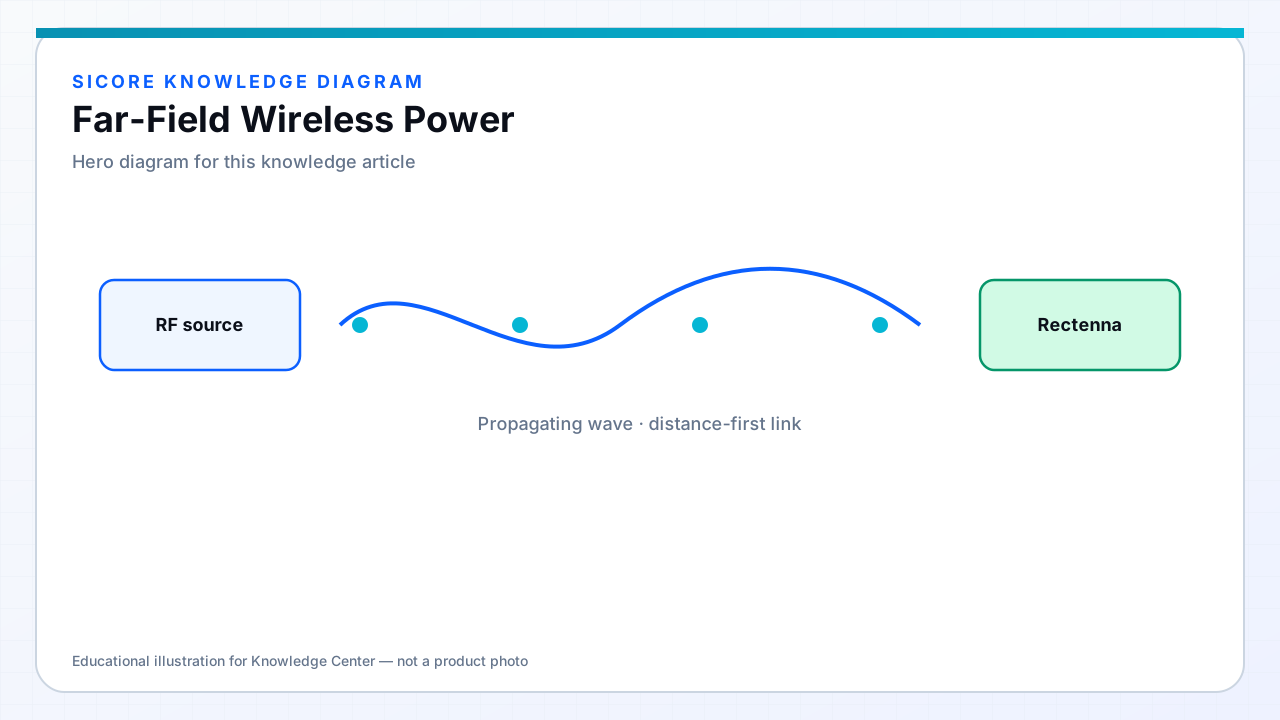
Far-field wireless power transfers energy using radiating electromagnetic waves rather than the reactive near-field of a tightly coupled coil pair. Distance can be meters or more, but power density, safety limits, and beam control become the dominant constraints.
01Common far-field families
- RF harvesting / low-power RF: sensors and IoT at milliwatts or microwatts.
- Microwave power beaming: focused beams for higher power at distance.
- Optical / laser power: directed light converted by photovoltaic receivers.
02Compared with industrial docking
AGV and robot charging docks almost always use near-field inductive or resonant transfer because they need high efficiency at a known stop position, strict EMI control, and safe human proximity. Far-field methods fit better when the receiver cannot dock — remote sensors, special aerospace concepts, or ultra-low-power IoT — not when you need kilowatt-class opportunity charging at a pad.