
Wiki article · Collection 01
Microwave Power Transfer
Engineering reference on Microwave Power Transfer for wireless power system design, integration, and deployment.
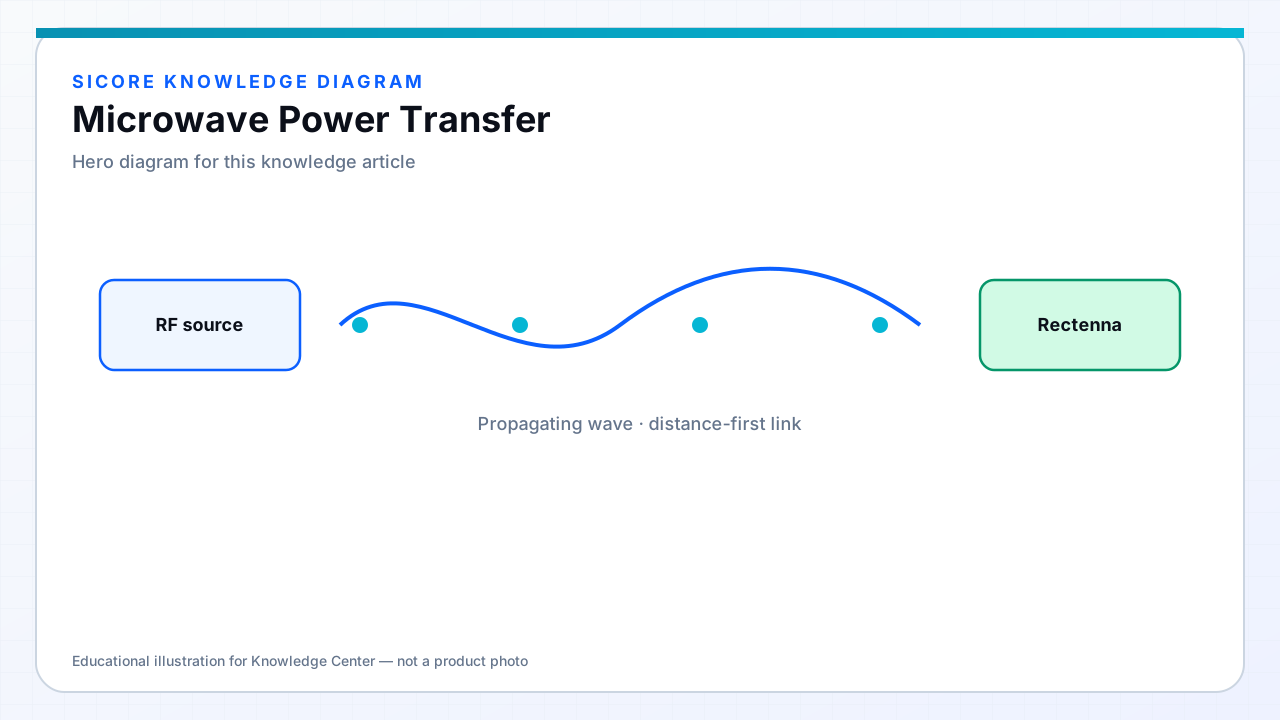
Microwave power transfer focuses energy into a beam — often in the GHz range — and converts it back to DC at a rectenna array. Historically associated with space solar power studies and specialized beaming demos, it targets longer-range transfer than coil pads.
01Engineering challenges
- Beam forming and pointing accuracy as the receiver moves.
- Conversion efficiency end-to-end (DC → RF → free space → RF → DC).
- Human safety and keep-out zones around high-power beams.
- EMI coexistence with communications and radar in the same spectrum.
02Industrial takeaway
For warehouse AGVs and sealed docking, microwave beaming is rarely the first choice. Near-field magnetic systems deliver higher wall-to-battery efficiency in a compact pad footprint with mature safety patterns (FOD, LOD, thermal limits). Microwave remains relevant for research, niche long-range links, and future infrastructure concepts — not as a drop-in replacement for a charging dock.