
Wiki article · Collection 03
Ferrite Materials
Engineering reference on Ferrite Materials for wireless power system design, integration, and deployment.
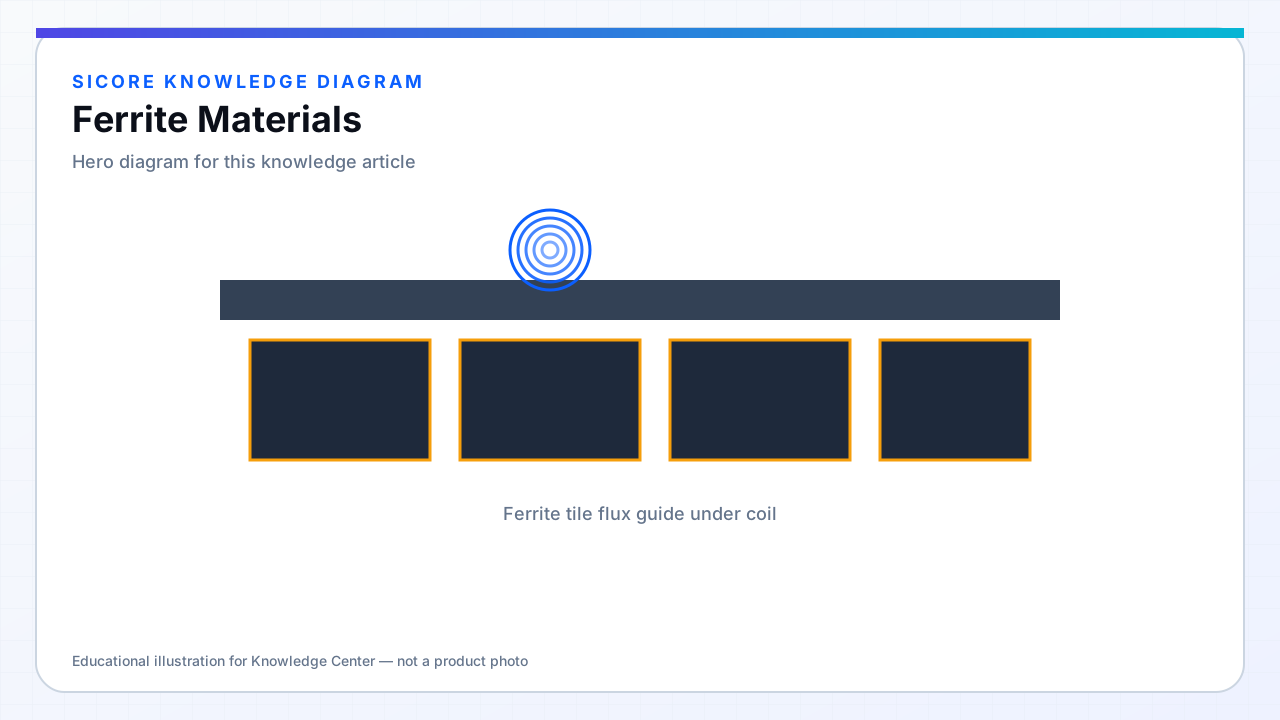
Soft ferrites in wireless power act as flux guides behind coils, increasing effective permeability of the path and reducing fringing into air and nearby conductors. Material choice (MnZn vs NiZn families, specific vendor grades) sets core loss, Curie temperature, and how much flux density the tile can carry before saturation detunes the coil.
Ferrite is not inert — it heats from hysteresis and eddy currents (especially in sintered tiles with grain structure). A pad running 24/7 on an AGV lane must budget core loss at worst-case alignment and ambient.
01Grade selection factors
- Operating frequency vs datasheet loss curves — do not use 100 kHz data at 150 kHz without verification.
- Flux density headroom under max current and min gap (highest k).
- Temperature coefficient of permeability affecting L drift.
- Mechanical: tile size, gapping, brittleness in dock impacts.
02Implementation
Tiles are often cut with gaps to limit eddy paths and thermal cracking. Adhesive and potting must match thermal expansion — ferrite cracks silently and changes permeability. Keep ferrite within vendor storage/handling rules; chipped edges concentrate flux and local heating.
03Alternatives and hybrids
- Nanocrystalline tapes for higher Bsat in some receiver volumes.
- Air-only coils where ferrite would saturate or metal debris sticks to the pad.
- Hybrid stacks: ferrite near the coil, steel shield farther back — model carefully for eddy loss.