
Wiki article · Collection 03
Copper vs Aluminum Conductors
Engineering reference on Copper vs Aluminum Conductors for wireless power system design, integration, and deployment.
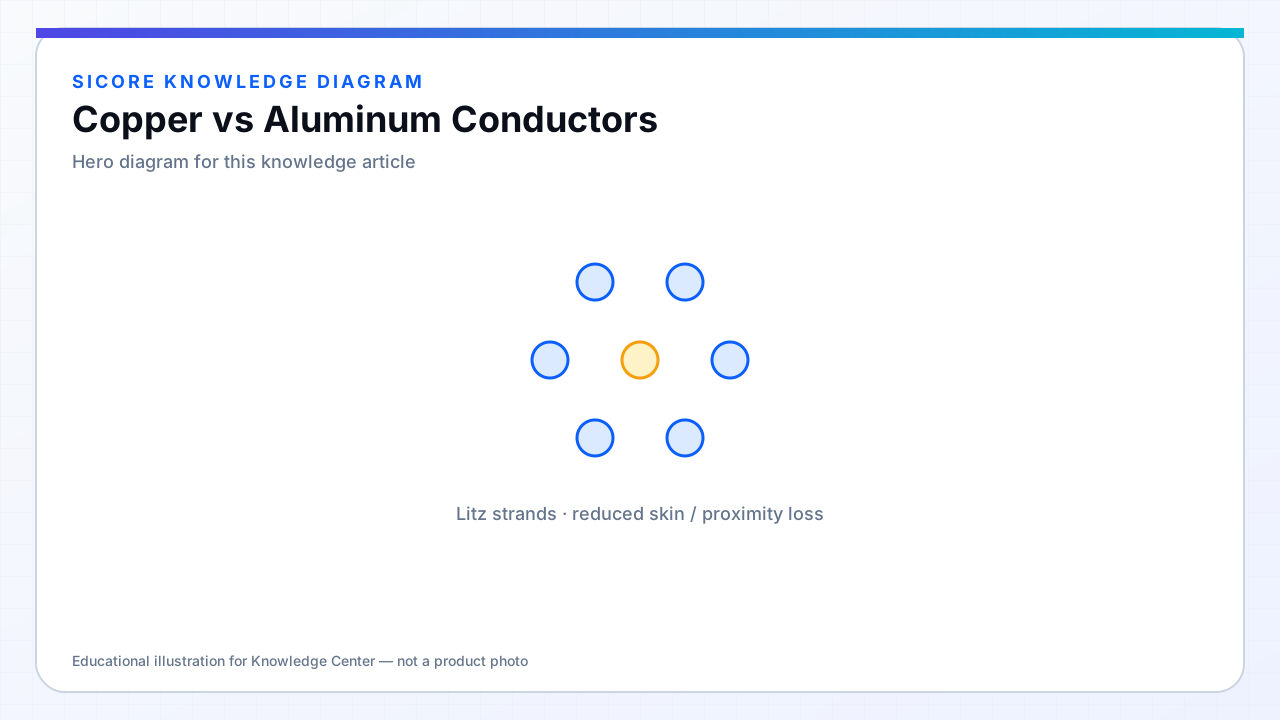
Copper dominates WPT windings for its conductivity and mature Litz supply chain. Aluminum appears where mass reduction matters — airborne or mobile robot payloads — at the cost of larger cross-section for same Rdc and more careful termination against galvanic corrosion and creep.
At AC frequencies, material choice still follows skin and proximity rules; aluminum's lower conductivity means either thicker sections or accepting higher loss for the same geometry.
01Copper advantages
- Higher conductivity — smaller coil for same loss.
- Reliable solder, weld, and crimp terminations.
- Wide Litz and foil vendor base.
02Aluminum considerations
Use plated pads, ultrasonic weld, or mechanical clamps rated for thermal cycle. Avoid direct copper-aluminum contact without isolation in wet environments. Verify Rac on prototype — some aluminum foil designs win on weight but need larger area changing k.
03Decision frame
- Default copper unless mass budget forces aluminum.
- Re-run thermal and k models on any material swap.
- Fleet maintenance training for aluminum termination inspection differs from copper.