
Wiki article · Collection 03
Nanocrystalline Cores
Engineering reference on Nanocrystalline Cores for wireless power system design, integration, and deployment.
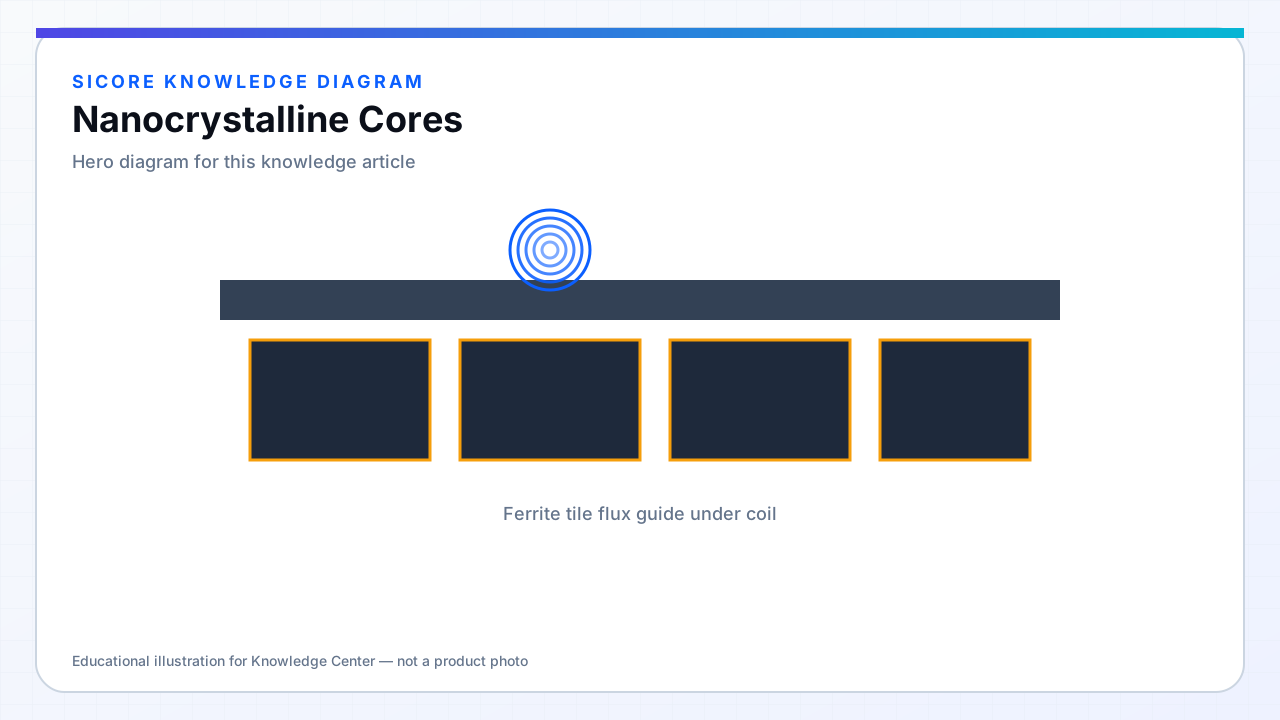
Nanocrystalline alloys (fine-grain metallic glass ribbons) offer very high permeability and high saturation flux density compared to many ferrites. In WPT they appear in compact receivers, common-mode chokes on coil leads, and flux concentrators where ferrite would be too bulky or saturate too early.
Ribbons are thin and stacked; cutting and gapping differ from sintered ferrite tiles. Mechanical shock can degrade performance if laminations shift.
01When they help
- Tight receiver volume with high L target.
- High flux density headroom in high-power transient peaks.
- Common-mode suppression on long coil cables in AMR turrets.
02Cautions
Cost exceeds ferrite for large pad areas — usually receiver-localized. Curie temperature and loss curves differ by grade — validate at operating frequency. Protect from moisture and bending below vendor bend radius.
03Integration
- Potting must not crush ribbon stacks.
- Match CTE with housing to prevent gap opening in cold warehouse floors.
- EMC: high μ can also couple stray fields — shield thoughtfully.