
Wiki article · Collection 02
Soft Switching
Engineering reference on Soft Switching for wireless power system design, integration, and deployment.
6 minArticle 12/16Resonant WPT
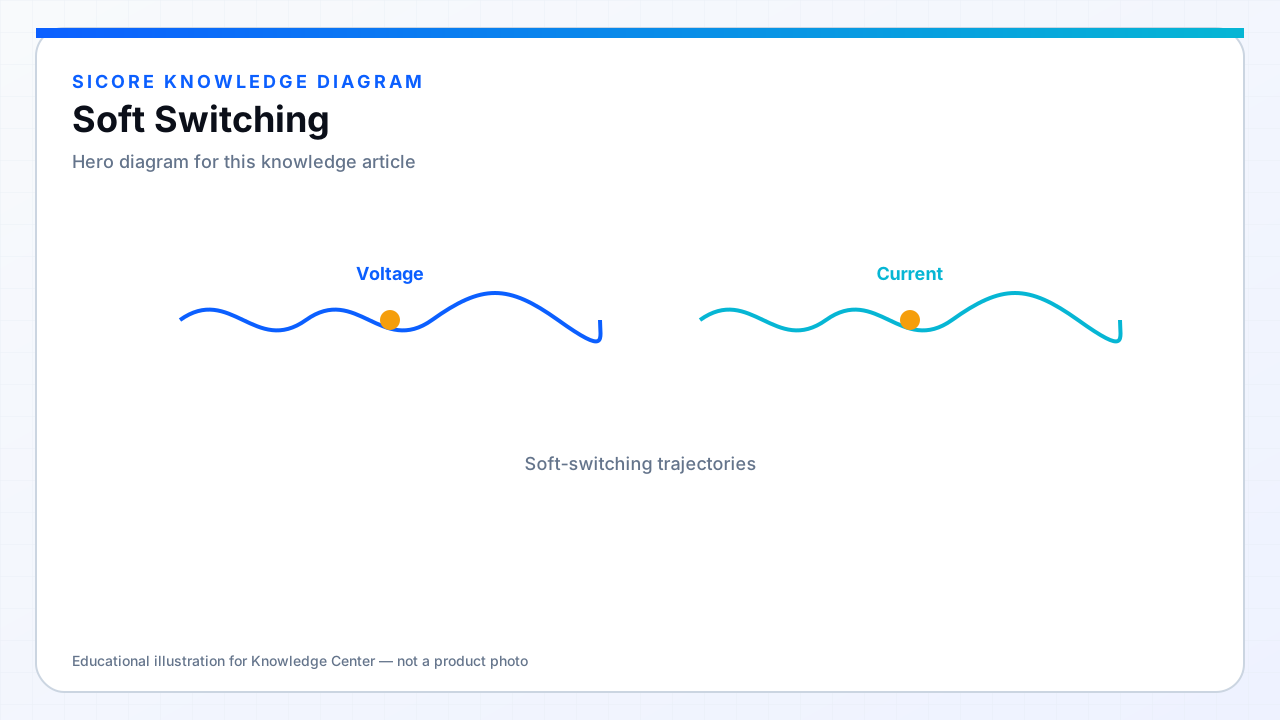
Soft switching means semiconductor devices turn on or off when voltage or current is near zero, slashing overlap loss and often reducing high-frequency EMI. Resonant and quasi-resonant WPT inverters are built so the tank trajectory creates those zero crossings in the intended load range.
01Why docks care
- Hundreds of watts to kilowatts make hard-switching heat painful.
- Smaller heatsinks and sealed IP enclosures need every watt of loss budget.
- Lower dv/dt / di/dt edges ease EMI filter design.
- SiC and GaN still benefit — soft switching is not only for slow silicon.
02Keep soft switching across the map
The hard part is not achieving ZVS at one lab point — it is holding soft switching from empty battery to full, and from best to worst alignment. Dead-time, magnetizing/tank current, and frequency schedule must be co-designed with the compensation network.