
Wiki article · Collection 01
Energy Conversion Fundamentals
Engineering reference on Energy Conversion Fundamentals for wireless power system design, integration, and deployment.
6 minArticle 14/16Fundamentals
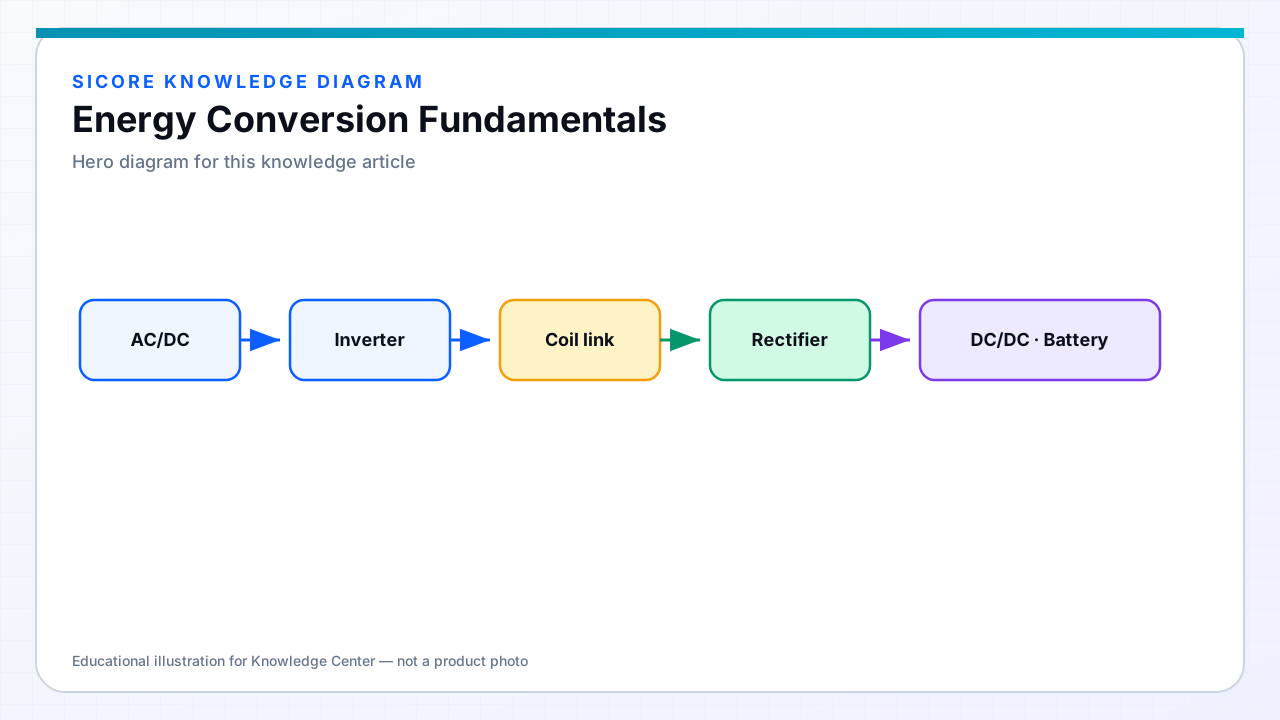
A wireless charger is a chain of power converters. Understanding each stage clarifies efficiency maps, heat sinks, and why “wireless” loss is only one part of wall-to-battery performance.
01Typical stage stack
- Front-end: PFC and AC/DC (mains-powered docks) or DC input from a facility bus.
- Inverter / power stage: creates the high-frequency coil drive.
- Magnetic (or capacitive) link: the wireless gap.
- Receiver rectifier: often synchronous for higher efficiency.
- DC/DC or charger IC: finishes CC/CV battery charging or load regulation.
02Loss buckets
Conduction loss (I²R), switching loss, core loss in ferrite, copper proximity/skin effect in coils, rectifier drop, and cable/bus distribution all add up. Improving only the coil coupling while ignoring a lossy rectifier rarely hits the target system efficiency. Thermal design must follow the same map: heat appears where loss appears.