
Wiki article · Collection 01
One-to-One vs One-to-Many Charging
Engineering reference on One-to-One vs One-to-Many Charging for wireless power system design, integration, and deployment.
6 minArticle 12/16Fundamentals
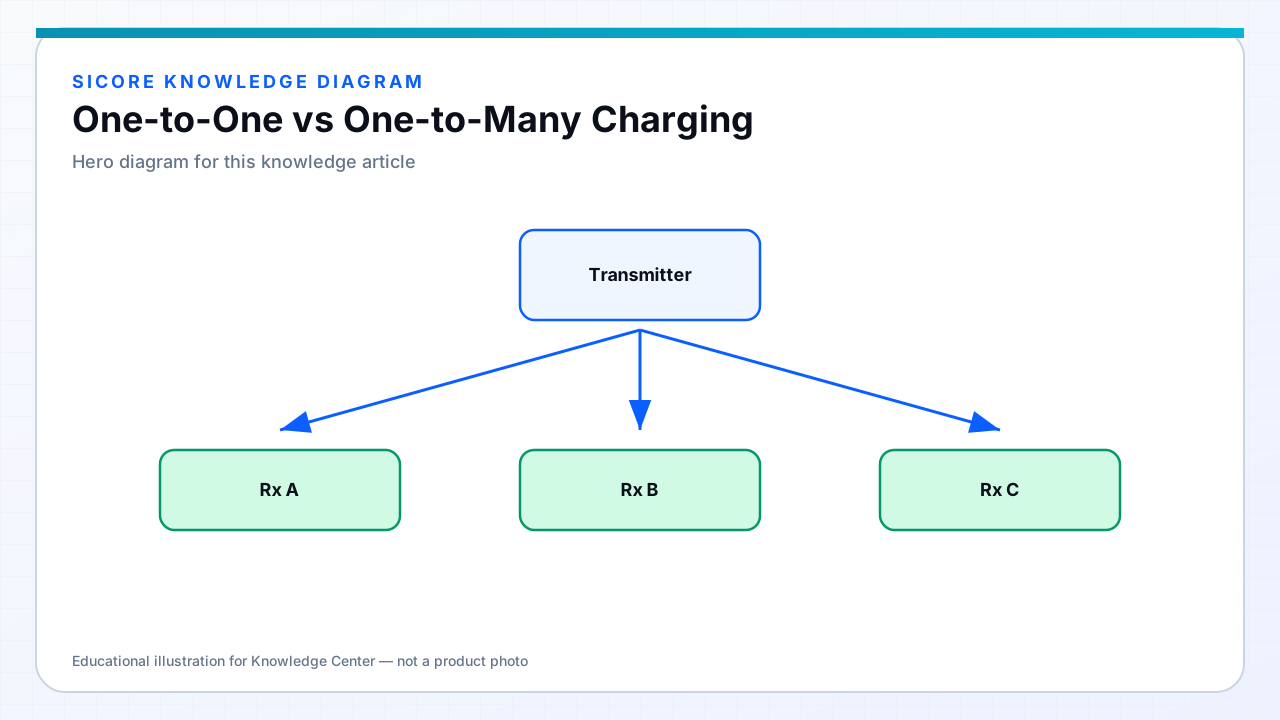
One-to-one charging means one transmitter primarily serves one receiver at a time — the classic AGV dock. One-to-many means one transmitter (or a coordinated array) can energize multiple receivers, or a surface can charge whichever device lands in a zone.
01One-to-one
- Predictable power budget and thermal design.
- Straightforward authentication and billing/telemetry per vehicle.
- Natural fit for high-power industrial docks (hundreds of watts to kilowatts).
02One-to-many
- Convenient for desktops and multi-device consumer pads.
- Requires load sharing, selective activation, and stronger FOD strategies.
- Efficiency per device can drop if the field is spread or mistuned.
- Industrial “many” often means many docks on a network — not one coil feeding many robots at once.
03SiCore-oriented view
High-availability robot fleets usually scale with many one-to-one docks plus cloud or local charge scheduling, rather than a single shared field. Multi-coil arrays still matter for alignment tolerance on one vehicle, which is different from truly simultaneous multi-vehicle charging on one pad.